
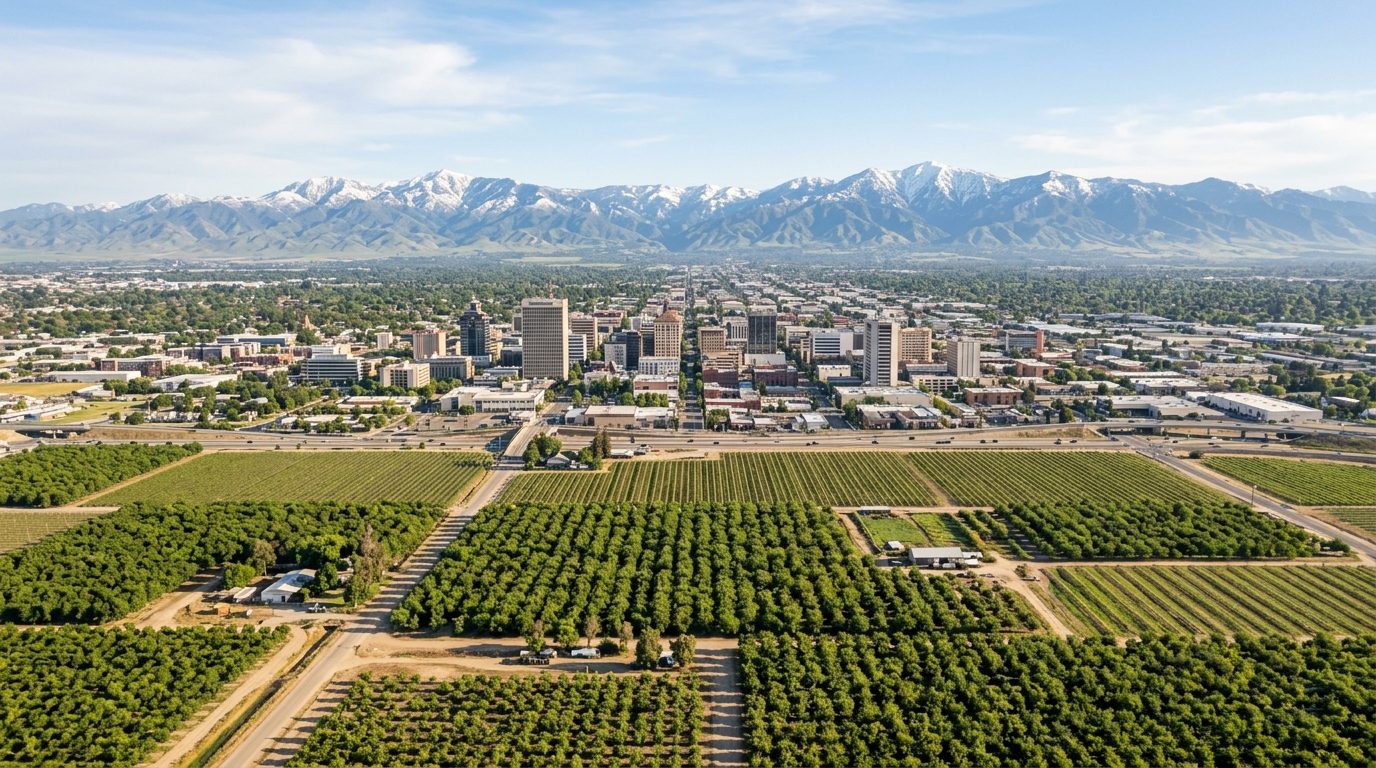
Current real estate market data, news and analysis for the Fresno, CA metropolitan area — 1.2M residents across Fresno and Madera counties.
Data as of May 2026. Sources: Redfin Data Center, U.S. Census Bureau.
Latest Fresno Real Estate News
Fresno Real Estate Market Overview
The Fresno metropolitan area consists of Fresno and Madera counties in California’s central San Joaquin Valley. Fresno and Clovis form the primary urban housing market, while smaller cities such as Reedley, Sanger, Selma, Kerman and Kingsburg serve surrounding agricultural areas. Fresno contains early bungalow neighborhoods, mid-century ranch homes, apartments, condominiums, townhouses and extensive suburban development. Clovis combines an older town center with newer subdivisions and master-planned communities extending toward the Sierra Nevada foothills. Western and southern county cities are generally more closely tied to farming, food processing and regional transportation corridors, while eastern communities provide access to foothill recreation and rural residential land.
Higher price tiers are generally associated with north Fresno, the Van Ness Extension, Woodward Park, Copper River Ranch, selected Clovis neighborhoods and larger-lot properties near the foothills. These areas often combine newer housing, established schools, private amenities, larger parcels or convenient access to northern employment and retail corridors. More attainable choices are commonly found in central, southeast and southwest Fresno, older suburban neighborhoods and smaller valley cities. Lower acquisition costs outside the urban core may be accompanied by longer commutes, limited services, agricultural activity, well or septic systems and fewer public transportation options.
The regional economy is supported by agriculture, food processing, health care, government, education, logistics, construction and professional services. Fresno County is a major agricultural production area, and related packing, processing, equipment and transportation businesses influence employment throughout the metro. Community Medical Centers, Kaiser Permanente, county government, school systems and California State University, Fresno support health care, public-sector and education employment. Warehousing and distribution facilities follow the highway and rail corridors, while downtown Fresno, north Fresno and Clovis contain separate medical, government, retail and office districts.
Extreme heat, drought, air quality and water supply are important property considerations. Valley geography can trap air pollution and wildfire smoke, while prolonged summer heat places additional demands on roofs, cooling systems, windows and insulation. Flood exposure varies near rivers, canals and low-lying agricultural land, and foothill-edge properties may face wildfire and evacuation concerns. Development at the urban fringe can also bring homes close to active farms, dairies, irrigation systems or industrial uses. Buyers should verify water and sewer providers, flood zones, solar agreements, foundation and drainage conditions, homeowners association obligations and whether nearby open land is protected, agricultural or approved for future development.
Cities and Towns in the Fresno Metro Area
Notable Communities and Neighborhoods
Fresno Real Estate Market FAQ
How is the Fresno housing market geographically organized?
The market is centered on Fresno and Clovis, with smaller incorporated cities distributed across the agricultural San Joaquin Valley and toward the Sierra Nevada foothills. Housing patterns, commuting routes, school districts, water systems and proximity to farms or industrial uses create distinct submarkets.
Which Fresno-area locations generally sit in higher price tiers?
North Fresno, the Van Ness Extension, Woodward Park, Copper River Ranch, selected Clovis neighborhoods and larger-lot properties near the foothills generally occupy higher tiers. Newer construction, school access, lot size, private amenities and proximity to northern employment and retail corridors contribute.
What should buyers verify in a Fresno-area new subdivision?
Buyers should review homeowners association rules, builder warranties, utility providers, school boundaries, road plans and nearby approved land uses. They should also confirm whether parks, retail centers and transportation improvements are complete or planned for a later phase.
What environmental conditions should Fresno-area buyers investigate?
Buyers should examine extreme heat, air quality, drought, flood exposure, wildfire smoke and soil conditions for the specific property. Rural-edge homes may also require review of wells, septic systems, agricultural operations, water availability and private-road maintenance.
Nearby Markets