
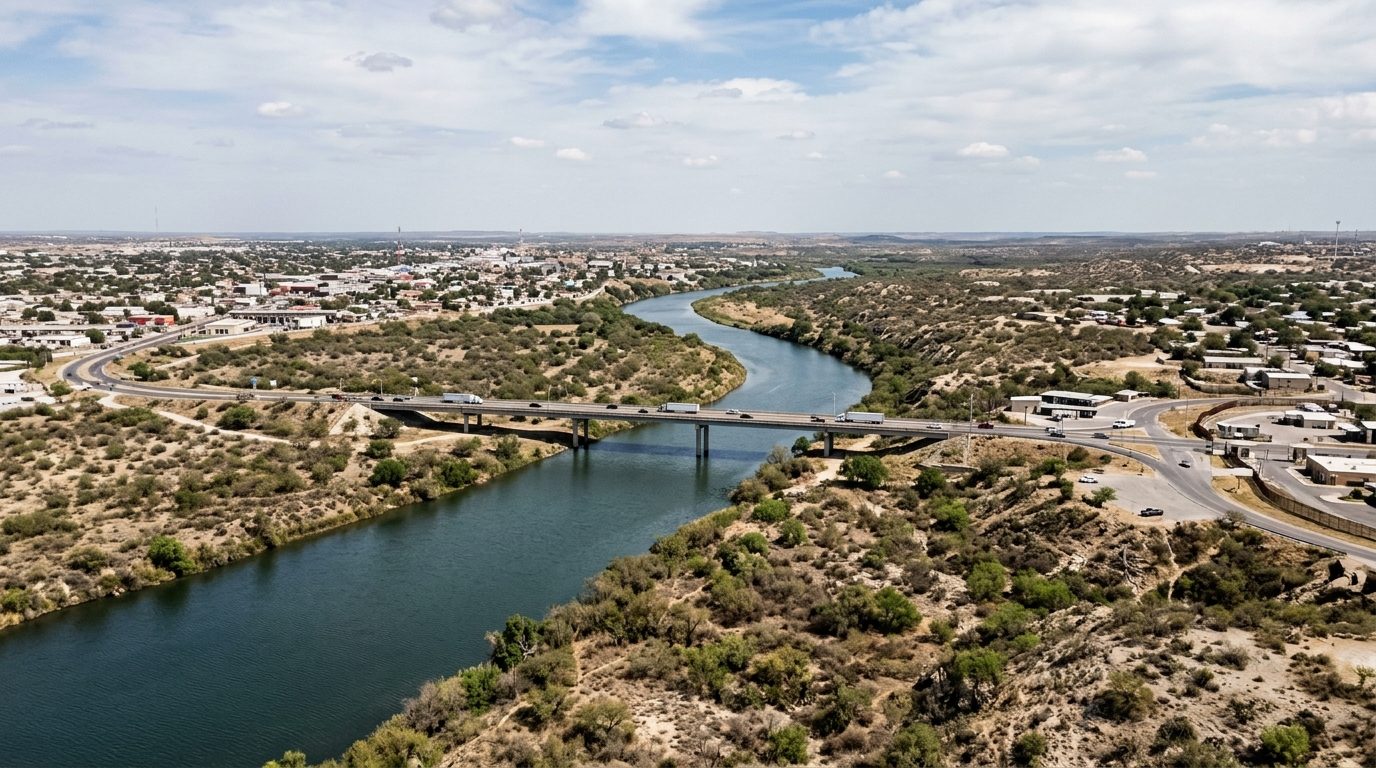
Current real estate market data, news and analysis for the Eagle Pass, TX metropolitan area — 58,823 residents across Maverick county.
Data as of May 2026. Sources: Redfin Data Center, U.S. Census Bureau.
Latest Eagle Pass Real Estate News
Coverage of this market is coming soon. Browse all housing market news.
Eagle Pass Real Estate Market Overview
Eagle Pass is the county seat of Maverick County and sits on the east bank of the Rio Grande directly across from Piedras Negras, Coahuila, in Mexico, connected by two international vehicle bridges and a rail crossing. The city and surrounding county occupy flat to gently rolling brush country typical of the South Texas borderlands, with the river forming the city’s western edge and defining much of its historic core. Housing stock reflects this layered history: modest early-to-mid-20th-century homes and older masonry buildings cluster near downtown and the Fort Duncan area close to the river, while single-family subdivisions of brick and frame construction, along with a substantial share of manufactured and mobile homes, extend outward through the rest of the city and into unincorporated county subdivisions.
Within Eagle Pass, the newer subdivisions built on the north and east sides of the city, farther from the floodplain and closer to retail corridors and newer school campuses, tend to carry higher values, reflecting more recent construction and larger lot sizes. The older, closer-in neighborhoods near downtown, the Fort Duncan area, and the immediate riverfront carry a mix of long-established family homes and older, lower-cost housing stock, with some blocks shaped by past flood clearance along the river. Outside city limits, unincorporated subdivisions scattered across Maverick County, platted decades ago with varying levels of paved roads, water, and wastewater service, generally represent the most affordable and most variable end of the local market.
Eagle Pass’s economy centers on its role as a border crossing point: the Eagle Pass-Piedras Negras International Bridge, the Camino Real commercial bridge, and a rail bridge move trade and daily cross-border shoppers and commuters, supported by U.S. Customs and Border Protection’s Eagle Pass port of entry and a Border Patrol presence in the city. Retail tied to this cross-border traffic, led by H-E-B and Walmart, is a major private-sector employer, alongside manufacturing operations such as the Maverick Arms firearms plant. Ranching remains part of the county’s economic base, consistent with Maverick County’s origins as rangeland. Public-sector employment is significant as well: Eagle Pass Independent School District, the City of Eagle Pass, Maverick County government, and federal border agencies all employ substantial numbers of residents, while Fort Duncan Regional Medical Center anchors local healthcare.
Proximity to the Rio Grande is a defining local factor: portions of the city near the river have flooded historically, prompting a past federal buyout of riverside residential blocks that were converted into parkland, and the floodplain remains a consideration for insurance and development decisions in low-lying areas. Summers bring prolonged, intense heat typical of the region’s semi-arid climate, a factor in utility costs and building design. Texas levies no state income tax, but local property taxes fund city, county, and school district budgets. Public transit is limited, and most residents rely on personal vehicles, with cross-border bridge traffic periodically affecting travel near downtown. Federal border infrastructure, including fencing and CBP facilities along the river, constrains land use in some riverside areas. Buyers should confirm flood-zone status and flood history, the extent of paved roads and water and wastewater service, and platting and title status for any property, particularly in unincorporated county subdivisions.
Cities and Towns in the Eagle Pass Metro Area
Notable Communities and Neighborhoods
Eagle Pass Real Estate Market FAQ
How is the Eagle Pass housing market organized?
The market splits roughly into three tiers: the older, closer-in neighborhoods near downtown and the Rio Grande, the newer subdivisions built out toward the north and east sides of the city, and unincorporated subdivisions scattered across the rest of Maverick County outside city limits. Each tier differs in the age of housing stock, lot size, and the level of city services and infrastructure available.
Which parts of the Eagle Pass area tend to be priced higher?
Newer subdivisions on the city’s north and east sides, away from the river floodplain and closer to newer schools and retail corridors, generally carry higher values because of more recent construction and larger lots. Older neighborhoods near downtown and the riverfront, along with unincorporated county subdivisions, tend to sit at the lower end of the market.
What should buyers verify before purchasing property in the Eagle Pass area?
Buyers should confirm a property’s flood-zone designation and flood history, check whether roads are paved and whether water and wastewater service is public or private, and verify platting, title, and permitting status, since these vary widely between the incorporated city and unincorporated county subdivisions.
Is flooding a concern in Eagle Pass given its location on the Rio Grande?
Yes. The city has a documented history of Rio Grande flooding, including an event significant enough to prompt a federal buyout of riverside residential blocks that were later converted into parkland. Low-lying areas near the river warrant a flood-zone check and review of local floodplain and drainage history before purchase.
Nearby Markets