
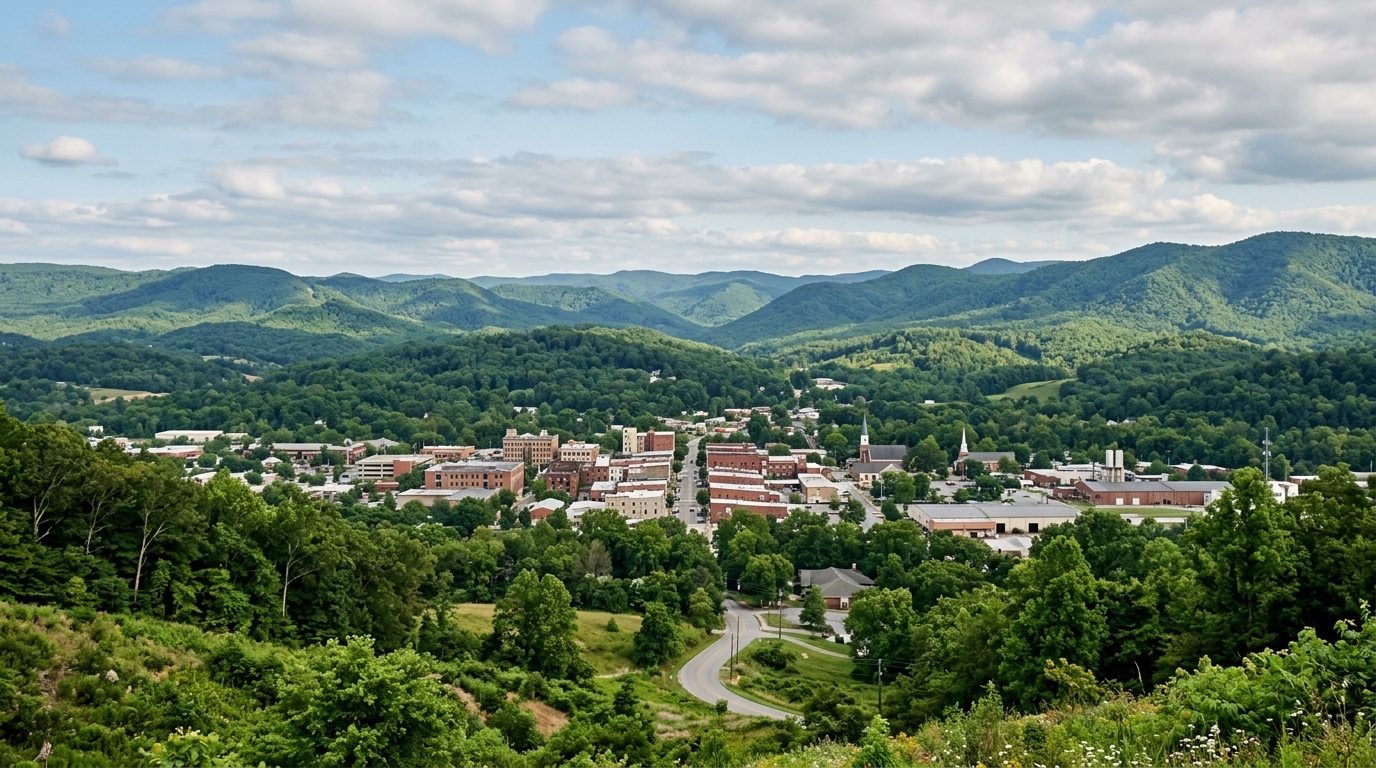
Current real estate market data, news and analysis for the Dalton, GA metropolitan area — 147,819 residents across Murray and Whitfield counties.
Data as of May 2026. Sources: Redfin Data Center, U.S. Census Bureau.
Latest Dalton Real Estate News
Coverage of this market is coming soon. Browse all housing market news.
Dalton Real Estate Market Overview
Dalton anchors a compact metro at the southern edge of the Appalachian Mountains in northwest Georgia, where the terrain shifts from flatter Ridge and Valley country into forested foothills climbing toward the Cohutta Wilderness and Fort Mountain along the metro’s eastern edge. The city sits along low ridges split by creeks feeding the Conasauga River, with Whitfield County forming the urbanized core around Dalton and Murray County stretching north and east toward more rural, mountainous ground around Chatsworth, Cohutta, Eton, Tunnel Hill, and Varnell. Housing stock reflects that layered history: brick mill-worker cottages and early bungalows cluster near downtown Dalton, ranch houses from the postwar manufacturing boom fill the surrounding grid, and newer subdivisions with vinyl and brick-veneer construction spread along the city’s northern and eastern edges. Farther out in Murray County, home sites give way to larger-acreage properties, manufactured housing, and rural homesteads set against a mountain backdrop.
Price tiers in the Dalton area track a mix of history, terrain, and distance from industry. The historic districts closest to downtown, anchored by tree-lined streets, older brick homes, and walkable blocks, draw a premium for architectural character and proximity to the courthouse square, restaurants, and civic buildings, even though lots tend to be smaller. Newer subdivisions on the city’s north side, several built around clubhouses, pools, or small lakes, command higher prices for larger floor plans, attached garages, and amenity packages that older neighborhoods lack. More affordable housing tends to sit closer to the carpet mills and industrial corridors lining the rail and highway routes through Whitfield County, where land use mixes residential streets with manufacturing and warehousing. Out toward the foothills and into Murray County, prices generally ease with distance from Dalton’s job centers, though land closer to Fort Mountain and the Cohutta foothills can carry its own premium for views and acreage rather than square footage.
The regional economy still centers on flooring manufacturing, a legacy that earns Dalton its long-standing nickname as the carpet and flooring capital of the country. Shaw Industries, a Berkshire Hathaway subsidiary, and Mohawk Industries both maintain major operations and corporate presence in the area, alongside flooring producers such as Engineered Floors and Tarkett, which run mills and distribution facilities throughout Whitfield County. That base has diversified to include solar panel production, automotive parts suppliers, and other industrial employers drawn to the area’s rail and interstate access. Outside manufacturing, Hamilton Health Care System anchors healthcare through Hamilton Medical Center and related facilities, while Whitfield County Schools and Dalton Public Schools, two separate school systems serving different parts of the metro, along with county and municipal government, round out the largest non-manufacturing employers.
Buyers should weigh a few local realities. The region sits well inland, so hurricane exposure is minimal, but hilly terrain and creek networks through Whitfield and Murray counties mean localized flooding can affect low-lying parcels, making a flood-zone check worthwhile before purchase. Property tax administration differs between city and county, and homestead exemptions vary by jurisdiction, so buyers should confirm which taxing authority and school district, Dalton or Whitfield County, apply to a given address. Public transit is limited, so most households rely on personal vehicles along the area’s highway and interstate corridors, and buyers near industrial zones should verify local zoning and any nearby manufacturing operations before closing.
Cities and Towns in the Dalton Metro Area
Notable Communities and Neighborhoods
Dalton Real Estate Market FAQ
How is the Dalton housing market organized across the metro?
The metro splits between the urbanized core in and around the city of Dalton, in Whitfield County, and a more rural, mountainous stretch of Murray County to the north and east that includes Chatsworth, Cohutta, Eton, Tunnel Hill, and Varnell. Housing near Dalton’s core tends to be denser and older, while Murray County offers larger lots and acreage properties farther from employment centers. Buyers should treat the two counties as distinct markets with separate tax offices, school systems, and permitting rules rather than a single uniform area.
Which areas of the Dalton metro tend to be pricier, and why?
Homes in Dalton’s older historic districts near downtown carry a premium for architectural character, mature trees, and walkability to the courthouse square and restaurants, despite smaller lots. Newer subdivisions on the city’s north side also price higher, reflecting larger floor plans and amenities like clubhouses or pools. More affordable housing clusters near the carpet mills and industrial corridors, while rural Murray County generally offers lower prices with distance from job centers, except for mountain-adjacent land valued for views and acreage.
What should buyers verify locally before purchasing in the Dalton area?
Because the metro spans two counties and includes both city and unincorporated jurisdictions, buyers should confirm which municipality, school district, and taxing authority apply to a specific address, since property assessment practices and homestead exemption rules differ between the city of Dalton and the surrounding counties. It is also worth checking flood-zone status, proximity to industrial or manufacturing operations, and local zoning before closing, since land use can shift block by block near the region’s mills and highway corridors.
What is the main region-specific risk buyers should understand in the Dalton area?
Localized flooding is the most relevant risk, driven by the area’s hilly terrain and the creeks and tributaries that feed the Conasauga River through Whitfield and Murray counties. While the inland location limits hurricane exposure, low-lying parcels near waterways can still be subject to floodplain mapping and flood insurance requirements, so a flood-zone check for any specific property is a practical step before purchase.
Nearby Markets