The share of title companies that ran into at least one attempt by a criminal to impersonate a property owner and sell a home they do not own has more than doubled in two years, according to new research from the American Land Title Association.
Fifty-nine percent of firms reported experiencing at least one seller impersonation fraud attempt in 2025, ALTA said — “more than double the 28% reported in ALTA’s 2024 study.” The monthly snapshot moved just as sharply: in April 2026 alone, 45% of firms reported at least one attempt, against 19% in the same month two years earlier.
“Seller impersonation fraud (SIF) has become more widespread, sophisticated and financially consequential in just two years,” the trade group said in its summary of the findings. The study drew on responses from 245 title insurance professionals across 40 states, the District of Columbia and the U.S. Virgin Islands, and was fielded in spring 2026 with sponsorship from fraud-prevention vendor CertifID.
Vacant land is still the favorite target — but no longer the only one
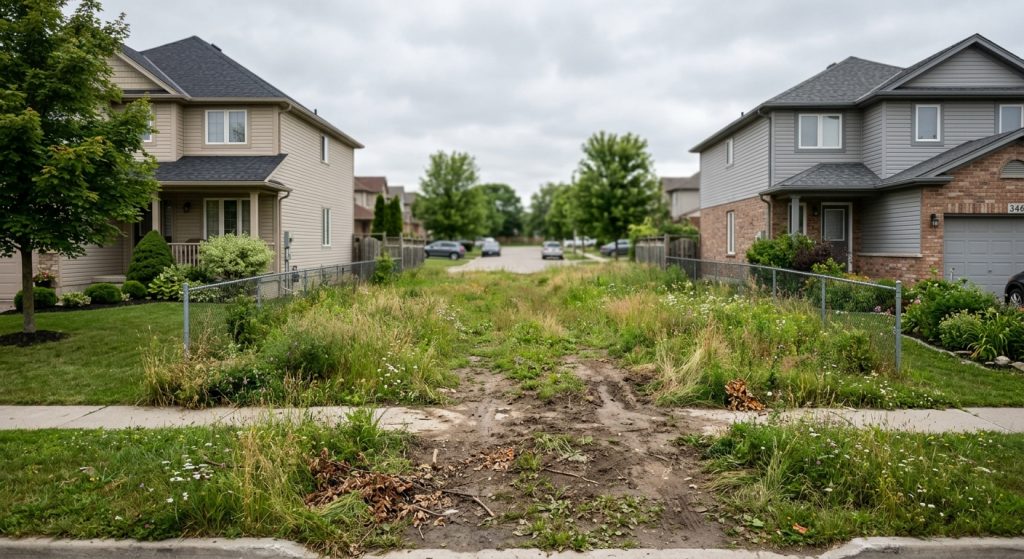
The scheme works because some properties have no one living on them to notice. A fraudster posing as the owner lists a parcel, pushes for a fast all-cash closing handled remotely, and disappears with the proceeds before the real owner learns the deed has moved.
Vacant land remained the most frequently targeted property type, cited by 82% of respondents. But the survey found the aperture widening: vacation homes were named by 51%, rental properties by 48%, agricultural land by 36% and primary residences by 25%.
Ownership circumstances matter as much as property type. Roughly 73% of respondents pointed to properties held by absentee owners, 68% to properties owned free and clear of any mortgage, and more than half to properties whose owners had recently died.
Spoofed contacts, and manipulated voices
“Spoofed contact information emerged as the most commonly reported tactic, with 87% of respondents identifying it as a common component of fraud attempts,” ALTA said. Nearly six in 10 respondents reported that manipulated voice or image technology — deepfakes — is becoming a common feature of the attempts.
Elizabeth Blosser, ALTA’s chief strategy, communications and innovation officer, said the results matched what members had been describing. “The findings confirm what title professionals have been telling us for several years—seller impersonation fraud is becoming more common, more sophisticated and more difficult to detect,” she said. “Criminals are investing time and resources to exploit weaknesses in real estate transactions, which means our industry must remain equally committed to strengthening safeguards that protect property owners and consumers.”
Six-figure losses at a quarter of affected firms
Among firms that encountered an attempt, 25% reported paid claims. Of those that disclosed what the episodes cost, half reported average claim costs above $100,000 and 42% put the average between $25,000 and $100,000.
The warning signs respondents ranked highest are behavioral rather than documentary: a seller who avoids meetings, phone calls and video; a mail-away signing with a notary the seller selects; an all-cash transaction; a property with no mortgage or other encumbrance; a below-market asking price; and seller conduct that does not fit the transaction.
Defenses are getting denser. ALTA said 94% of firms rated multiple tools as effective, averaging 5.3 per firm. Identity verification systems drew the highest effectiveness rating at 92%, followed by direct contact with the seller through independently verified channels at 90%, multifactor authentication at 89%, approved notary networks at 88% and knowledge-based authentication at 86%. Wire fraud and business email compromise were the fraud types respondents most often encountered alongside seller impersonation.
The association also pointed members to its ALTA 49 and 49.1 endorsements, which it has published as a coverage response to the fraud, and to updates in its best practices.
One caveat on the comparison
The two surveys are not the same size. ALTA’s 2024 study, released Aug. 5, 2024, collected responses from 783 title companies; the 2026 round drew 245. A smaller sample widens the margin around any single percentage, and neither of ALTA’s published summaries reports a margin of error. On our reading, the direction of the finding is hard to argue with — every measure moved the same way, and the month-level figure more than doubled independently of the annual one — but the precise size of the jump deserves the caveat.
For the agents and closing teams who see these files first, the practical exposure sits in the same places it did two years ago, only more often. RealtyWire’s wire fraud checklist for buyers and sellers covers the funds side of the same problem, and enforcement in adjacent corners of the industry has grown teeth: an appraiser was sentenced to 20 years in a $65 million mortgage fraud case earlier this year. More coverage for practitioners is in RealtyWire’s Agents & Brokerages section.