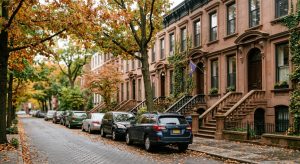
Seattle homeowners will soon be able to put their names on a public list that makes it illegal for anyone, real estate brokers included, to approach them about selling. Mayor Katie B. Wilson signed the measure on Sept. 8, and the city announced the signing the following day.
Ordinance 127491 creates Seattle’s first citywide “Do Not Solicit” list, to be maintained by the Seattle Office of Civil Rights. Once an owner’s name and address are added, solicitation becomes prohibited 30 days later. A first violation draws a $1,000 penalty and each repeat violation $2,000, with every day a violation occurs counted as a separate offense. Homeowners may also sue within two years and seek damages for emotional distress.
The list takes effect June 1, 2027. The city said enrollment details will be released closer to that date.
What counts as solicitation
The reach of the ordinance is what makes it consequential for the industry. In describing the bill at committee passage in July, the City Council said it applies to individuals and entities “including, but not limited to real estate brokers, agents, their employees, or representatives,” and that solicitation covers in-person visits, phone calls, mailings and digital communications.
Being on the list is itself treated as an answer. The council said placement “constitutes a clear expression that the owner does not wish to sell their property and does not wish to be solicited.” The legislation, introduced as Council Bill 121259 by Councilmember Dionne Foster, cleared her Housing, Arts, and Civil Rights Committee on July 22 and went to the full council on July 28.
For agents and investors who prospect off-market, that reshapes a routine part of lead generation inside city limits. Direct mail campaigns, cold calls and door-knocking in Seattle will require screening against a city-maintained list, and the per-day penalty structure means a mailing drop or an automated dialing campaign that hits a listed owner repeatedly can compound quickly.
Where the ordinance came from
The city traced the measure to complaints from longtime owners. During a Housing, Arts, and Civil Rights Committee meeting in June 2026, the city said, residents described widespread unwanted approaches from entities trying to buy their homes, many of them calling the contacts stressful, invasive or fear-inducing. The council said the bill was also informed by 74 residents who answered a survey on predatory homebuying tactics.
“Every person deserves privacy and dignity in their home,” Wilson said. “With this ordinance, Seattle is fighting predatory solicitation practices and building enforceable protections that put homeowners in charge of who can contact them.”
Foster framed the issue in terms of what repeated pressure does to sale prices. “Predatory homebuying practices strip wealth from vulnerable communities by pressuring homeowners into undervalued sales,” she said, adding that the bill “will now benefit all homeowners from West Seattle to Rainier Beach to Lake City.”
Chukundi Salisbury, executive director of Black Legacy Homeowners, which pushed for the measure and attended the signing, said in the council’s July announcement that families “are constantly pressured to sell, often through aggressive off-market tactics designed to take advantage of longtime homeowners.” Maria Batayola, chair of the Beacon Hill Council, said in the same release that unsolicited calls, texts and mailings from businesses offering to buy homes “with no competition” create fear and stress for vulnerable neighbors.
Seattle Office of Civil Rights Interim Director Mike Chin attended the signing, held in the Norman B. Rice Room at City Hall.
Not the first, and probably not the last
Seattle is following rather than leading here. The City Council said similar do-not-solicit lists have been adopted in New York and Philadelphia, and the ordinance builds on homeowner protections the council passed in 2025. Annual reports through 2029 will track enrollment, complaints, citations, appeals and penalties collected, which will give other cities weighing the same approach something to measure.
The ordinance lands alongside a run of local and state rules aimed at who gets to buy American houses and how. Michigan this summer barred investors owning more than 100 homes in the state from buying more single-family properties. Seattle itself has been busy on housing legislation, having stripped environmental appeals from zoning votes in July to speed approvals.
As the city describes it, the mechanism is an opt-out registry with a price attached to ignoring it: homeowners who want to be left alone must first put themselves on a public list, and enforcement follows from there. On our reading, that makes its practical reach a question of uptake, which the annual reports starting after June 2027 will be the first to show.