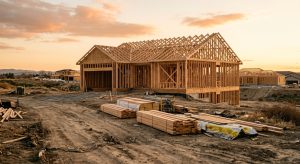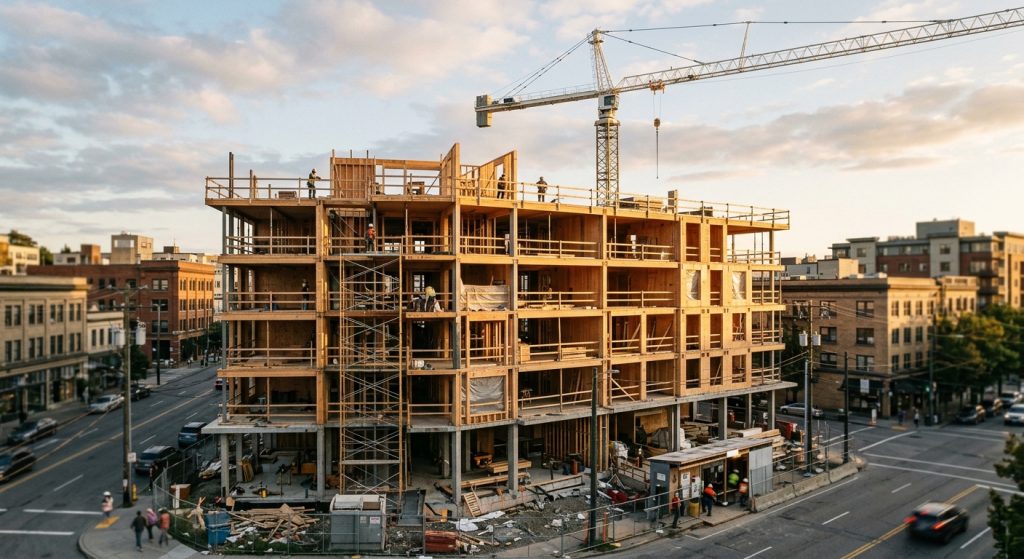
Airbnb said Sept. 14 that it will put an initial $250 million into rental housing projects that are permitted and ready to build but short of the last slice of financing needed to break ground, the opening move in a program the company calls the Airbnb Housing Accelerator.
The company said the money will be deployed as “last-dollar” financing and that it expects the commitment to unlock more than $5 billion in total capital investment over the next ten years. Airbnb also said it will invest “at returns significantly below standard market rates,” prioritizing stalled affordable and mixed-income projects.
The target is a specific bottleneck rather than the housing shortage in general. Research commissioned by Airbnb estimates that 750,000 housing units across the country have cleared most regulatory hurdles but lack the final financing commitment needed to start construction. Last-dollar capital is the incremental money that closes a gap after senior debt, tax credits and local subsidy are in place — often a small fraction of a project’s cost, but the piece that decides whether it proceeds.
The first check goes to Austin, Texas
Airbnb’s inaugural investment is $6.4 million toward 201 affordable units in Austin, Texas. Those units sit inside the larger St. John redevelopment, a public-private project the company said will include more than 500 homes along with retail, a park and public art by local artists.
“Austin leads the national conversation and the actual outcomes on housing because we’re doing what it takes to build,” Austin Mayor Kirk Watson said in the announcement. “I’m glad to see Airbnb investing in housing projects like St. John’s. Expanding housing takes all of us. When a company like Airbnb steps up and works alongside local organizations, community leaders, and the city, you get real outcomes.”
Developers, nonprofits and community organizations can submit additional projects for consideration through the company’s housing accelerator page.
Chief Executive and co-founder Brian Chesky tied the program to the company’s origin story. “The ability to afford housing is part of the foundation of Airbnb. The company was launched because we couldn’t afford our rent—and today, that reality exists for millions of Americans,” he said. “The housing crisis wasn’t created overnight, and it won’t be solved overnight. But we can start moving in the right direction, and that is exactly what the Airbnb Housing Accelerator is designed to do.”
Three more pillars: policy, data and a prize
Capital is one of four components. Airbnb said it will fund local organizations pushing zoning, permitting and building-code changes, naming the Citizens’ Housing and Planning Association, the Florida Housing Coalition, AURA and the Housing Action Coalition as groups it is supporting. The company said the reforms it will back include shorter permitting timelines, higher density allowances and limits on upfront impact fees. It is also funding research with the Chicago Urban League intended to identify why existing housing programs underperform.
“Communities across Massachusetts are working to build support for more housing, but residents and local leaders need the right tools to turn that support into results,” said Eric Shupin, chief executive of the Citizens’ Housing and Planning Association. Ashon Nesbitt, chief executive of the Florida Housing Coalition, said the support “helps us reach more communities and help more of them say yes to housing.”
Airbnb published a companion report, “The Airbnb Housing Accelerator: Tackling the Housing Crisis,” alongside the announcement.
Later this year the company said it will release the Airbnb City Index, an annual ranking of cities worldwide on housing policy and outcomes, including housing additions per capita and affordability measures as well as the rules that help or hinder production. Airbnb described the dataset as first-of-its-kind and aimed at journalists, researchers, advocates and policymakers.
The fourth piece is a $5 million Airbnb Housing Innovation Prize: five awards of $1 million each for companies or nonprofits working on technologies and designs that make homes faster, cheaper and easier to build. Airbnb said it will consider offsite construction of single-family and multifamily homes, jobsite productivity tools, and faster permitting and design processes, among other areas. Construction technology has drawn substantial private capital this year, including autonomous heavy equipment and AI-based project monitoring; autonomous excavators began working on U.S. job sites earlier in 2026.
What the numbers do and do not cover
On our reading, the sums are modest against the gap Airbnb itself describes: $250 million spread across 750,000 stalled units works out to a few hundred dollars a unit if it were distributed evenly, which is not how gap financing works. The relevant test is leverage — whether a small, patient check reliably pulls in the senior capital behind it. The company’s own $5 billion figure implies roughly 20 dollars of outside investment for every dollar it commits, a ratio it has not detailed.
The program also lands as corporate money moves further into the housing-supply debate. The U.S. Chamber of Commerce launched a housing advisory council chaired by JPMorganChase this year, and state officials have begun leaning on local governments over permitting — Texas Gov. Greg Abbott threatened to strip funding from cities that block housing in August. Affordability itself has continued to deteriorate: the National Association of Home Builders reported that housing affordability worsened in the second quarter as borrowing costs climbed.
Full details of the commitment, the Austin investment and the policy agenda are in Airbnb’s Sept. 14 announcement. More coverage of construction finance and supply is in RealtyWire’s Housing Market section.