Boom, an Austin, Texas, software company that screens rental applicants for property managers, has raised $15 million in a Series A round and launched a leasing platform built on top of that screening data — a bet that knowing who will qualify is more valuable than simply handling more inquiries.
The company announced the round and the product, BoomCRM, on Aug. 18. S3 Ventures led, with participation from Mischief VC and repeat investments from Starting Line VC, Gilgamesh Ventures and Company Ventures. Total funding to date was not disclosed.
What the product does
BoomCRM “answers calls, qualifies prospects, and books tours,” according to the company, which describes it as “the first leasing CRM built on a foundation of underwriting intelligence.” Boom says it was developed over 16 months alongside a group of operators.
The distinction the company is drawing is between an AI agent that handles inbound volume and one that already knows whether a given prospect will pass screening. Boom’s existing product, BoomScreen, does the underwriting; BoomReport handles rent reporting.
Rob Whiting, Boom’s chief executive, argued that the conversational layer will not stay differentiating for long.
“Before long, every platform will have an agent that answers the call and books the tour. That part is table stakes,” he said. “What’s hard to replicate is the intelligence underneath, knowing who will actually qualify. Everyone else is working toward that decision. We started there, and built the front door already knowing who belongs in the room.”
Where it is deployed
Boom says it screens for more than 400 operators covering over 500,000 units. Named customers include AMH, Roots Management, Marketplace Homes, Saratoga Group, On Q Property Management and RENU Property Management.
The company says it serves more than 25% of the largest third-party single-family rental management companies on one widely cited industry list, and by its own analysis more than 25% of the 100 largest manufactured-housing operators by homesite count. It is the preferred screening provider for ManageAmerica and the Keyrenter franchise network. Those market-share characterizations are Boom’s own.
Aaron Perman, a general partner at S3 Ventures, framed the investment around the state of existing software. “Property managers are running on software built to keep the books, not make decisions,” he said. “Boom turns a painful, disjointed rental process into a modern consumer experience, with same-day application answers.”
Two customers offered usage figures. Ryan Smith, a principal at Endeavor Communities, said his problem “was never lead volume, it was visibility,” adding that “Boom’s AI Leasing Agent handled close to 200 calls last month, 20% of them after hours, and gave my team back more than 75 hours.” Paul Downey, director of operations at TG Property Management, said the combination of BoomCRM and BoomScreen addressed his need.
What it means
The verified facts are the raise, the investors, the product launch and the company’s stated customer base. The performance figures come from customers quoted in the company’s own announcement and are not independently measured.
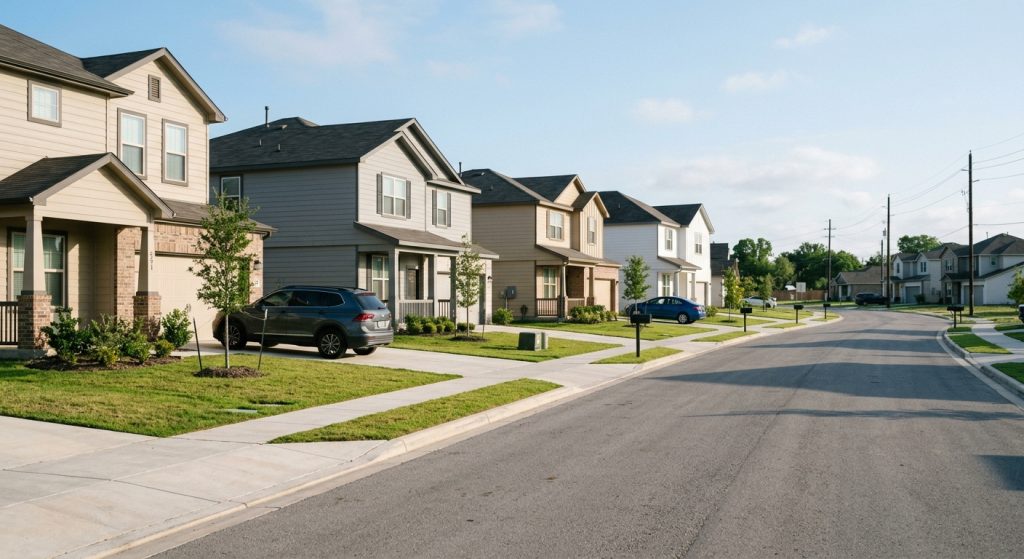
RealtyWire’s analysis is that the segment Boom targets — single-family rental and manufactured housing operators — has been underserved relative to large apartment REITs, which have had sophisticated leasing systems for years. Scattered-site operators manage properties across many addresses with small on-site teams, which makes phone handling and applicant qualification a genuine operational bottleneck rather than a marginal efficiency.
Whiting’s argument that conversational agents become table stakes is worth taking seriously, and it applies well beyond this company. Yardi’s RentCafe just put a conversational AI agent in front of the 40 million renters it says use its site. When the interface commoditizes, the defensible asset is the proprietary data underneath — which is precisely what Boom is claiming.
The $15 million size places this squarely in the middle of proptech’s current funding environment: large enough to signal conviction, far from the nine-figure rounds of the 2021 cycle. Capital has continued flowing to real estate technology this year, including SoftBank’s $200 million investment in construction robotics startup Gravis Robotics, but concentrated in fewer companies.
What to watch
The test is whether screening data actually improves leasing outcomes in a way operators can measure. Boom’s thesis requires that pre-qualification meaningfully reduces wasted tours and failed applications. If it does, the advantage is durable, because competitors would need comparable underwriting history to match it.
Also worth watching is whether large apartment operators become customers. Boom’s traction is in single-family and manufactured housing, where incumbents are weaker. Moving upmarket would put it against established property management platforms that already own the operator relationship — a considerably harder sale than the one it has been making.