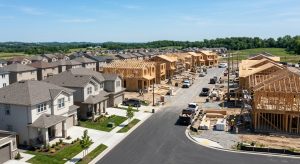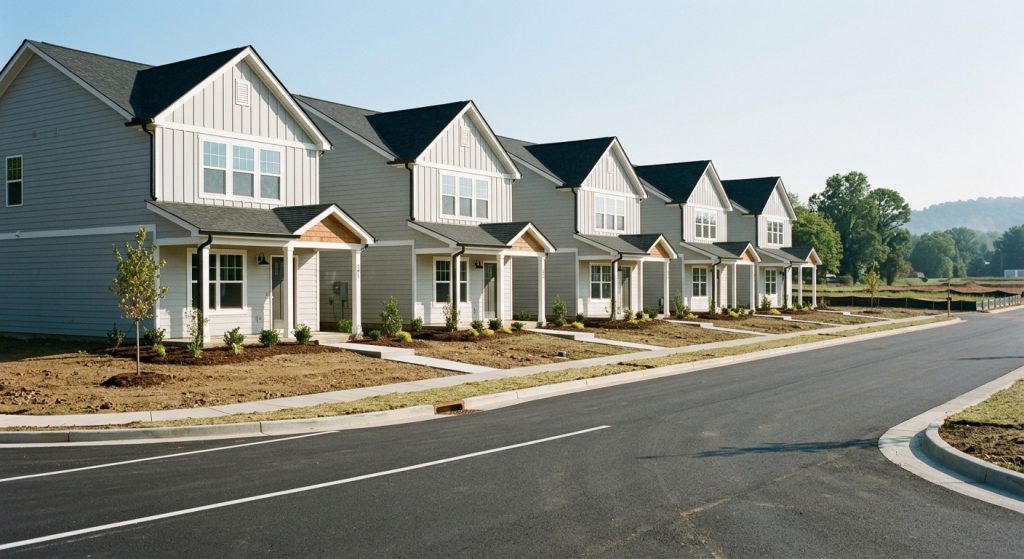
Construction of single-family homes built specifically to be rented fell in the second quarter, extending a slowdown in one of the housing market’s fastest-growing segments, according to an analysis published Friday by the National Association of Home Builders.
Roughly 15,000 single-family built-for-rent units started construction in the second quarter of 2026, down from 18,000 a year earlier, NAHB chief economist Robert Dietz wrote, citing the Census Bureau’s Quarterly Starts and Completions by Purpose and Design survey.
The four-quarter moving average — a smoother measure that filters out the volatility inherent in this relatively small data series — totaled 63,000 starts, a 16% decline from 75,000 in the prior four-quarter period.
Still far above historical norms
Even after the pullback, built-for-rent construction remains a substantially larger share of the single-family market than it was historically. The segment accounts for just under 7% of single-family starts, compared with an average of 2.7% from 1992 through 2012.
Dietz attributed the slowdown to a combination of a higher cost of financing, increased multifamily supply competing for the same renters, and policy concerns surrounding institutional ownership of single-family homes.
He wrote that congressional action removing prohibitions against institutional capital financing for built-for-rent housing suggests “stabilization for BTR housing should be reached in the coming months” — an NAHB forecast, not an established outcome.
The analysis notes that the built-for-rent figures capture only homes started with rental as the stated purpose. Homes built for sale that are subsequently purchased by investors and converted to rentals are counted separately, and NAHB estimates based on industry surveys that those may represent an additional 3% to 5% of single-family starts. Condominiums, by comparison, have averaged roughly 3% market share across recent quarters.
What it means
The built-for-rent sector expanded rapidly as builders sought an outlet for inventory when for-sale demand weakened and as institutional investors pursued scattered-site rental portfolios. A 16% decline in the smoothed average suggests that trade has become harder to finance at current rates, and that the sector is not the reliable release valve for builders it was two years ago.
The policy backdrop cuts both ways. Dietz points to the removal of federal financing prohibitions as a stabilizing factor, but state-level restrictions have moved in the opposite direction — Michigan, for instance, banned large investors from buying single-family homes under limits tighter than the federal standard. Builders weighing built-for-rent projects now face a patchwork in which the financing environment and the ownership rules point different ways depending on the state.
The decline also fits a broader construction slowdown. Single-family housing starts plunged in July even as permits climbed, and single-family permitting has declined through June while multifamily activity held up better — the same competing-supply dynamic Dietz cited as one reason built-for-rent demand has cooled.
Whether the segment stabilizes near 7% of starts or drifts back toward its long-run share will depend largely on financing costs, which remain the constraint Dietz named first.