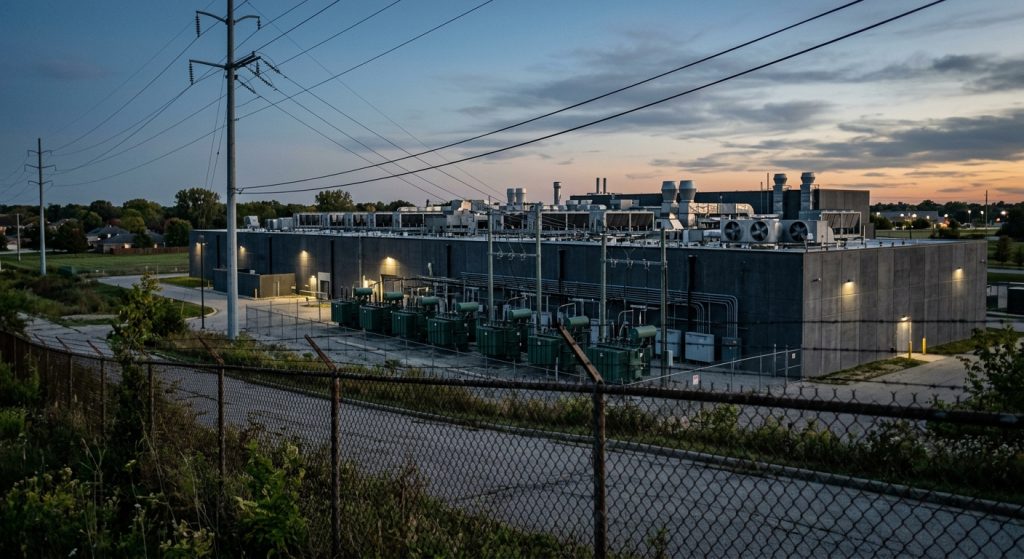
Indianapolis has finalized a moratorium halting new data center development through the end of 2027, closing out a monthslong local fight and adding the state’s largest city to a fast-growing list of communities restricting the industry.
The city’s Metropolitan Development Commission voted 6-0 on Wednesday to approve the pause as part of a zoning ordinance that establishes minimum standards for data center projects, according to WISH-TV. The Indianapolis City-County Council had approved the measure Aug. 10 with a single dissenting vote, and Mayor Joe Hogsett supported it, Inside INdiana Business reported.
The freeze gives city officials time to write permanent rules. Under the ordinance, a committee will develop data center standards addressing building size and height, sound levels and low-frequency noise, and brownfield and environmental concerns. Hogsett’s budget proposal allocates $150,000 for data center research.
“We’re looking at quite extensive regulations. And we’re going to do a nationwide survey,” City-County Councilman Dan Boots said, according to WISH-TV.
Three projects continue
The moratorium does not apply to three developments city officials already approved: a DC Blox facility on the city’s east side, a Metrobloks project in the Martindale-Brightwood neighborhood, and a Sabey Corp. project in southwestern Marion County. The Metropolitan Development Commission is scheduled to consider tax abatements for the Sabey and Metrobloks projects on Sept. 16.
The council vote came after a delay. The proposal was held on Aug. 10 when an amendment was introduced to clarify the definition of a data center and specify which types of facilities the moratorium would and would not cover, WISH-TV reported at the time.
Reaction split along familiar lines. Bryce Gustafson of the Citizens Action Coalition, which opposed unrestricted development, told WISH-TV: “I feel a lot right now. I feel a sense of relief. But we also realize this is essentially half time.”
Councilman Michael-Paul Hart, who opposed the measure, framed it as an economic risk: “Just by saying ‘no’ to everything is not a responsible thing to do.” Indy Chamber President Matt Mindrum said the moratorium “sends a message that Indianapolis is becoming less open to business” and “risks turning away billions in investment,” according to Inside INdiana Business.
What it means
Indianapolis is not an outlier. Nearly one-third of Indiana’s 92 counties have enacted temporary moratoriums or outright bans on data center development, WISH-TV reported. Louisville, Jeffersonville and Valparaiso have adopted similar measures recently.
For developers and the industrial real estate investors financing them, the practical effect is a narrowing of viable sites in a metro that had been marketed as a power-accessible Midwest alternative to saturated markets like Northern Virginia. Site selection in Indiana increasingly requires clearing a local political test before a zoning one — and the moratorium’s 2027 end date means any project not already entitled faces at least a year of waiting.
What the permanent rules ultimately require — particularly on noise, water and electrical load — will determine whether Indianapolis reopens to the sector on workable terms or effectively prices it out. That is the open question the committee’s work will answer, and it is worth watching alongside the broader wave of local and statehouse pushback against data centers now reshaping where AI infrastructure can be built. Congressional attention has followed: Rep. Ro Khanna has introduced a “Data Center Bill of Rights” aimed at strengthening communities’ ability to block such facilities.