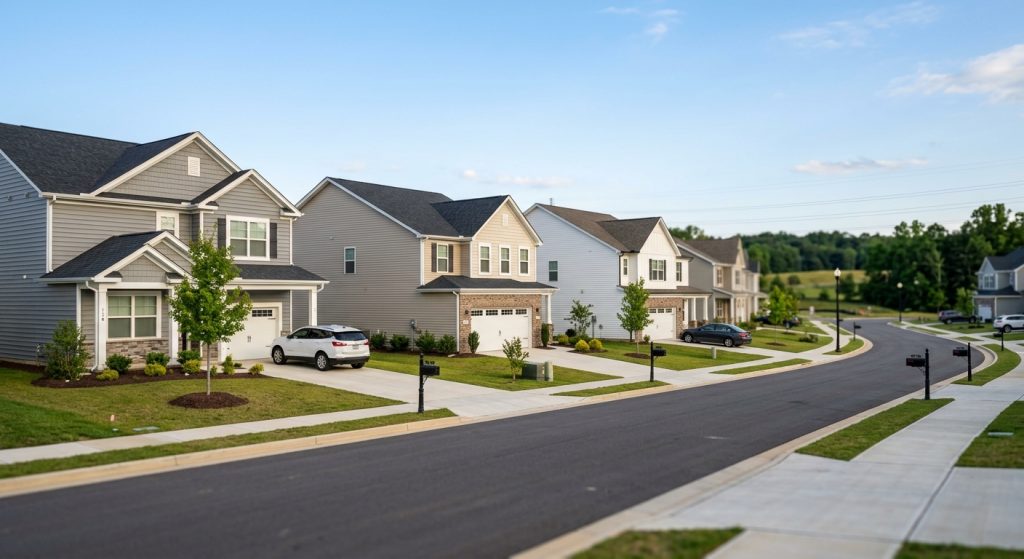
Demand for mortgages to buy newly built homes weakened in July, another sign that elevated borrowing costs are cooling one of the housing market’s more resilient corners. Mortgage applications for new home purchases fell 5.7% from a year earlier and slipped 1% from June, according to the Mortgage Bankers Association’s Builder Application Survey released this week.
Based on the application data, the MBA estimated that new single-family home sales ran at a seasonally adjusted annual rate of 647,000 units in July, down 3% from 667,000 in June. On an unadjusted basis, the trade group estimated 54,000 new homes were sold during the month, down 3.6% from 56,000 in June.
Rates and inventory weigh on demand
The MBA attributed the slowdown to a combination of higher mortgage rates and elevated new home inventory, which has made buyers increasingly sensitive to financing costs. The 30-year fixed rate spent much of July near its highest levels of the year before easing slightly in recent weeks, and builders have leaned heavily on incentives such as rate buydowns to move standing inventory.
The average loan size for a new home eased to $374,438 in July, down from $375,218 in June — a modest decline that reflects a mix of pricing and the types of homes selling. The pullback in new-home demand echoes broader weakness in the purchase market, where overall mortgage applications fell 6.6% in July as rates climbed through the summer.
Loan mix
By product type, conventional loans accounted for 50% of new-home applications in July. Federal Housing Administration loans made up 34.6%, loans backed by the Department of Veterans Affairs represented 13.6%, and Department of Agriculture loans accounted for 1.8%. The relatively high FHA share is characteristic of the new-construction segment, where entry-level and first-time buyers — who lean more heavily on government-backed financing — make up a meaningful part of the market.
The Builder Application Survey tracks mortgage applications submitted through builders’ affiliated lending arms, giving an early read on new-home sales roughly a month before the government’s official new-home sales report from the Census Bureau. Because it is based on applications rather than closings, it can signal shifts in demand before they show up in completed transactions.
Part of a broader cooling
The new-home figures fit a wider pattern of softening housing activity. Purchase-mortgage applications overall have fallen through much of the summer, and both existing- and pending-home sales have retreated as affordability has deteriorated. Builders, who account for a growing share of overall home sales when existing inventory is tight, have not been immune, even as many continue to offer concessions to keep sales moving.
What it means: The drop in new-home applications suggests the incentives builders have been using to prop up demand are reaching their limits at current rate levels. If mortgage rates continue their recent modest decline, application activity could stabilize heading into the fall; if rates hold near their 2026 highs, the new-home segment is likely to keep losing momentum. The Census Bureau’s official new-home sales data for July, due later this month, will provide a check on the MBA’s early estimate.
The MBA’s Builder Application Survey covers roughly a fifth of all new single-family home sales and is used, together with government data, to gauge the health of the new-construction market.