Federal Reserve officials left interest rates unchanged at their July meeting, but newly released minutes show a policy committee increasingly divided over whether to hold the line or push borrowing costs higher — a debate with direct consequences for a housing market where, in the Fed’s own words, “home-purchase mortgage activity remained depressed.”
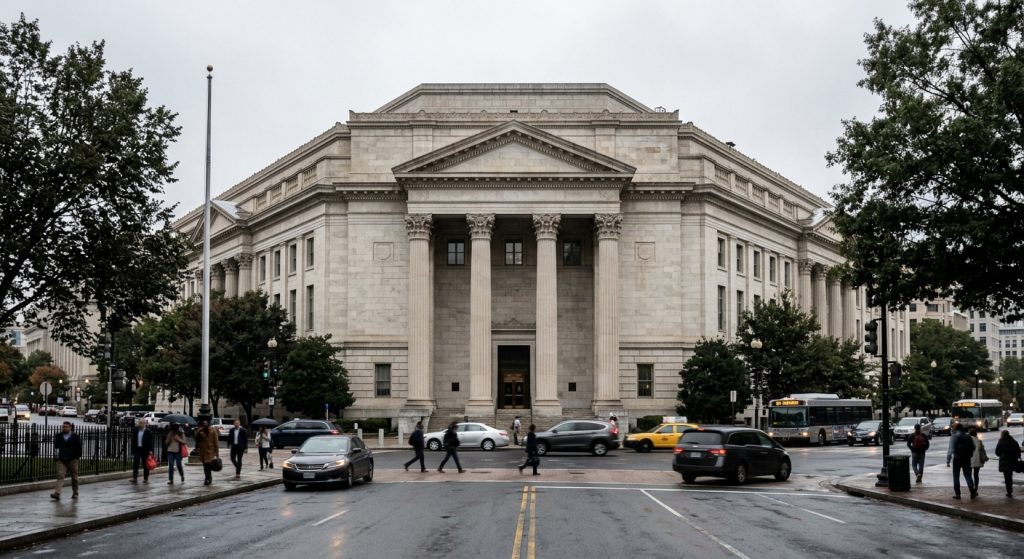
The minutes of the July 28–29 meeting of the Federal Open Market Committee, published by the Federal Reserve, document the reasoning behind the committee’s decision to keep its benchmark federal funds rate in a target range of 3.5% to 3.75%. That decision came on a 9–3 vote, with three officials dissenting in favor of an immediate quarter-point increase.
A committee split three ways on inflation
The three dissenters — Cleveland Fed President Beth Hammack, Minneapolis Fed President Neel Kashkari and Dallas Fed President Lorie Logan — each preferred to raise the target range by 25 basis points at the July meeting, according to the record. Their case rested on stubborn price pressures: the minutes note that “inflation remained elevated relative to the Committee’s 2 percent goal, in part reflecting supply shocks” in sectors including energy.
By the committee’s own estimate, core inflation as measured by the personal consumption expenditures price index ran at 3.3% in June, down only slightly from 3.4% in May and still well above the 2% target. The dissent, and the detailed discussion behind it, echoed the message in the rare 9–3 vote that accompanied the July decision.
The majority held rates steady while signaling continued vigilance. The committee reiterated its commitment to price stability and pointed to a labor market that “appeared stable,” with the unemployment rate holding at 4.2% and, in the committee’s words, “job gains have kept pace with the workforce.”
What the minutes say about housing
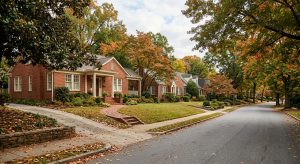
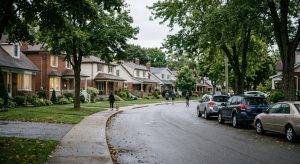
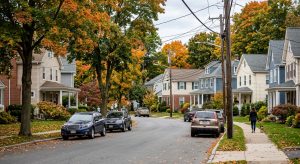
Housing occupied a smaller share of the discussion, but the references that appear are pointed. The minutes state that “for households, home-purchase mortgage activity remained depressed” — a nod to the affordability squeeze that has kept transaction volumes near multi-year lows as borrowing costs stay elevated.
On the inflation side, officials noted that core services price inflation “had edged up over the past year,” even as it was partly offset by “a deceleration in prices for housing services.” Shelter costs, which include rent and owners’ equivalent rent, carry heavy weight in the inflation measures the Fed watches, and their gradual cooling has been one of the few disinflationary forces working in the committee’s favor.
The tension is straightforward for prospective buyers and the agents who serve them: with the policy rate on hold and inflation still above target, there is little in the minutes to suggest near-term relief on the financing costs that shape demand. Mortgage rates recently touched 6.81%, their highest level in a year, as loan applications fell.
What it means
The verified facts are these: the Fed held its target range at 3.5%–3.75%, three officials wanted a hike, inflation remains above 2%, and the labor market is holding steady. The committee did not commit to a direction for its next meeting.
As a matter of RealtyWire analysis, the minutes tilt the risk balance toward “higher for longer” rather than imminent cuts. A committee in which three members are pushing to raise rates is not a committee preparing to lower them, and the explicit acknowledgment that home-purchase activity is depressed did not move the majority toward easing. For a housing market already contending with record prices and thin inventory, that points to continued pressure on affordability rather than a reprieve.
What to watch: the next FOMC decision and updated economic projections, the trajectory of core PCE inflation, and whether the gradual cooling in housing services inflation is enough to keep the majority patient. Any acceleration in shelter costs would strengthen the dissenters’ hand.