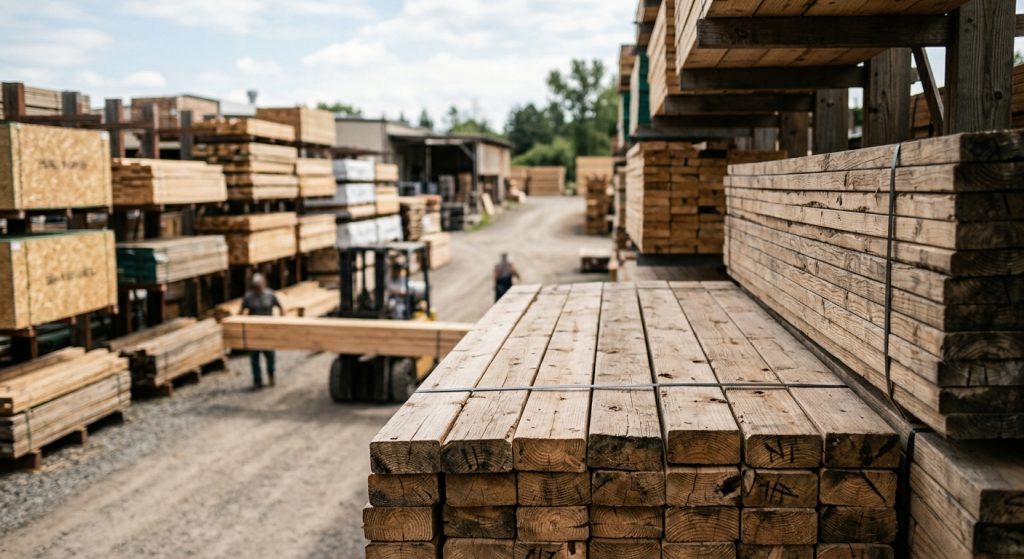
The U.S. Lumber Coalition on Monday praised the Trump administration’s enforcement of Section 232 tariffs on Canadian softwood lumber imports, framing the trade policy as essential to protecting American forestry jobs and building U.S. self-sufficiency in the lumber that supplies homebuilders, according to a statement released on PR Newswire.
“Canadian unfair trade practices for decades have been and continue to attack American workers and their forestry dependent communities,” said Zoltan van Heyningen, executive director of the U.S. Lumber Coalition, an alliance of softwood lumber producers, employees and woodland owners. He said Section 232 tariffs on softwood lumber imports “are an integral part of the success in growing the U.S. industry that has safeguarded and grown hundreds of thousands of U.S. jobs,” and credited the policy with supporting the 1.3 million jobs the coalition says the domestic lumber sector sustains.
An industry group’s case for tariffs, not an independent verdict
The coalition’s statement is an advocacy release from a group representing domestic lumber producers, not an independent analysis of the tariffs’ net effect on housing costs. Van Heyningen argued Canada has used “unfettered access to the U.S. market” to dump “unsustainable excess lumber capacity” at U.S. producers’ expense, and called on the Trump administration to keep the tariffs in place to let domestic producers “invest and grow to its natural size.”
The coalition’s framing sidesteps a question that has drawn scrutiny elsewhere in the housing industry: whether tariffs on softwood lumber raise costs for homebuilders and, ultimately, buyers. Lumber is one of the largest material line items in a new home’s construction budget, and price swings in softwood lumber feed directly into the cost of framing a house.
The U.S.-Canada softwood lumber dispute predates the current tariffs by decades, with U.S. producers repeatedly arguing that Canadian government forest-management practices amount to an indirect subsidy that lets Canadian mills undercut U.S. prices. Section 232 tariffs, a trade tool that allows the president to impose import restrictions on national-security grounds, have been applied to softwood lumber alongside steel, aluminum and other materials during the current administration.
Lumber costs already climbing this year
The tariff debate lands against a backdrop of rising material costs. Softwood lumber prices jumped 7.4% in July alone, according to a separate analysis of federal producer price data, part of a broader run-up in building material costs that homebuilders have flagged as a headwind to profitability and affordability this year.
What it means
The Section 232 tariffs on Canadian softwood lumber and the coalition’s job-count figures are verified as the coalition’s own claims, not independently audited data, and its characterization of Canadian trade practices as “unfair” is the coalition’s advocacy position rather than an adjudicated finding. Whether the tariffs help or hurt U.S. housing affordability overall is genuinely contested: domestic producers argue the policy builds long-term self-sufficiency in lumber supply, while homebuilders have separately pointed to elevated material costs, including lumber, as a factor squeezing their margins on new construction. Both claims can be true at once — a policy that helps domestic lumber producers can still raise near-term input costs for builders — and neither side’s framing settles the underlying question of net cost to homebuyers.