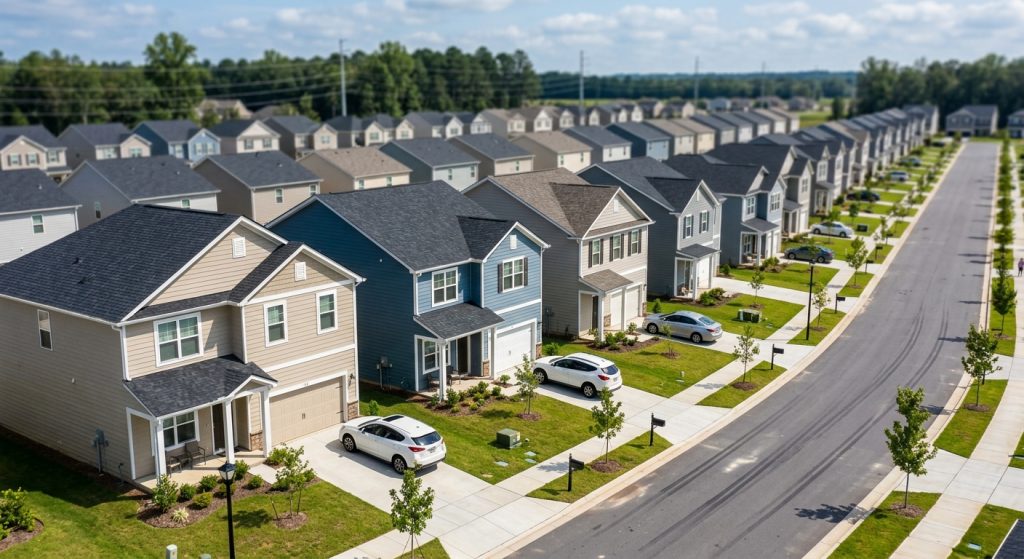
A small-scale homebuilder’s viral breakdown of his own construction costs is putting numbers behind a problem economists have flagged for years: it rarely pencils out for builders to make money on entry-level homes, even as the country is short an estimated 300,000 starter homes compared with before the pandemic.
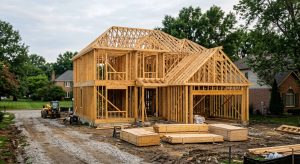
LaMonte Grulke, a general contractor in Little Rock, Arkansas, who builds three to six homes a year, went viral on X after breaking down why building a roughly 1,000-square-foot starter home barely turns a profit. “As a Home Builder who can and does build starter homes, I promise you, it’s incredibly difficult for me to make money from a 1k sqf home,” he wrote. “I have a starter home coming up that I hope sells for 235k~ anything less and I basically worked for free.”
In an interview with Realtor.com, Grulke expanded on the math, and the numbers illustrate a structural problem for the entry-level segment of the housing market nationally, not just in Arkansas. Between 2019 and 2026, the national median price for a starter home rose from $256,000 to $344,000, according to Realtor.com research, even as builders say their margins on those homes have stayed thin or shrunk.
Why smaller homes don’t mean smaller costs
The core issue, Grulke told Realtor.com, is that many of the trades and materials that go into a house are priced with flat fees or minimums that don’t scale down with square footage. “A good example is my electrician,” he said. “His minimum to show up and wire any home is $6,500, right? He doesn’t care if it’s a 1,000-square-foot home or a 1,600-square-foot home. But the price difference between those two homes can be quite a bit.”
Plumbers price similarly, he said: by how deep and far a job is, not the size of the house. And even where smaller homes do save money — less framing lumber, less labor — subcontractors often impose minimum charges. “Just because you have a 500-square-foot home and you’re paying $4 a square foot for framing, it doesn’t mean that they’re going to want to come out and build it for that price,” Grulke said, adding that crews often set a flat minimum, “where it’s like, ‘Hey, for us to show up, we want at least $4,000.'” Fixed-cost materials add up too — even a basic prefabricated shower system runs $600 to $700 “no matter what size the home is,” he said.
Those fixed costs hit independent builders like Grulke especially hard, since they lack the bulk-purchasing leverage of national production builders.
What the data shows
A 2024 survey by the National Association of Home Builders found the industry’s average builder profit margin was about 11% of a home’s sale price — up from 10.1% in 2022, driven mainly by rising land and construction costs eating into other cost categories. Grulke says his own results on starter-home projects have run well below that industry average. “I can think of one example of a home I built, spent eight months on it, and I walked away with $6,000,” he said. “I want to say it happened to me at least twice that I can remember in the last five years.”
What it means
The facts here are straightforward: fixed subcontractor minimums and flat-cost materials compress margins disproportionately on smaller homes, and national starter-home prices have risen faster than the pace at which those cost pressures have eased. The interpretation builders and housing economists have drawn from patterns like this is that it helps explain why production builders have increasingly shifted toward larger, higher-margin homes and away from true entry-level product — a dynamic that has contributed to the shortage of affordable, entry-level inventory nationally. Grulke argues the shortfall isn’t purely a builder-economics story, though; he also points to buyer expectations and local resistance to new development. “We don’t have a starter home problem as much as we have an expectations problem,” he wrote on X. “People want affordable homes — but fight when they’re built nearby. Buyers want starter-home pricing, but not starter-home size, finishes, density, or location. Everybody wants the Lexus. Everybody wants to pay Hyundai money.”
Land costs compound the squeeze further: builders nationally have also reported competing for buildable lots against data center developers offering above-market prices, another pressure point pushing entry-level construction further out of reach in some markets.
What to watch
Watch whether more independent and regional builders speak publicly about starter-home economics, and whether that pressure shows up in NAHB’s next construction-cost survey or in shifts in the mix of new-home square footage nationally. Also watch local zoning and permitting debates, since Grulke’s “expectations” argument — that density and location trade-offs are as much a barrier as construction cost — points to policy levers beyond builder profit margins alone.