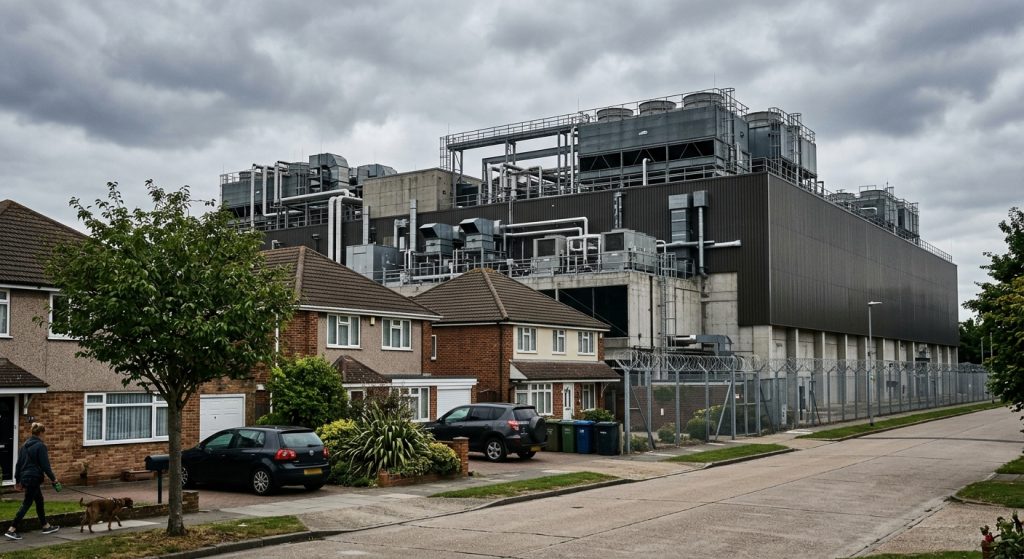
Rep. Ro Khanna, D-Calif., plans to introduce a “data center bill of rights” resolution in Congress that would give local communities explicit power to reject data center construction, according to CNBC, which was first shown the measure. The proposal lands as homeowners, renters and local officials nationwide push back against the AI data center boom over fears of higher electricity bills and strained water supplies.
“We need a data center bill of rights where communities don’t have these data centers shoved down their throat, where they can stand up and say no and where they can make sure these aren’t going in farmland or residential communities,” Khanna told CNBC.
The resolution, as described to CNBC, would establish several specific protections for local governments and residents:
- The right for communities to bar new data centers from being built within 2,500 feet of homes, schools, childcare facilities, hospitals or nursing homes.
- A guaranteed, transparent community review process that allows local officials to reject a proposed data center outright.
- Preservation of states’ authority to impose statewide pauses on new data center construction until protections are in place to stop rising electricity bills for ratepayers and to prevent depletion of local water supplies.
Khanna represents California’s 17th District, covering much of Silicon Valley, and has long positioned himself as a critic of unchecked tech-industry growth even as he represents the region’s dominant industry. The data center measure follows years of his advocacy for consumer-protection legislation aimed at technology companies, including past calls for an “internet bill of rights.”
A national backlash reaches Congress
The resolution formalizes, at the federal level, a fight that has been playing out block by block and statehouse by statehouse for months. RealtyWire has tracked a wave of local moratoriums, zoning fights and ballot-box rebellions against data centers as hyperscale AI campuses compete with homebuilders for land, water and electricity capacity. That backlash has spread to communities and statehouses across the country, with towns from Ohio to Georgia to the Pacific Northwest weighing bans or restrictions on new projects.
The land-use pressure has a direct housing angle: homebuilders say data center developers are outbidding them for land at prices residential developers call “impossible,” particularly in fast-growing exurban markets near major metro areas where AI campuses and new subdivisions are competing for the same parcels.
Some state leaders have taken the opposite approach, prioritizing data center growth over other land uses. In Texas, Gov. Greg Abbott has threatened to strip funding from cities that block housing construction, even as some Texas communities separately push back on data center siting — underscoring how the fight over large-footprint development, whether for AI infrastructure or homes, has become a defining local land-use battle of 2026.
Data center developers, meanwhile, continue to announce massive projects. OpenAI has unveiled a $20 billion data center development plan, and a separate 1.25-gigawatt data center campus was filed for construction in Lovejoy, Georgia — the scale of projects now moving through local approval processes nationwide.
What it means
Khanna’s resolution is a statement of principle rather than binding law — resolutions do not carry the force of legislation and would need to advance through committee and a floor vote to have any legal effect, a process that is far from certain in the current Congress. But its introduction is itself a signal: a sitting member of Congress from the heart of Silicon Valley is now formally aligning with the community-level backlash against AI infrastructure, rather than the industry that anchors his district’s economy.
For real estate professionals, the practical significance is what the resolution reflects rather than what it immediately changes. Land-use fights over data centers are increasingly shaping local zoning agendas, election cycles and, developers say, land prices in the same submarkets where housing construction is competing for buildable land. Whether or not Khanna’s measure advances, real estate investors and homebuilders operating near proposed data center sites should expect continued volatility in local approval processes as more states and cities weigh their own versions of the restrictions Khanna is proposing at the federal level.
This is RealtyWire analysis, not a description of confirmed data center policy outcomes; the resolution’s prospects in Congress remain uncertain and no further procedural details had been made public at the time of publication.