
Current real estate market data, news and analysis for the Rockford, IL metropolitan area — 337,242 residents across Boone and Winnebago counties.
Data as of May 2026. Sources: Redfin Data Center, U.S. Census Bureau.
Latest Rockford Real Estate News
Coverage of this market is coming soon. Browse all housing market news.
Rockford Real Estate Market Overview
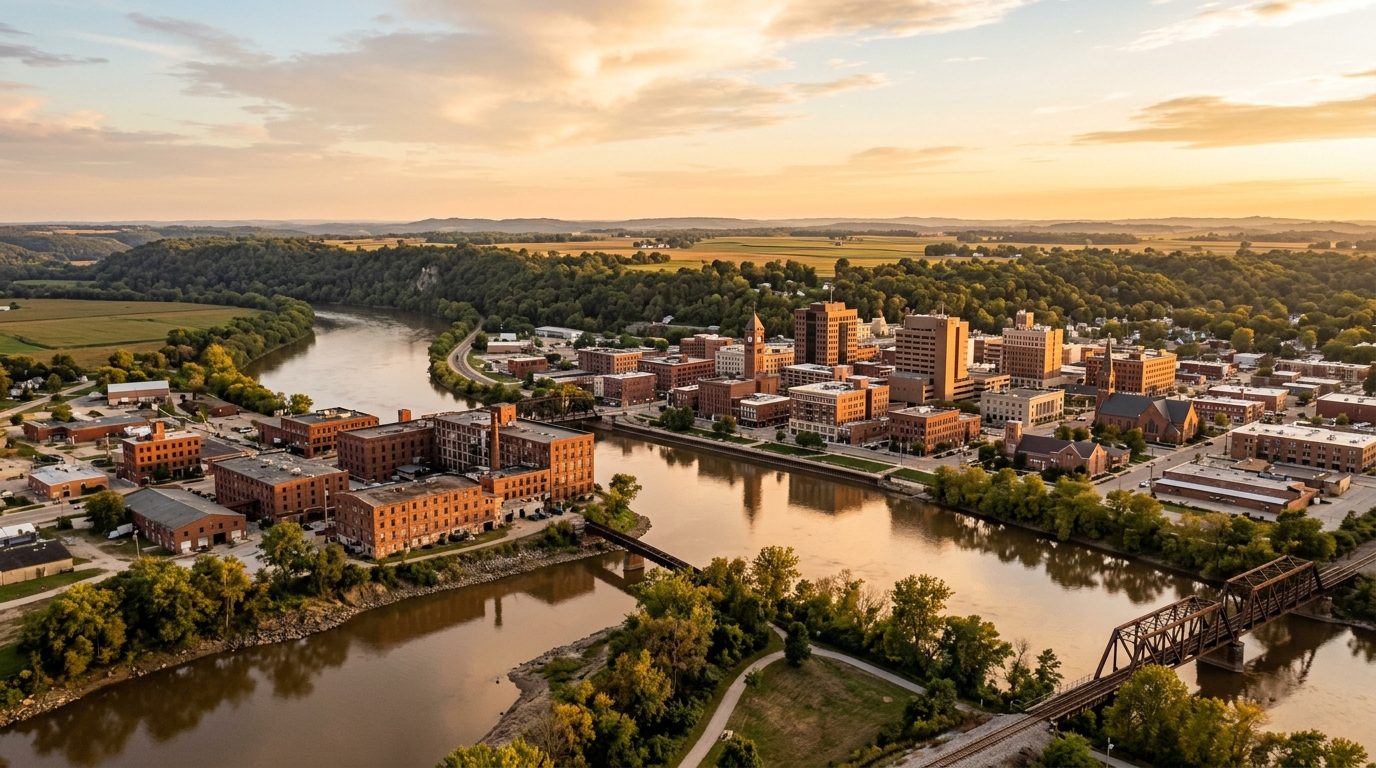
Rockford anchors a metro built around the Rock River, which cuts through the city center and shaped how the region grew outward from its banks in far northern Illinois. Winnebago County holds most of the metro, Boone County extends east toward Belvidere, and interstate corridors converge just outside downtown to tie them together. Loves Park and Machesney Park sit along the river north of the city, Cherry Valley and Belvidere lie east, and Rockton, Roscoe, and South Beloit trail the river toward the Wisconsin line. Housing stock reflects that layered history: the urban core carries early twentieth-century bungalows, foursquares, and Victorian-era homes from the city’s furniture and machine-tool era, many concentrated in historic districts with brick commercial strips and mature street trees. Surrounding that core, postwar ranch and split-level subdivisions fill the inner suburbs, while the metro’s outer edges carry newer, larger-lot construction.
Within Rockford, the east side generally commands higher values, aided by larger lots, newer building stock, proximity to parks such as Rock Cut State Park, and better-regarded school attendance areas; established neighborhoods with tree-lined streets and larger historic homes draw a premium tied to architectural character. The west side and older central neighborhoods, closer to the river and the historic manufacturing corridors, sit at the lower end of the price range, a legacy of smaller lots and disinvestment following the decline of furniture and tool manufacturing. Suburban communities along the Wisconsin line, particularly Rockton and Roscoe, function as higher-demand bedroom communities on the strength of newer housing stock and distance from the industrial core, while Belvidere’s fortunes track its assembly plant, tying pricing there to manufacturing cycles more directly than elsewhere in the metro.
The regional economy has historically centered on manufacturing, and that legacy persists even as industries have shifted. Rockford is a hub for aerospace component manufacturing, home to suppliers tied to Boeing, Collins Aerospace, GE Aviation, and Woodward, alongside smaller precision shops descended from the city’s fastener and machine-tool trades. Belvidere hosts a longstanding Stellantis, formerly Chrysler, assembly plant that has been one of the region’s largest employers for decades. Chicago Rockford International Airport is a major air-cargo hub, home to one of UPS’s largest North American sorting operations and an Amazon Air presence. Healthcare is another major employer, anchored by UW Health SwedishAmerican Hospital, OSF Saint Anthony Medical Center, and Mercyhealth, while Rockford Public Schools, Rockford University, and Rock Valley College round out the region’s employers.
Illinois carries a heavy property tax burden statewide, and Winnebago and Boone counties sit toward the higher end, reflecting overlapping school, park, and fire district levies stacked on municipal and county taxes; buyers should check the tax history for any address rather than assume a metro-wide norm. The region has a continental climate with cold winters and real risk of severe thunderstorms, including tornadoes, so buyers should review a property’s storm history and insurance terms for wind and hail; low-lying parcels near the Rock River and its creeks warrant a flood-map check. Public transit is limited to bus service, most residents rely on cars, and some outlying properties rely on private wells and septic systems. Because manufacturing and vehicle assembly remain central to employment, the local job base can move with national manufacturing cycles.
Cities and Towns in the Rockford Metro Area
Notable Communities and Neighborhoods
Rockford Real Estate Market FAQ
How is the Rockford metro area organized geographically?
The metro is built around the Rock River, which splits Rockford into east and west halves and runs north toward the Wisconsin state line. Winnebago County contains Rockford itself along with the river towns of Loves Park, Machesney Park, Rockton, Roscoe, and South Beloit, while Boone County extends east and holds Belvidere and Cherry Valley. Interstate corridors that converge near downtown Rockford connect the core city to these surrounding communities, and most residential growth has followed those highways outward from the river.
Which areas of the Rockford metro tend to be pricier, and why?
Rockford’s east side generally carries higher values because of larger lots, newer housing stock, and proximity to parkland and better-regarded school attendance areas, with established neighborhoods of larger historic homes adding a premium for architectural character. Suburban communities along the Wisconsin line, particularly Rockton and Roscoe, also trend toward the higher end because of newer construction and distance from the older industrial core. The west side and central neighborhoods closer to the river and historic manufacturing corridors tend to be more affordable, reflecting older, smaller housing stock.
What should buyers verify locally before purchasing in the Rockford area?
Because taxing districts overlap and vary block by block, buyers should confirm the specific property tax history and rate for an address rather than assume a single metro-wide figure. It is also worth checking flood-zone status for any property near the Rock River or its tributary creeks, confirming whether water and sewer service is municipal or relies on a private well and septic system, verifying the age of major systems in older housing stock, and reviewing school attendance boundaries, since they can shift block to block within the same neighborhood.
What is the biggest region-specific risk for buyers to understand?
The local economy still leans heavily on manufacturing, aerospace supply chains, and vehicle assembly, which means employment and, by extension, local housing demand can move with national manufacturing and auto-industry cycles rather than tracking the broader economy evenly. Belvidere’s history illustrates this directly, since the fortunes of that community have long been tied to the operating status of its assembly plant. Illinois’s comparatively heavy property tax burden compounds this risk for owners, since carrying costs remain fixed even when local employment conditions soften.
Nearby Markets