
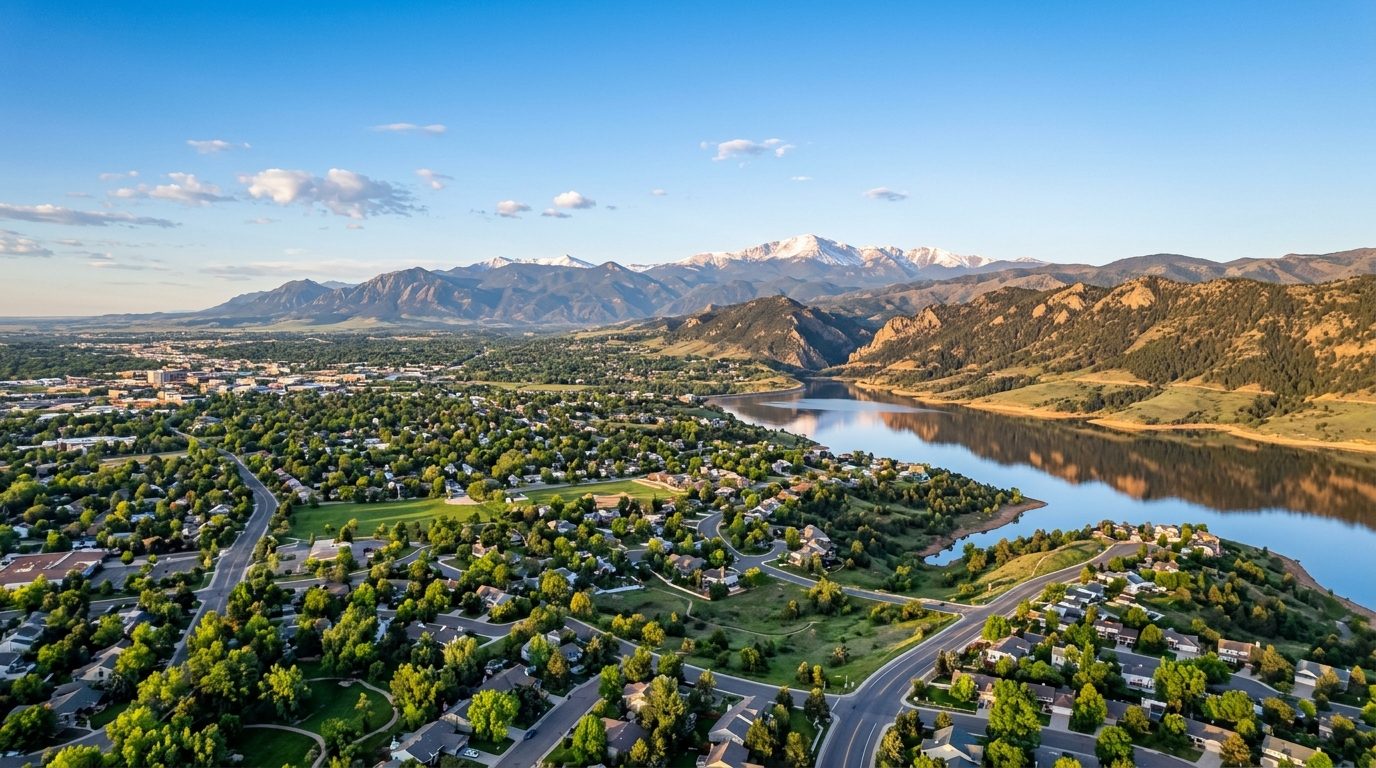
Current real estate market data, news and analysis for the Fort Collins-Loveland, CO metropolitan area — 377,292 residents across Larimer county.
Data as of May 2026. Sources: Redfin Data Center, U.S. Census Bureau.
Latest Fort Collins Real Estate News
Fort Collins Real Estate Market Overview
The Fort Collins-Loveland metro sits at the northern end of Colorado’s Front Range, where the high plains meet the foothills of the Rocky Mountains in Larimer County. Fort Collins, the county seat and home to Colorado State University, anchors the metro along the Cache la Poudre River, while Loveland lies a short distance south along the Big Thompson River. Smaller towns ring these centers: Timnath near I-25, Wellington to the north, Berthoud toward the Boulder County line, and Estes Park in the mountains at the eastern entrance to Rocky Mountain National Park. Housing stock ranges from early-1900s brick homes and bungalows in the historic cores of Fort Collins and Loveland, to mid-century ranch homes, to master-planned subdivisions on the plains east of both cities, to mountain cabins around Estes Park. New construction remains active on the metro’s eastern and northern edges, where former agricultural land has given way to planned residential villages. Density is low relative to Denver, dominated by single-family homes, though downtown Fort Collins includes denser infill housing.
Higher-priced tiers concentrate in and around Old Town Fort Collins, the foothill-adjacent west side of the city near Horsetooth Reservoir, newer lake-oriented communities in south Fort Collins and Timnath, and mountain properties around Estes Park with limited buildable land. These areas combine scarce lots, mountain or water views, walkable historic character, or well-regarded schools. Lower-priced tiers are generally found farther from the foothills and the university, in Wellington, parts of Loveland away from Centerra and the river corridor, and older neighborhoods predating recent development. Berthoud and Timnath fall in between, building out from small historic town cores. Proximity to the university, the foothills, water features, and Denver-bound commuter routes mark pricier submarkets, while distance from those anchors marks the more affordable ones.
The economy is anchored by Colorado State University, a top employer along with the Poudre School District, Larimer County government, and UCHealth’s Poudre Valley Hospital. Fort Collins has a substantial technology and manufacturing base, with Hewlett Packard Enterprise, Intel, Woodward Inc., Advanced Energy, and Otterbox operating there, alongside a craft brewing cluster led by New Belgium Brewing and Anheuser-Busch. Loveland’s employers include Banner Health, McKee Medical Center, the Thompson School District, and manufacturers such as Hach Company and Agilent Technologies, plus commercial growth around Centerra. Estes Park’s economy runs largely on tourism tied to the national park. Timnath, Wellington, and Berthoud are mainly residential communities for workers commuting into Fort Collins and Loveland.
Several local factors are worth verifying before buying. Wildfire exposure is real in the foothill canyons west of Fort Collins and Loveland and around Estes Park, areas that have experienced major fires including the Cameron Peak and High Park fires; buyers there should check defensible-space rules, insurance availability, and post-fire flood risk in burn-scar drainages. Water supply in this semi-arid region depends heavily on the Colorado-Big Thompson Project, operated by Northern Water, moving water across the Continental Divide to municipal and agricultural users; buyers should confirm a property’s water source, tap fees, and any ditch-share rights. Fort Collins limits its own outward expansion through a formally adopted Growth Management Area, shaping where new development occurs. Property taxes and fees vary by jurisdiction, so buyers should check with the Larimer County Assessor and the relevant city or town for current rates and HOA obligations.
Cities and Towns in the Fort Collins Metro Area
Notable Communities and Neighborhoods
Fort Collins Real Estate Market FAQ
How is the Fort Collins-Loveland metro area organized geographically?
The metro is built around two main cities in Larimer County: Fort Collins, along the Cache la Poudre River and home to Colorado State University, and Loveland, along the Big Thompson River a short distance to the south. Smaller communities surround them, including Timnath and Wellington on the plains near the I-25 corridor, Berthoud between Loveland and the Boulder County line, and Estes Park, a mountain town at the eastern entrance to Rocky Mountain National Park. The plains-based cities and towns form the metro’s commercial and employment core, while Estes Park sits apart, connected by canyon roads through the foothills.
Which parts of the metro tend to be pricier, and why?
Old Town Fort Collins, the foothill-adjacent west side of the city near Horsetooth Reservoir, newer lake-oriented master-planned communities in south Fort Collins and Timnath, and mountain properties around Estes Park tend to command higher prices. These areas benefit from limited remaining buildable land, proximity to Colorado State University, mountain or water views, or gateway access to Rocky Mountain National Park. Areas farther from the foothills and universities, including parts of Wellington and outlying Loveland, generally sit in more affordable tiers.
What should buyers verify locally before purchasing in this metro?
Buyers should confirm which water provider and tap fees apply to a specific property, since much of the region’s supply depends on the Colorado-Big Thompson Project managed by Northern Water rather than a single unified utility. They should also check whether a property falls within Fort Collins’ Growth Management Area or another jurisdiction’s land-use boundary, review current property tax rates and any special metro-district assessments with the Larimer County Assessor, and, for foothill or mountain properties, confirm wildfire mitigation requirements and insurance availability.
Is wildfire risk a concern in this metro, and where?
Wildfire risk is concentrated in the foothill canyons west of Fort Collins and Loveland and in the mountain terrain around Estes Park, areas within or near land burned by the Cameron Peak Fire and the High Park Fire in past years. Buyers considering homes in these zones should look into defensible-space requirements, local fire district resources, and the potential for post-fire flooding in canyon drainages. The plains-based portions of the metro, including most of Fort Collins, Loveland, Timnath, and Wellington, carry substantially lower direct wildfire exposure.
Nearby Markets