
Current real estate market data, news and analysis for the Spartanburg, SC metropolitan area — 407,656 residents across Spartanburg and Union counties.
Data as of May 2026. Sources: Redfin Data Center, U.S. Census Bureau.
Latest Spartanburg Real Estate News
Spartanburg Real Estate Market Overview
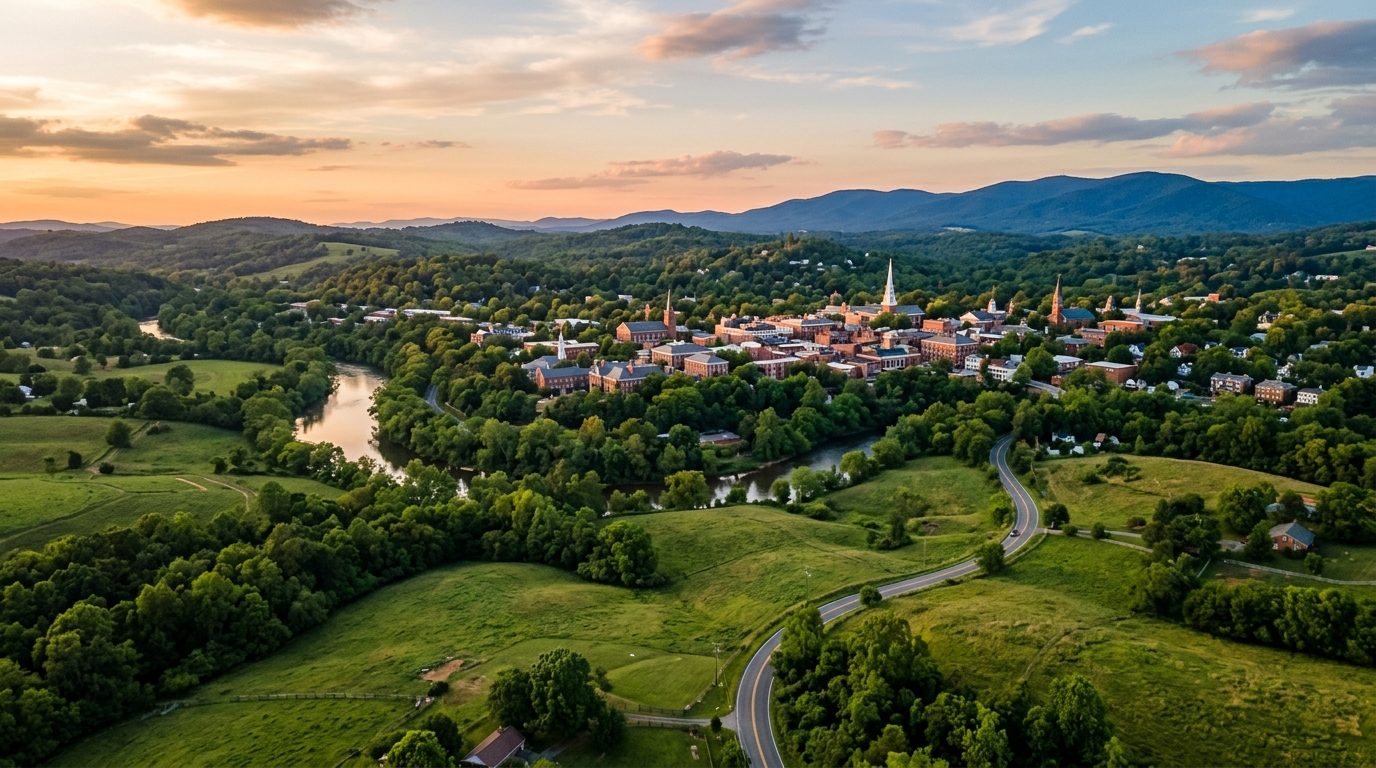
Spartanburg and Union counties sit in the upstate of South Carolina, in the Piedmont foothills below the Blue Ridge escarpment. The land rolls rather than flattens, cut by the Pacolet River, Lawson’s Fork Creek, and the Tyger River, waterways that once powered a dense network of textile mills and still shape where towns like Pacolet, Lockhart, and Central Pacolet grew up along their banks. Housing stock reflects that mill-town history: brick and frame mill-village cottages and bungalows cluster near old textile sites in and around Spartanburg, Union, and Woodruff, while early-twentieth-century streetcar neighborhoods closer to downtown Spartanburg feature Craftsman, Queen Anne, and Colonial Revival architecture on tree-lined lots. Farther from the urban core, ranch homes from the postwar decades give way to newer subdivisions, and the fastest-changing housing stock is new construction rising along the interstate corridor toward Greenville, where manufacturing and logistics growth has pulled rooftops outward.
Price tiers track distance from downtown Spartanburg and proximity to the interstate corridor more than any single dividing line. In-town historic neighborhoods with walkable streets, mature trees, and preserved architecture sit toward the higher end because that combination of character and convenience is limited in supply. Newer subdivisions built for commuters to the automotive and supplier plants along the corridor toward Greenville occupy a middle tier, priced for family size and school access rather than architectural pedigree. Smaller mill villages, rural crossroads communities, and most of Union County sit toward the more affordable end, reflecting longer commutes, a thinner base of nearby retail and services, and a slower pace of new investment compared with the corridor towns.
The regional economy has shifted from its textile-mill origins toward automotive manufacturing, materials science, and logistics. BMW operates a large manufacturing campus in Spartanburg County, and a cluster of automotive suppliers and materials firms, including Dräxlmaier, Magna, Röchling, and Toray, has grown up around it. Milliken and Michelin maintain a long-standing presence tied to the area’s textile and materials heritage, adidas runs distribution operations in the county, and warehousing and distribution space has expanded steadily along the interstate corridor that links the upstate to Charlotte and Atlanta. Healthcare is another major employment base, anchored by Spartanburg Regional Healthcare System, with higher education represented by Wofford College, Converse University, and the University of South Carolina Upstate.
Summers are long, hot, and humid, while winters are generally mild with little snow, a climate typical of the upstate. South Carolina’s property tax structure treats owner-occupied primary residences differently from second homes, rentals, and commercial property, so buyers should confirm how a given parcel will be classified and assessed before closing. Public transit is limited and most of the metro is car-dependent, so commute patterns to plants and distribution centers along the corridor matter for day-to-day life. Growth driven by manufacturing and supplier expansion has concentrated new residential and industrial development along that same corridor, which means buyers should check with the relevant city or county planning office on zoning, annexation status, and nearby industrial or warehouse projects. Because water and sewer service, school district lines, and flood zones near the rivers and creeks can vary block by block outside the city limits, buyers should verify these directly with Spartanburg County, Union County, or the appropriate municipality rather than assuming uniform coverage across the metro.
Cities and Towns in the Spartanburg Metro Area
Notable Communities and Neighborhoods
Spartanburg Real Estate Market FAQ
How is the Spartanburg metro area organized for housing purposes?
The metro spans Spartanburg and Union counties and includes the city of Spartanburg along with a ring of smaller towns and mill-village communities such as Duncan, Inman, Lyman, Wellford, Woodruff, Chesnee, Cowpens, Reidville, Landrum, Campobello, and, in Union County, the city of Union along with Jonesville, Carlisle, and Lockhart. Housing choices generally fall along a gradient from walkable, historic in-town neighborhoods near downtown Spartanburg to newer suburban subdivisions along the interstate corridor to smaller, more rural towns farther from the urban core.
Which parts of the Spartanburg area tend to be pricier, and why?
Historic, tree-lined neighborhoods close to downtown Spartanburg command a premium because their combination of walkability, preserved architecture, and proximity to downtown employment and amenities is limited in supply. Newer subdivisions near the automotive and supplier plants along the interstate corridor toward Greenville also draw strong demand tied to job access and school assignment. Smaller mill villages, rural crossroads towns, and much of Union County tend to be more affordable, reflecting longer commutes and a thinner base of nearby services.
What should buyers verify locally before purchasing in the Spartanburg metro?
Buyers should confirm water and sewer provider and capacity, since some outlying areas rely on well and septic systems while others are served by municipal or special-purpose district utilities. It is also worth checking flood zone status near the Pacolet and Tyger rivers and Lawson’s Fork Creek, school district assignment, HOA rules in newer subdivisions, and whether a property sits inside city limits or unincorporated county territory, which affects taxes and services. Property tax classification as owner-occupied versus non-owner-occupied should also be confirmed with the county assessor.
How has manufacturing growth shaped development patterns in the area?
Expansion of automotive manufacturing and its supplier network, along with warehousing and distribution activity along the interstate corridor linking the upstate to Charlotte and Atlanta, has pulled new residential subdivisions and industrial parks outward from Spartanburg toward towns like Duncan, Lyman, Wellford, and Inman. Buyers considering these corridor towns should check local land-use and zoning plans for planned industrial or logistics development nearby, since the mix of residential and industrial uses is still evolving in some areas.
Nearby Markets