
Current real estate market data, news and analysis for the Visalia, CA metropolitan area — 485,146 residents across Tulare county.
Data as of May 2026. Sources: Redfin Data Center, U.S. Census Bureau.
Latest Visalia Real Estate News
Coverage of this market is coming soon. Browse all housing market news.
Visalia Real Estate Market Overview
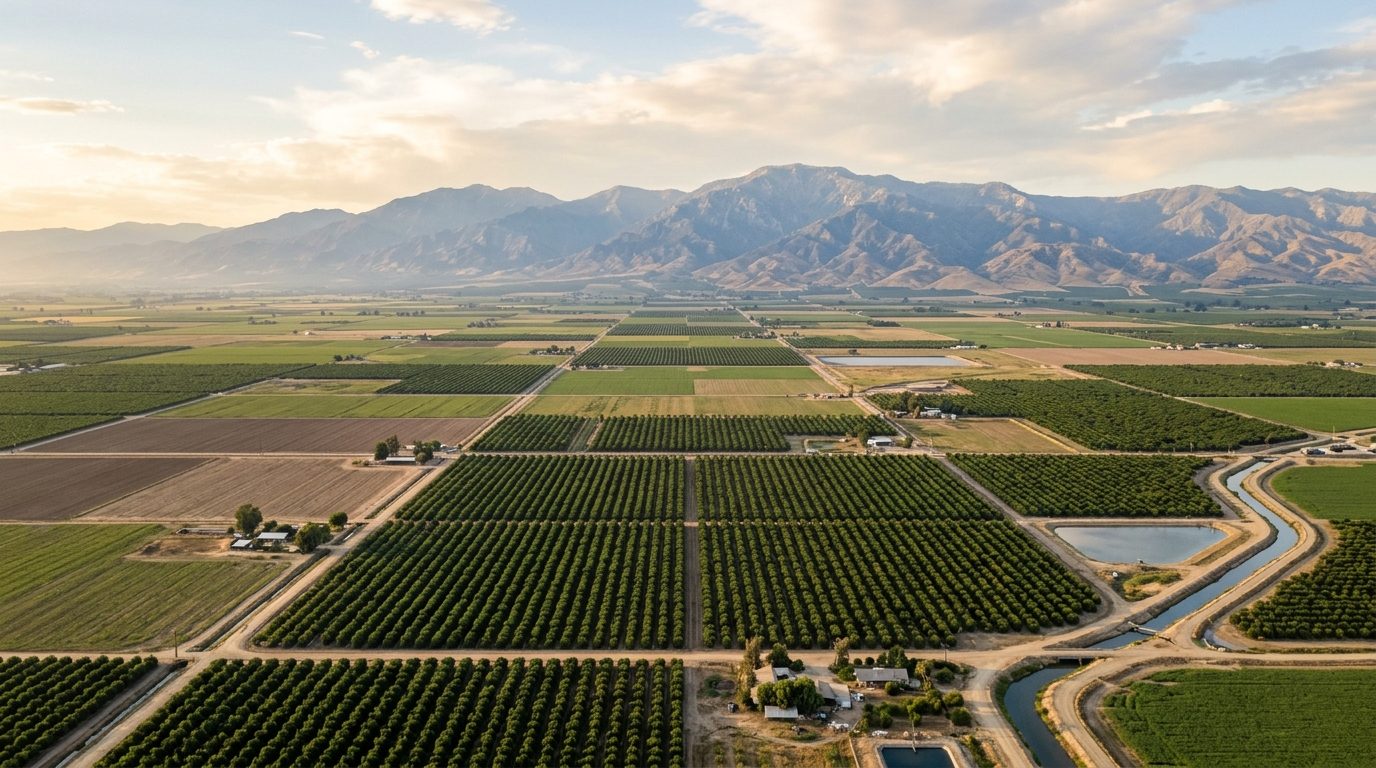
Visalia sits on the flat floor of the southern San Joaquin Valley in Tulare County, roughly midway between Fresno and Bakersfield, with the Sierra Nevada foothills visible to the east and the range’s crest, including the southern approaches to Sequoia and Kings Canyon National Parks, further beyond. The terrain is uniformly flat farmland, and that agricultural grid shapes the street layout of Visalia, Tulare, Porterville, and the smaller towns of Exeter, Farmersville, Lindsay, Dinuba, and Woodlake. Housing stock reflects several building waves: modest post-war and mid-century single-story homes near older town cores, a broad band of ranch-style tract homes from later in the twentieth century, and newer stucco subdivisions with two-story plans on former farmland at the edges of town. Downtown Visalia retains a cluster of early twentieth-century commercial buildings and residential blocks with mature street trees, distinct from the newer tracts.
Areas closest to the foothills on Visalia’s northeast and east sides, along with newer master-planned tracts, generally sit at the higher end of the price range compared with older, centrally located neighborhoods or the smaller agricultural towns further out. Foothill proximity brings cooler evening air, valley views, and newer schools serving growing subdivisions. Older core neighborhoods in central and south Visalia, along with Tulare, Porterville, Dinuba, Lindsay, and Farmersville, mix long-established housing with homes built near packing houses and agricultural operations, and tend to be more affordable, reflecting housing age and proximity to farm-related land uses. Smaller towns further from Visalia’s commercial core, particularly Lindsay and Farmersville, have historically trailed Visalia itself, a function of local job base and distance from regional retail and medical centers.
Agriculture anchors the metro’s economy: Tulare County consistently ranks among the top agricultural-producing counties in the country, with dairy, citrus, and tree fruit as core industries, supported by packing houses, processing plants, and cold storage operations across Visalia, Exeter, Lindsay, Porterville, and Dinuba. Kaweah Health, a public healthcare district headquartered in Visalia, is one of the area’s largest employers, operating the region’s principal hospital and a network of clinics. Tulare County government, Visalia Unified School District, and College of the Sequoias are also major employers. Food processors, including Ruiz Foods in Dinuba, and citrus packers such as Porterville Citrus, add manufacturing jobs, while a growing logistics sector along Highway 99 has added warehousing employment.
Buyers should weigh several regional factors. Summers are hot and dry, and the valley floor periodically sees poor air quality from agricultural dust, trapped vehicle emissions, and wildfire smoke from Sierra Nevada forests during fire season. Water supply is a live issue: parts of Tulare County rely on groundwater subject to state oversight under California’s groundwater sustainability rules, and some local subbasins have faced probationary status tied to historical overpumping and land subsidence, affecting well-dependent properties and infrastructure such as irrigation canals; buyers on private wells should check well depth and groundwater plan status with the county. Property taxes, based on purchase price under Proposition 13, apply across the metro, though special assessments or Williamson Act agricultural preserve contracts can apply to specific parcels and should be verified with the assessor. Commuting is car-dependent, centered on Highway 99 and Highway 198, with limited transit; buyers should confirm zoning near farmland, since edge-of-town homes can sit near operations with dust, odor, or spraying, and should verify flood zone status.
Cities and Towns in the Visalia Metro Area
Notable Communities and Neighborhoods
Visalia Real Estate Market FAQ
How is the Visalia, CA metro area organized?
The metro is built around the city of Visalia, the largest population and commercial center, together with the smaller cities of Tulare, Porterville, Dinuba, Exeter, Farmersville, Lindsay, and Woodlake, all within Tulare County. Each town has its own downtown core, school district, and mix of older and newer housing, connected by Highway 99 and Highway 198 across the flat agricultural valley floor, with unincorporated farming communities filling the gaps between the incorporated cities.
Which parts of the Visalia metro tend to be pricier, and why?
Newer subdivisions on Visalia’s northeast side, closer to the Sierra Nevada foothills, tend to be priced higher, reflecting newer construction, newer school facilities, and foothill proximity. Older central neighborhoods and the smaller outlying towns, particularly those closer to packing houses, processing facilities, or older housing stock, tend to be more affordable, largely a function of home age and distance from Visalia’s larger job and retail base.
What should buyers verify locally before purchasing in this metro?
Buyers should confirm a property’s water source (municipal versus private well) and, for wells, check well depth and local groundwater sustainability plan status with the county; verify flood zone designation given the valley’s flat terrain and irrigation infrastructure; check for any Williamson Act agricultural preserve contracts or Mello-Roos special assessments tied to the parcel through the county assessor; and confirm proximity to active agricultural operations, which can bring dust, odor, or seasonal spraying to nearby homes.
What is a region-specific risk homebuyers should understand about the Visalia area?
Groundwater management is an active regional issue: parts of Tulare County draw on groundwater subbasins that have faced state-mandated oversight tied to historical overpumping, land subsidence, and impacts on domestic wells and irrigation infrastructure such as the Friant-Kern Canal. Buyers relying on private wells, or purchasing near agricultural land, should research the status of the local groundwater sustainability plan and any subsidence history before buying.
Nearby Markets