
Current real estate market data, news and analysis for the Pensacola-Ferry Pass-Brent, FL metropolitan area — 544,949 residents across Escambia and Santa Rosa counties.
Data as of May 2026. Sources: Redfin Data Center, U.S. Census Bureau.
Latest Pensacola Real Estate News
Pensacola Real Estate Market Overview
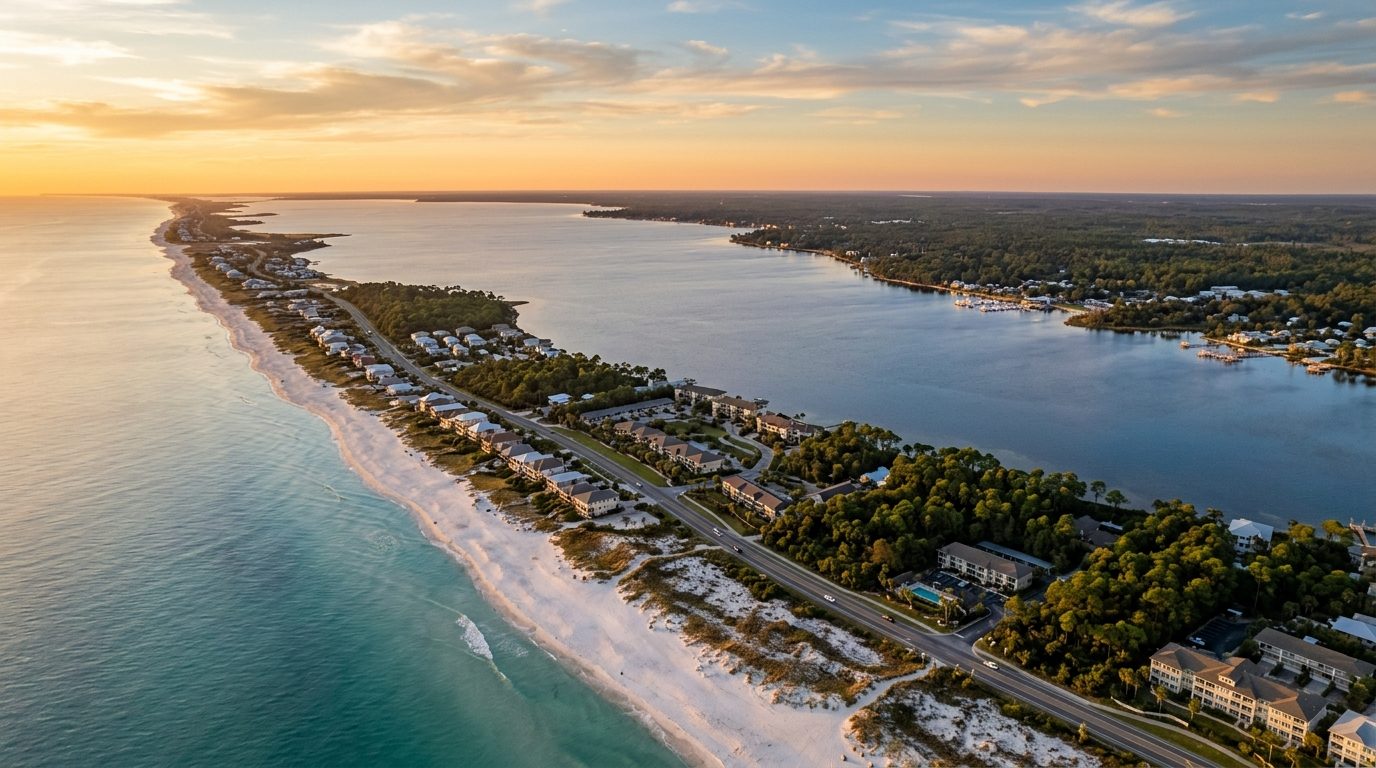
The Pensacola-Ferry Pass-Brent metro covers Escambia and Santa Rosa counties in the western Florida Panhandle, along the Alabama line. It is built around Pensacola Bay, Escambia Bay, and Santa Rosa Sound, with barrier islands, Perdido Key and Santa Rosa Island, separating the mainland from the open Gulf and holding Pensacola Beach and Navarre Beach. Pensacola sits on the bay’s western shore in Escambia County, which stretches north to rural Century. Santa Rosa County lies across the bay, running from Gulf Breeze and Navarre on the coast north through Milton and Pace to rural Jay. Housing ranges from early-20th-century bungalows near downtown Pensacola to mid-century brick ranches in older suburbs, newer subdivisions in Pace, Milton, and western Escambia County, and coastal condominiums built to current wind and flood codes.
Waterfront and near-beach areas, including Perdido Key, Pensacola Beach, Navarre Beach, and bay-front Gulf Breeze, sit at the top of the local price range, reflecting direct Gulf or bay access, vacation-rental demand, and newer coastal construction. Close-in historic neighborhoods such as East Hill, Old East Hill, and North Hill also command a premium for tree canopy, architectural character, and walkability to downtown. Established suburbs like Cordova Park, Ferry Pass, and inland Gulf Breeze and Pace fall in the middle tier, with newer or well-kept housing and manageable commutes to Navy Federal, NAS Pensacola, or downtown. Older inland neighborhoods such as Brent, Warrington, and Ensley, and the rural north around Century and Jay, tend toward lower prices, reflecting smaller or older homes and longer commutes.
The economy centers on the military, healthcare, and higher education, with manufacturing and Gulf tourism beneath it. Naval Air Station Pensacola, home to the Blue Angels and the Naval Aviation Schools Command, and Naval Air Station Whiting Field in Milton make the Navy the region’s largest institutional presence. Navy Federal Credit Union operates a large campus in western Escambia County and is the area’s largest private employer. Baptist Health Care and Ascension Sacred Heart run hospital and clinic networks across both counties. The University of West Florida and Pensacola State College anchor higher education. Industrial employers include International Paper’s mill in Cantonment, Ascend Performance Materials’ chemical plant, aerospace-support work near Pensacola International Airport, and a Leonardo Helicopters facility near Whiting Field. Gulf tourism supports hospitality and retail jobs along the coast.
Coastal weather is the defining local factor: the metro sits on the Gulf hurricane track and has taken direct hits and heavy flooding from storms including Hurricane Ivan and Hurricane Sally, so wind and flood insurance cost and availability vary sharply with elevation and distance from open water. Buyers should check FEMA flood-zone status near the bay, sound, or Gulf, since lenders can require flood coverage even outside a mapped high-risk zone. Florida has no state income tax, but property tax bills depend on homestead exemption status and the state’s assessment cap, so a seller’s current bill may not carry over. Most land outside Pensacola, Milton, and Gulf Breeze city limits is unincorporated county territory, and growth has concentrated along the Nine Mile Road and Beulah corridor in Escambia County and the Pace corridor in Santa Rosa County. In the rural north, around Century and Jay, well and septic systems are common, and buyers should confirm HOA rules and school-zone lines, which don’t always match neighborhood boundaries.
Cities and Towns in the Pensacola Metro Area
Notable Communities and Neighborhoods
Pensacola Real Estate Market FAQ
How is the Pensacola-Ferry Pass-Brent metro laid out geographically?
The metro spans Escambia and Santa Rosa counties in the far western Florida Panhandle. Pensacola anchors the west side on Pensacola Bay, with Ferry Pass and Brent as unincorporated areas just north and east of the city core. Santa Rosa County sits across the bay to the east, running from the coastal cities of Gulf Breeze and Navarre through Milton and Pace and up to the rural far-north towns of Century and Jay. Barrier islands, Perdido Key and Santa Rosa Island, separate Pensacola Bay and Santa Rosa Sound from the open Gulf of Mexico.
Which areas of the Pensacola metro tend to be more expensive, and why?
Direct waterfront and near-beach locations, such as Perdido Key, Pensacola Beach, Navarre Beach, and the bay side of Gulf Breeze, carry the highest prices because of Gulf or bay access, vacation-rental appeal, and construction built to current coastal codes. Close-in historic neighborhoods near downtown Pensacola, including East Hill and North Hill, also price at a premium for their mature tree canopy and walkable character. Inland and rural areas farther from the water and from downtown, including parts of the far north of the metro, generally price lower.
What should a buyer verify locally before purchasing in this metro?
Because so much of the metro touches a bay, sound, or the Gulf, buyers should check a property’s FEMA flood-zone designation and elevation, since lenders can require flood insurance even outside a mapped high-risk zone. In the more rural parts of Escambia and Santa Rosa counties, including areas near Century and Jay, it’s worth confirming whether a property is on a private well and septic system rather than municipal water and sewer. Buyers should also confirm HOA rules in newer subdivisions and check which public school zone an address falls into, since Escambia County School District and Santa Rosa County School District lines don’t always follow neighborhood boundaries.
What regional risk should buyers pay closest attention to here?
Hurricane and tropical storm exposure is the defining consideration. The metro sits directly on the Gulf hurricane track and has experienced significant storm damage and flooding in past decades, including from Hurricane Ivan and Hurricane Sally. Wind and flood insurance costs and availability vary considerably by location, generally rising with proximity to the open Gulf, Pensacola Bay, or Santa Rosa Sound, so it’s worth getting an insurance quote early in the buying process rather than assuming coverage will be affordable or easy to bind.
Nearby Markets