
Current real estate market data, news and analysis for the Panama City-Panama City Beach, FL metropolitan area — 231,174 residents across Bay and Washington counties.
Data as of May 2026. Sources: Redfin Data Center, U.S. Census Bureau.
Latest Panama City Real Estate News
Panama City Real Estate Market Overview
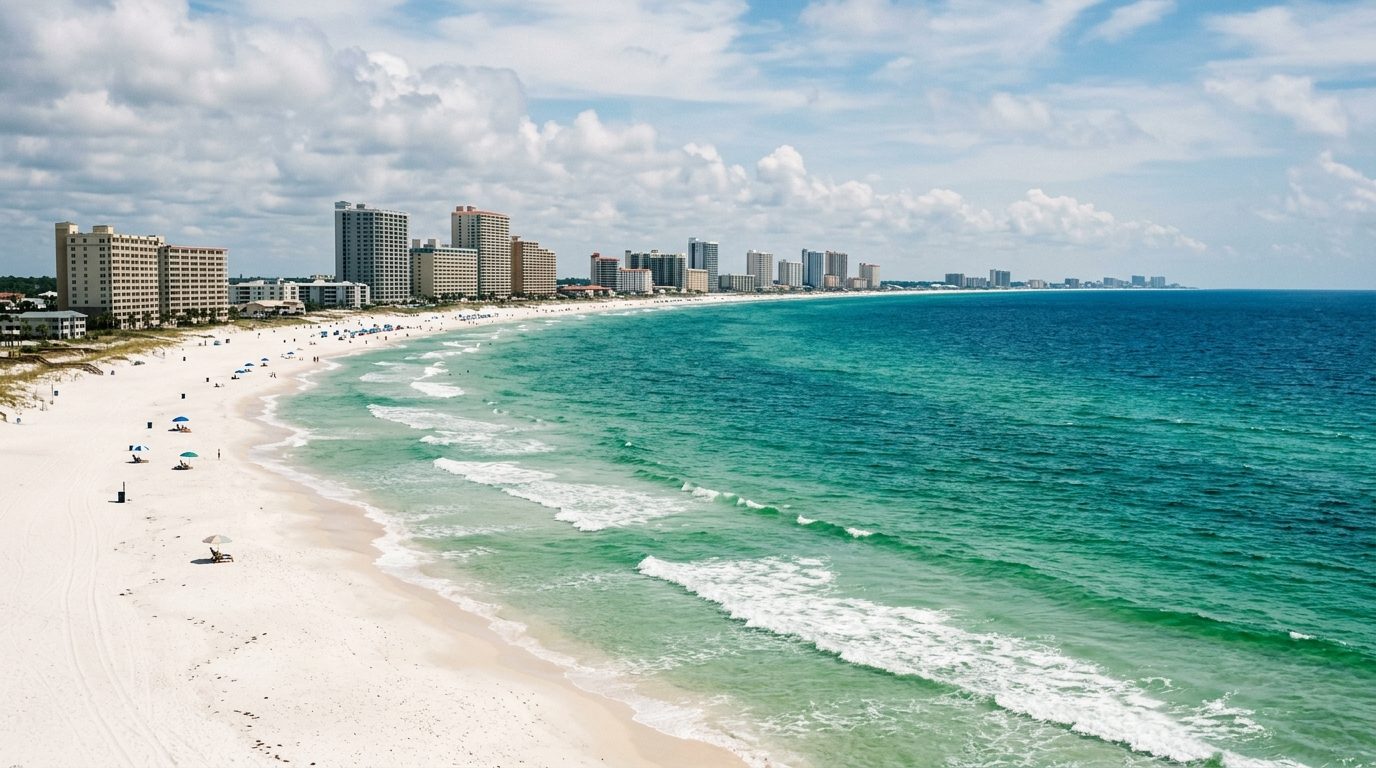
The Panama City-Panama City Beach metro sits along the Florida Panhandle’s Gulf Coast, wrapped around St. Andrews Bay, with a barrier-adjacent beach strip separated from the mainland by intracoastal water and connected by bay bridges. The metro spans a historic bayfront downtown and older in-town neighborhoods on the mainland, a tourism-oriented beach corridor fronting the Gulf, and newer suburban growth spreading north along the main highway corridors toward the interior. Housing stock is correspondingly varied: modest wood-frame and brick homes from the mid-twentieth century in the older mainland neighborhoods, high-rise and mid-rise condominium buildings along the beach built largely for vacation and rental use, and newer single-family subdivisions and planned communities inland and along the beach’s western edge that have expanded as rebuilding continued after a major hurricane, replacing some older, storm-damaged stock with homes built to current wind and flood codes.
Beachfront and near-beach properties command the clearest premium, driven by Gulf frontage, view, and walkability to sand, while low-density, gated communities built around wooded acreage and coastal dune lakes on the beach’s western end price even higher on privacy, natural surroundings, and private amenities rather than density. Waterfront pockets on the mainland along St. Andrews Bay, including the historic district anchored by its walkable commercial street, sit in a middle tier, benefiting from redevelopment and water access without full beach pricing. More attainable housing is generally found farther inland on the mainland, away from direct bay or Gulf frontage, in older neighborhoods still working through post-storm rebuilding, and in areas nearer the region’s industrial and military-adjacent corridors. Newer inland subdivisions built for year-round residents rather than vacationers also tend to price below comparable beachfront product.
The economy is anchored by the military, with a large Air Force installation and a Navy support and warfare-center presence among the area’s largest employers and a magnet for defense contractors and aerospace-related suppliers. Shipbuilding is a major private-sector employer, with a longstanding shipyard operation building vessels for government and commercial customers. Health care is significant as well, led by a regional hospital system, alongside tourism and hospitality tied to the beach economy, a community college, and public-sector employment through the county school district and local government. Recovery and reconstruction work tied to a major hurricane also supported construction-related employment for an extended period after the storm.
Hurricane and wind risk are the defining considerations here: the coast is exposed to storm surge, high wind, and heavy rainfall, and a catastrophic storm struck the region in recent memory, prompting stricter rebuilding standards for homes in mapped floodplains. Windstorm and flood insurance costs and availability vary significantly by elevation, construction age, and distance from water, so buyers should get quotes and a wind-mitigation inspection before closing, and confirm a property’s flood zone and base flood elevation directly with the city or county rather than relying on a listing. Florida has no state income tax but has its own property tax and homestead exemption rules worth confirming with the county property appraiser, and short-term rental regulation differs between the beach and mainland jurisdictions, which matters for investment-oriented buyers. Older homes, particularly those built before modern wind-borne debris and elevation codes took effect, should be checked for permit history and any remaining storm-related repair or elevation requirements.
Cities and Towns in the Panama City Metro Area
Notable Communities and Neighborhoods
Panama City Real Estate Market FAQ
How is the Panama City-Panama City Beach market organized geographically?
The metro splits between the mainland city of Panama City, centered on historic bayfront neighborhoods along St. Andrews Bay, and the separate beach corridor of Panama City Beach fronting the Gulf of Mexico, connected by bridges across the bay. Inland areas north of both extend into newer, more suburban growth away from the water.
Which areas tend to be priciest, and why?
Direct Gulf-front and near-beach properties price highest for their water access and views, and low-density gated communities built around wooded acreage and coastal dune lakes on the beach’s western end command a further premium for privacy and amenities. Mainland bayfront pockets sit in a middle tier, while inland, non-waterfront neighborhoods are generally the most attainable.
What should buyers verify locally before purchasing here?
Buyers should confirm a property’s flood zone and base flood elevation with the city or county, obtain a wind-mitigation inspection and homeowners and flood insurance quotes before closing, and check the permit history of older homes for any outstanding storm-repair or elevation requirements. Short-term rental rules also differ between beach and mainland jurisdictions and are worth confirming for investment purchases.
What is the primary regional risk buyers should plan around?
Hurricane exposure is the defining risk, including high wind and storm surge along the Gulf and bay shorelines; the region sustained catastrophic damage from a major hurricane in recent memory. This has led to stricter rebuilding and elevation standards in mapped floodplains and makes insurance cost and availability a central part of any purchase decision.
Nearby Markets