
Current real estate market data, news and analysis for the Lancaster, PA metropolitan area — 563,159 residents across Lancaster county.
Data as of May 2026. Sources: Redfin Data Center, U.S. Census Bureau.
Latest Lancaster Real Estate News
Lancaster Real Estate Market Overview
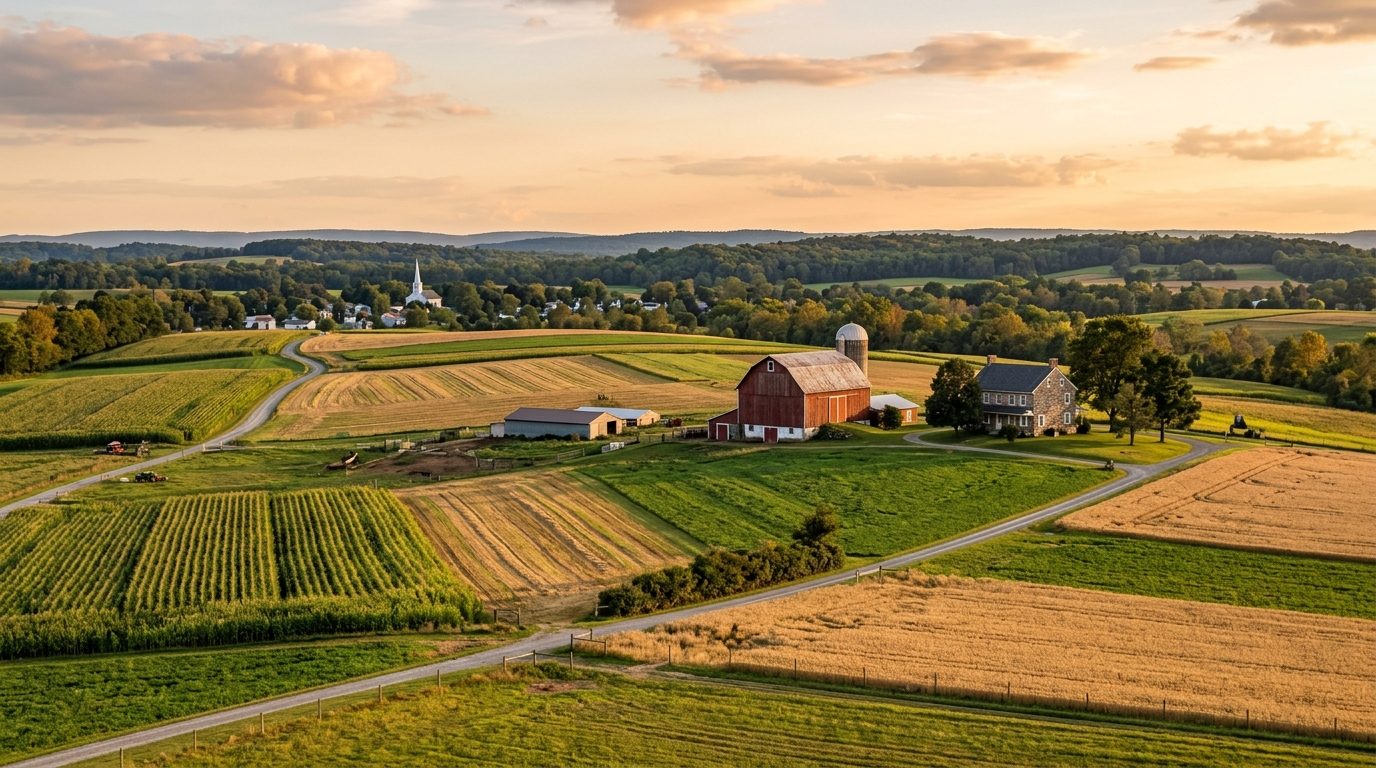
Lancaster PA lies in the Piedmont section of southeastern Pennsylvania, bounded on its western edge by the Susquehanna River and covering rolling farmland that ranks among the most fertile agricultural ground in the country. The city of Lancaster sits near the geographic center of the county, surrounded by a ring of boroughs, townships, and small villages that shift gradually from dense street grids to open cropland. Housing stock reflects that layered history: brick and stone rowhouses and twin homes line the streets of the city core, many dating to the nineteenth century, while surrounding boroughs mix Victorian-era homes with mid-century ranch and split-level construction. Farther out, colonial-era stone farmhouses and working farms sit beside newer single-family subdivisions built on former agricultural land at the suburban edge.
Pricing tends to track walkability, age and condition of the housing stock, and proximity to the city’s employment and cultural core rather than any single dividing line. Boroughs such as Lititz and Ephrata, with restored Main Street commercial districts, tree-lined blocks of well-kept older homes, and easy walking access to shops and schools, generally sit toward the higher end of the market. Newer subdivisions built on the outskirts of the townships ringing the city also draw a premium for larger lots and updated construction. River towns such as Columbia and Marietta, shaped by an older industrial past, and outlying boroughs such as Quarryville, Christiana, and Terre Hill, where commutes into the city are longer and the setting is more rural, tend to be more affordable.
The metro’s economy rests on healthcare, manufacturing, agriculture, and finance. Penn Medicine Lancaster General Health is the county’s largest employer, anchoring a hospital and outpatient network based in the city. Armstrong World Industries, a longtime manufacturer of flooring and ceiling systems, is headquartered in Lancaster, and CNH Industrial’s New Holland Agriculture division still builds farm equipment in the borough of New Holland, where the brand originated. Food and agriculture remain central to the economy, with dairy processing, poultry operations, and the largest concentration of Amish and Mennonite farms in the country supporting a wide network of related trades and tourism. Fulton Financial, headquartered in Lancaster, and other regional employers round out a diversified base, while Franklin and Marshall College and Millersville University anchor higher education locally.
A few factors set this market apart. Much of the county outside the boroughs falls under long-standing agricultural zoning and farmland preservation easements, among the most extensive in the nation, which can limit subdivision or new construction near open farmland – worth checking before buying adjacent to it. Rural properties frequently rely on private wells and on-lot septic systems rather than public utilities, and those should be inspected independently rather than assumed functional. Land along the Susquehanna River and its tributary creeks carries mapped floodplain in places, so a flood determination is worth confirming even away from the main river. Public transit is limited outside the city core and most residents drive, though Lancaster city has an Amtrak station on the Keystone Corridor toward Philadelphia and Harrisburg. School district boundaries can also shift from one side of a street to the next in township areas, so confirming the assigned district for a specific address is worthwhile before making an offer.
Cities and Towns in the Lancaster Metro Area
Notable Communities and Neighborhoods
Lancaster Real Estate Market FAQ
How is the Lancaster, PA market organized geographically?
The metro is built around the city of Lancaster near the center of the county, ringed by a mix of historic boroughs (Lititz, Ephrata, Elizabethtown, and others), suburban townships, and a large surrounding area of unincorporated farmland. Most everyday activity, from schools to shopping, is organized around whichever borough or township a property sits in rather than around the city alone.
Which areas of Lancaster tend to be pricier, and why?
Boroughs with walkable, restored downtown cores, tree-lined blocks of older homes, and proximity to shops and schools – Lititz and Ephrata are typical examples – tend to command a premium, as do newer subdivisions built on the edges of townships close to the city. River towns and more distant rural boroughs, which involve longer commutes and carry an older industrial or purely agricultural character, generally sit at the more affordable end.
What should buyers verify locally before purchasing in Lancaster County?
Outside the boroughs, confirm whether a property relies on a private well and on-lot septic system rather than public water and sewer, and have both inspected independently. Check for mapped floodplain along the Susquehanna River or nearby creeks, confirm the assigned school district for the specific address since lines can vary block to block, and ask whether adjacent land carries an agricultural preservation easement that could affect future development nearby.
Is there a region-specific risk or consideration to know about in Lancaster County?
Lancaster County has one of the most extensive farmland preservation and agricultural zoning programs in the country, which permanently restricts subdivision and non-farm development on a large share of the surrounding countryside. That protects the rural landscape but also means buyers near open farmland should understand what can and cannot be built or changed on neighboring parcels before assuming future development potential.
Nearby Markets