
Current real estate market data, news and analysis for the Wichita, KS metropolitan area — 663,809 residents across Butler, Harvey, Sedgwick and Sumner counties.
Data as of May 2026. Sources: Redfin Data Center, U.S. Census Bureau.
Latest Wichita Real Estate News
Coverage of this market is coming soon. Browse all housing market news.
Wichita Real Estate Market Overview
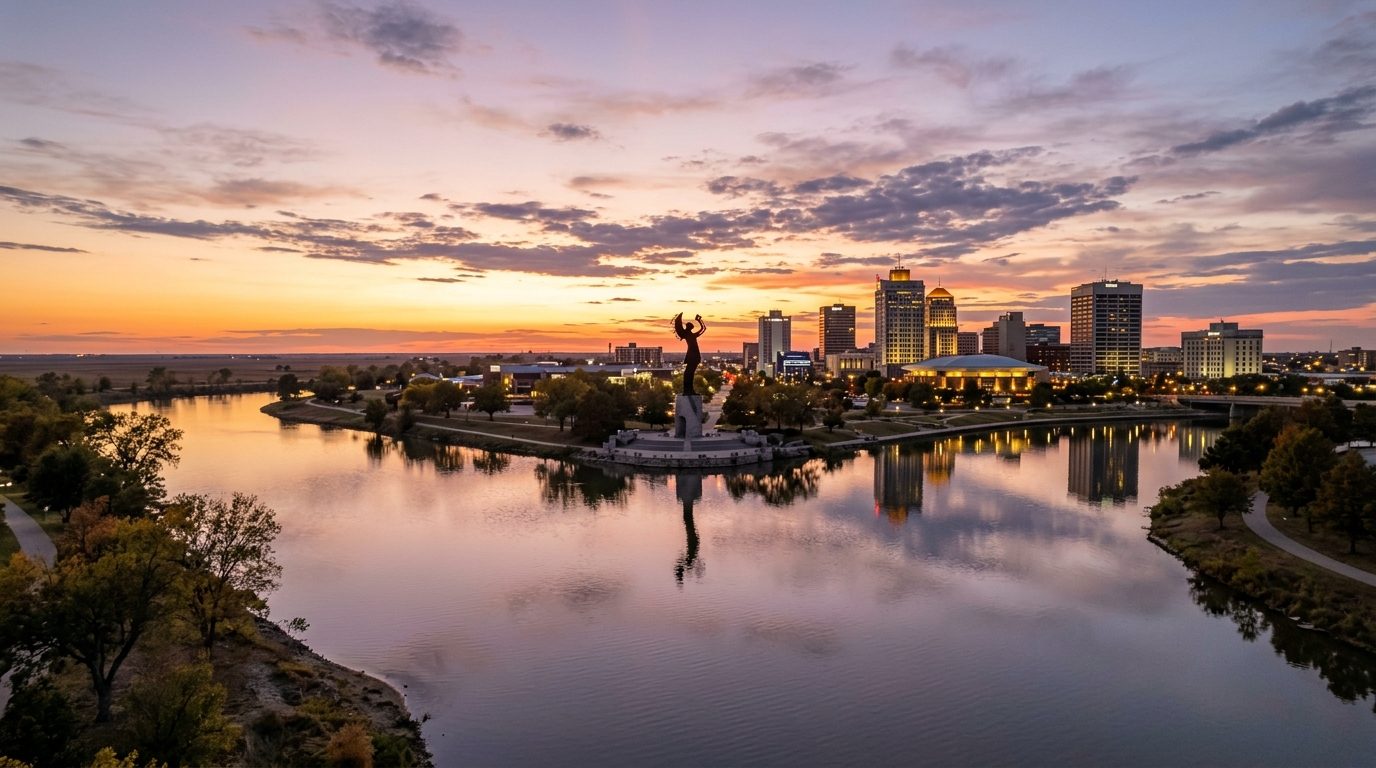
Wichita sits in south-central Kansas at the confluence of the Arkansas and Little Arkansas Rivers, on gently rolling terrain that gives way to flat prairie in every direction. The metro spans Butler, Harvey, Sedgwick, and Sumner counties, with the rivers and Kellogg Avenue’s east-west corridor forming the main organizing lines of the city. Housing stock in the older core reflects a city built up through the early and mid-twentieth century, with Craftsman, Tudor Revival, and mid-century ranch homes on tree-lined, gridded streets. Farther out, subdivisions from the 1970s through today spread across former farmland in a fairly conventional suburban pattern, with cul-de-sac layouts and larger lots as distance from downtown increases. Because the region is flat and largely unconstrained by mountains, coastline, or major water bodies, new development has generally been able to expand outward rather than up, keeping most of the metro low-rise and car-oriented.
Within the metro, the east side of Wichita and the suburbs beyond it, including Andover, Bel Aire, and parts of Derby, tend to sit in higher price tiers, reflecting newer construction, larger lot sizes, and proximity to newer schools and retail corridors. West-side communities such as Maize, Goddard, and Park City have also seen substantial newer suburban building. The urban core and older north and south Wichita neighborhoods, along with towns like Haysville and Valley Center, generally include more modest and older housing stock, which tends to price lower. Some close-in historic neighborhoods, such as College Hill and Eastborough, are exceptions, commanding higher values due to established tree canopy, architectural character, and larger historic lots rather than newer construction.
The Wichita economy has long centered on aviation manufacturing, a legacy that gives the city its nickname, the Air Capital of the World. Textron Aviation, which produces Cessna and Beechcraft aircraft, and Bombardier’s Learjet operations both maintain major manufacturing presences in the city, alongside Spirit AeroSystems, a large-scale producer of commercial aircraft structures that has historically been one of the region’s largest private employers. Wichita State University, including its National Institute for Aviation Research, supports this industry through applied research and workforce training. Beyond aerospace, healthcare is a significant employment sector, anchored by hospital systems including Ascension Via Christi and Wesley Medical Center, along with other regional employers in finance, food processing, and education.
Buyers evaluating the Wichita metro should account for a few region-specific factors. The area lies within a zone of elevated tornado and severe thunderstorm risk during spring and early summer, and homes should be checked for storm shelters, safe rooms, or basements, along with adequate insurance coverage for wind and hail. Property tax rates and annual valuation changes are set at the county level and can vary between Sedgwick, Butler, Harvey, and Sumner counties, so buyers should confirm current mill levies and any special assessments for newer subdivisions. Public transit in the metro is limited and largely bus-based, so most residents rely on cars, and commute patterns should factor into location choices. Land-use and zoning are governed jointly by the City of Wichita and Sedgwick County under a unified zoning code, and buyers considering newer master-planned subdivisions on the metro’s edges should verify school district boundaries, homeowners’ association requirements, and whether infrastructure such as roads and utilities has been fully built out.
Cities and Towns in the Wichita Metro Area
Notable Communities and Neighborhoods
Wichita Real Estate Market FAQ
How is the Wichita metro organized geographically?
The metro is built around Wichita’s location at the confluence of the Arkansas and Little Arkansas Rivers, spanning Butler, Harvey, Sedgwick, and Sumner counties on flat to gently rolling prairie. The city core sits near the river junction, with Kellogg Avenue forming a major east-west spine and interstates providing the main routes outward to suburbs and satellite towns such as Derby, Andover, Maize, Goddard, and Park City.
Which areas of the Wichita metro tend to be pricier, and why?
The east side of Wichita and adjoining suburbs like Andover and Bel Aire, along with newer west-side growth areas such as Maize and Goddard, tend to command higher prices due to newer construction, larger lots, and newer schools and retail. A handful of close-in historic neighborhoods, such as College Hill and Eastborough, are also higher-priced because of established character and lot size rather than new building. Older sections of the urban core and some older suburbs tend to have more modest pricing tied to older housing stock.
What should buyers verify locally before purchasing in the Wichita area?
Buyers should confirm which county and school district a property falls in, since tax rates and valuations are set separately by Sedgwick, Butler, Harvey, and Sumner counties. It is also worth checking for storm shelter or safe room provisions, reviewing any homeowners’ association rules in newer subdivisions, and confirming that infrastructure such as roads, sewer, and utilities is fully completed in newer master-planned developments on the metro’s edges.
Is severe weather a significant consideration for homeowners in the Wichita metro?
Yes. South-central Kansas sits within a region prone to tornadoes and severe thunderstorms, particularly in spring and early summer. Homebuyers should look for properties with basements, storm shelters, or safe rooms, and should verify that homeowners insurance adequately covers wind, hail, and tornado damage, which are common causes of claims in the area.
Nearby Markets