
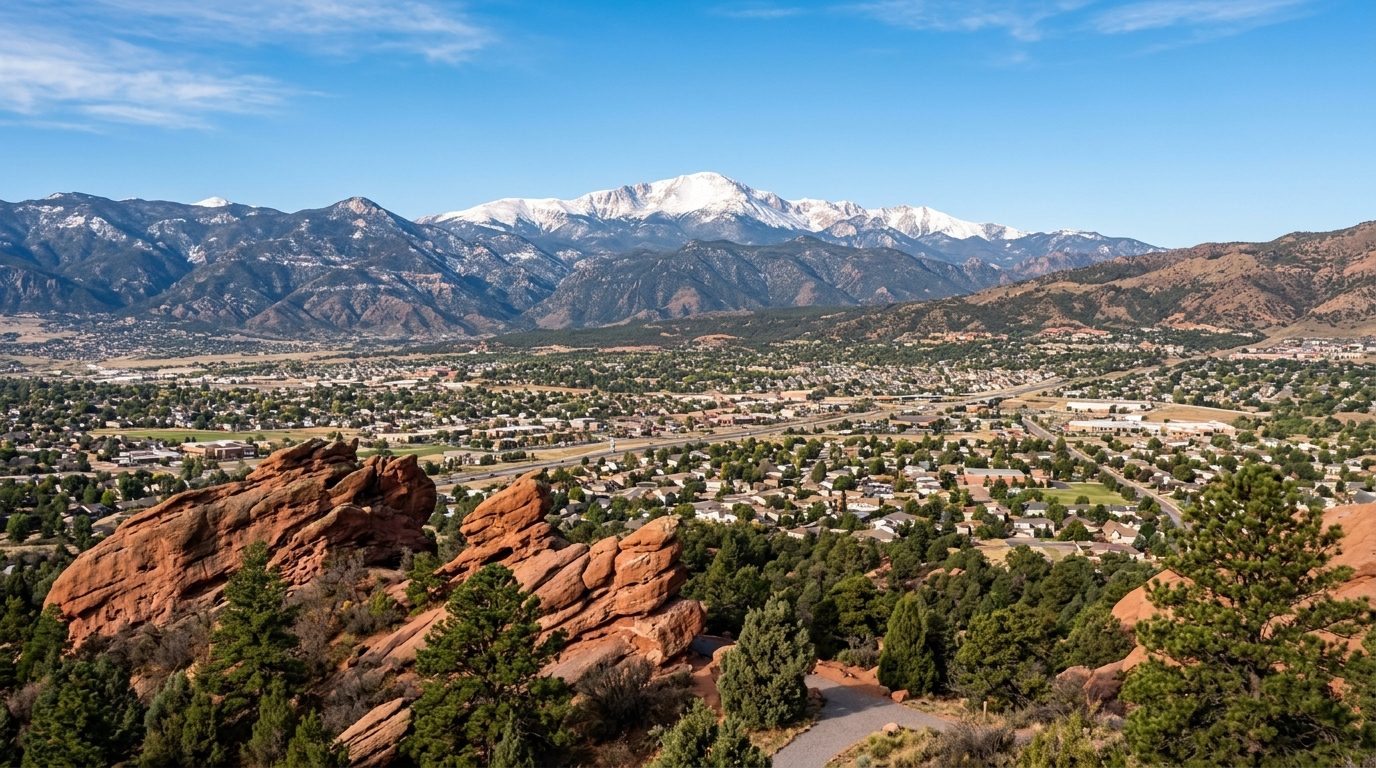
Current real estate market data, news and analysis for the Colorado Springs, CO metropolitan area — 781,796 residents across El Paso and Teller counties.
Sources: U.S. Census Bureau.
Latest Colorado Springs Real Estate News
Colorado Springs Real Estate Market Overview
Colorado Springs sits at the base of Pikes Peak along the eastern edge of the Front Range, where the Rocky Mountains give way to high plains. The metro spans El Paso County, holding the city and most suburbs on rolling prairie and mesa terrain, and Teller County, a smaller mountain county to the west centered on Woodland Park and the old mining district around Cripple Creek and Victor. Housing in the urban core ranges from brick and Victorian-era homes near downtown and Old Colorado City to postwar ranch houses on the east side and newer subdivisions pushed toward Fountain, Monument, and unincorporated Black Forest as the region has grown. Teller County’s mountain towns carry a more rural, forested housing stock of smaller lots, cabins, and older mining-era buildings.
Higher-priced housing sits mostly on the city’s west and northwest sides, where lots back against foothill terrain, mountain and rock-formation views are common, and long-established neighborhoods near the Broadmoor carry historic prestige. Newer master-planned communities on the north and northeast side, built around golf courses, trails, and amenity centers, also command a premium tied to newer construction and open space. More moderately priced housing concentrates on the east and southeast sides and in Fountain and Security-Widefield, where subdivisions are denser and flatter terrain offers fewer views. Prices generally ease farther from the urban core and toward the Pueblo County line, while Teller County’s mountain towns price on their own curve tied to scarce buildable land and seasonal demand.
The regional economy is anchored heavily by the military and the aerospace and defense industry built around it. Fort Carson, an Army post south of the city, is among the area’s largest employers, and the Air Force maintains a major presence through Peterson Space Force Base, Schriever Space Force Base, and the Air Force Academy, alongside Cheyenne Mountain Space Force Station, built into the mountain and home to NORAD and U.S. Northern Command operations. That footprint has drawn defense contractors including Lockheed Martin and Northrop Grumman, plus smaller technology and space firms. Healthcare is a major employer through the UCHealth and Centura Health hospital systems, higher education through the University of Colorado Colorado Springs and Colorado College, and the U.S. Olympic & Paralympic Committee is headquartered here. Tourism around Pikes Peak and Garden of the Gods, plus manufacturing and logistics, round out the base.
Wildfire is the most consequential local risk factor, particularly along the wildland-urban interface in the western foothills, in Black Forest, and in Teller County’s mountain communities, all of which have burned before; insurers have grown more cautious there, some requiring specific roofing and defensible space before writing or renewing coverage. Colorado’s property tax burden is comparatively light, though rates vary by county, and buyers should check whether a property sits inside a metropolitan or special taxing district financing local infrastructure, since such fees add to carrying costs. Transit is limited and the metro is largely car-dependent. Growth has occurred mainly through annexation and greenfield development on the fringes, so it is worth confirming whether a property sits inside city limits or unincorporated county land. Other items to verify locally include floodplain status near Fountain Creek, the water provider and rights serving a property, HOA and metro district obligations, and whether a home relies on municipal utilities or a separate district.
Cities and Towns in the Colorado Springs Metro Area
Notable Communities and Neighborhoods
Colorado Springs Real Estate Market FAQ
How is the Colorado Springs metro area organized geographically?
The metro covers El Paso County, home to the city of Colorado Springs and most of its suburbs on rolling prairie and mesa terrain along the Front Range, and Teller County, a smaller mountain county to the west centered on Woodland Park and the historic mining district around Cripple Creek and Victor. The city itself spreads from foothill neighborhoods pressed against Pikes Peak on the west side out to flatter plains communities like Fountain and Falcon to the south and east, with outlying towns such as Monument and Palmer Lake anchoring the northern edge along the interstate corridor toward Denver.
Which parts of the Colorado Springs area tend to be pricier, and why?
The west and northwest sides of the city tend to command a premium because lots back onto foothill terrain, mountain and rock-formation views are common, and some neighborhoods carry long-established prestige. Newer master-planned communities on the north and northeast side also price higher, largely because of newer construction, planned trail and park systems, and amenity centers. Areas farther from the urban core, on flatter terrain with denser, smaller-lot subdivisions, tend to be more moderately priced, and Teller County’s mountain towns follow their own pricing logic tied to limited buildable land rather than distance from downtown.
What should buyers verify locally before purchasing in this market?
Buyers should confirm whether a property is inside Colorado Springs city limits or unincorporated county land, since that affects zoning authority, services, and nearby development. It is also worth checking for metropolitan or special taxing district fees attached to newer subdivisions, the specific water provider and water rights serving the property, floodplain status near Fountain Creek and its tributaries, and whether fire protection and utility service come from Colorado Springs Utilities or a separate district, which can vary block to block on the metro’s edges.
Is wildfire a real risk for homes in the Colorado Springs area?
Yes, particularly for properties along the wildland-urban interface in the western foothills, in the Black Forest area, and in Teller County’s mountain communities, all of which have experienced significant wildfires in the past. This history has made insurers more selective in these areas, with some carriers requiring specific roofing materials and documented defensible space around a home before they will write or renew a policy, so it is worth checking a property’s wildfire risk zone and insurance availability early in the buying process.
Nearby Markets