
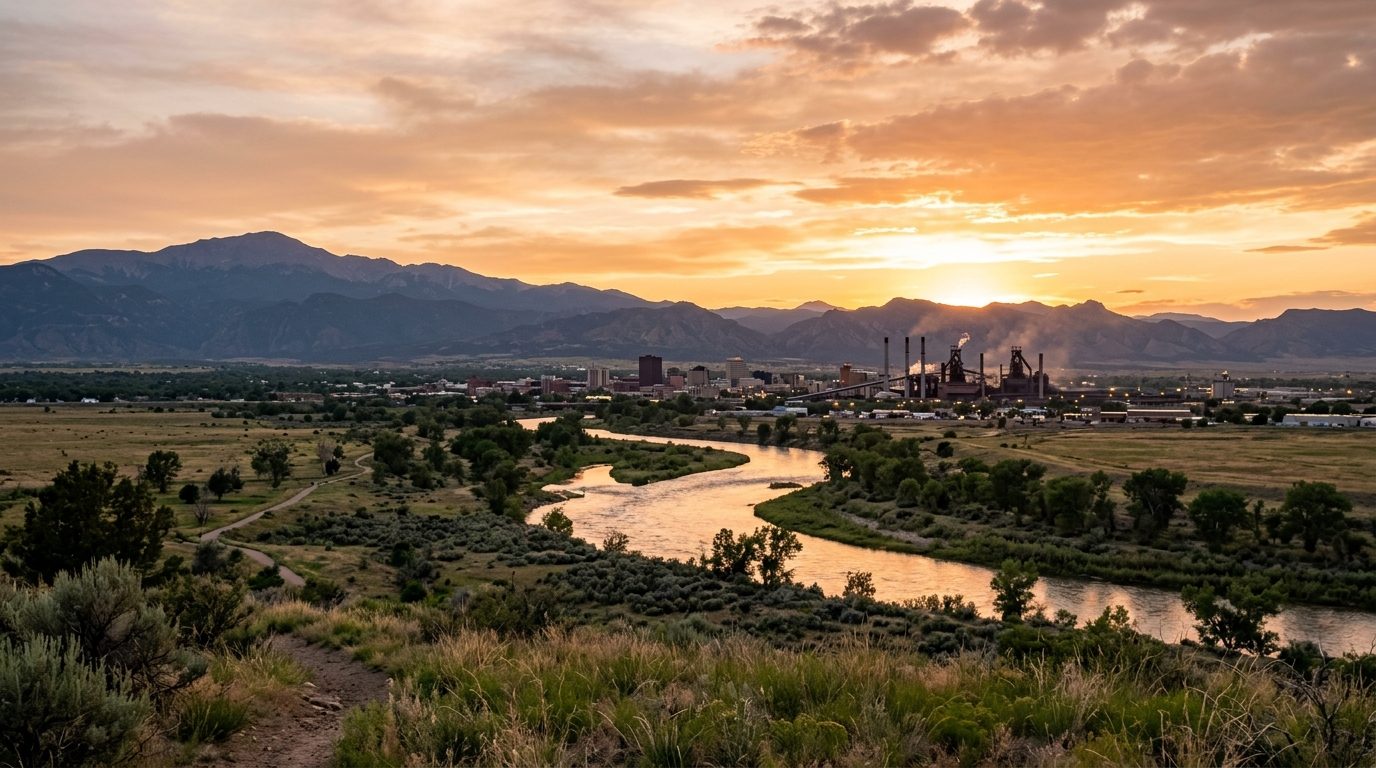
Current real estate market data, news and analysis for the Pueblo, CO metropolitan area — 169,277 residents across Pueblo county.
Data as of May 2026. Sources: Redfin Data Center, U.S. Census Bureau.
Latest Pueblo Real Estate News
Coverage of this market is coming soon. Browse all housing market news.
Pueblo Real Estate Market Overview
Pueblo County occupies the point where the Arkansas River bends out of the Rocky Mountain foothills and onto the high plains, with Fountain Creek joining the Arkansas near the county seat of Pueblo. The landscape shifts from irrigated river-bottom farmland and mesa grassland in the east to piñon-juniper foothills and the Wet Mountains in the southwest, giving the county a split identity between high-desert plains and mountain foothills. The city of Pueblo anchors the county with a historic urban core of brick bungalows, Victorian-era homes, and mill-worker cottages built up around the old Colorado Fuel and Iron steel works. West of the city, the unincorporated community of Pueblo West offers large-lot ranch and acreage homes on a mesa above the river, Boone sits among farm fields along the river to the east, and Rye is a small mountain community tucked into the Wet Mountains foothills to the southwest.
Within the metro, value tends to track distance from the historic industrial core and proximity to open views or acreage. Neighborhoods that grew up around the old steel mill and the rail yards, including Bessemer, Eilers, and Goat Hill, carry the oldest and most modest housing stock, shaped by generations as company-adjacent, working-class districts. Pueblo West and the foothill fringe near Rye and Colorado City sit toward the opposite end, offering newer construction, larger acreage, and open views toward Pikes Peak or the Wet Mountains, without the industrial land-use legacy of the urban core. Pueblo’s downtown, riverwalk district, and older streetcar-era neighborhoods like Mesa Junction occupy a middle tier, trading on walkability and ongoing reinvestment rather than acreage or newness.
Pueblo’s economy grew up around heavy industry, and manufacturing remains central to it: the steel mill founded as Colorado Fuel and Iron still operates today as Rocky Mountain Steel Mills, now part of Orion Steel Companies after passing out of EVRAZ ownership, and CS Wind runs a large wind-tower manufacturing plant that grew out of an earlier Vestas facility. Healthcare is another pillar, led by Parkview Medical Center and CommonSpirit Health’s St. Mary-Corwin campus. Xcel Energy operates a major power-generating station in the county, Trane Technologies runs a manufacturing operation locally, and Target operates a regional distribution center. Colorado State University Pueblo and Pueblo Community College anchor higher education and workforce training, while the U.S. Army’s former Pueblo Chemical Depot, long a chemical-weapons storage and destruction site overseen by a Bechtel-led contractor team, remains a federal presence in the county’s east end.
Hail is the defining property-risk factor along this stretch of the Front Range, and buyers should expect roof condition and impact-resistant materials to matter for insurance pricing more than wildfire across most of the urban area, though foothill parcels near Rye, Colorado City, and the Greenhorn Mountains carry real wildfire exposure. Land near the Arkansas River and Fountain Creek sits within mapped flood zones tied to the river’s historic rerouting after a major early flood, so flood-zone status is worth confirming parcel by parcel. Pueblo West operates its own water and sanitation district separate from the city of Pueblo, and rural eastern-county parcels often depend on irrigation-ditch rights or private wells, so water source and rights should always be verified before purchase. The metro has no passenger rail transit and limited local bus service, so commuting is largely car-dependent.
Cities and Towns in the Pueblo Metro Area
Notable Communities and Neighborhoods
Pueblo Real Estate Market FAQ
How is the Pueblo, Colorado real estate market organized geographically?
The metro centers on the city of Pueblo, which sits where Fountain Creek meets the Arkansas River, with older grid neighborhoods clustered near the historic steel mill and downtown. West of the city, the unincorporated community of Pueblo West spreads across a mesa above the river with a mostly separate water and sewer utility. Boone lies along the river to the east amid irrigated farmland, while Rye sits apart from the rest of the metro in the Wet Mountains foothills to the southwest, giving the county a plains-versus-foothills split.
Which areas of Pueblo County tend to carry higher home values, and why?
Pueblo West and the foothill areas near Rye and Colorado City generally sit toward the higher end because of larger acreage, newer construction, and open views toward Pikes Peak or the Wet Mountains, without the industrial land-use history of the urban core. The oldest neighborhoods around the historic steel mill and rail yards, such as Bessemer, Eilers, and Goat Hill, sit toward the lower end because of older, smaller housing stock and their long history as company-adjacent, working-class districts. Downtown, the riverwalk district, and streetcar-era neighborhoods like Mesa Junction fall in between, reflecting walkability and ongoing reinvestment.
What should buyers verify before purchasing property in the Pueblo area?
Because Pueblo West operates its own water and sanitation district separate from the city of Pueblo, buyers should confirm which utility and taxing district serves a given parcel, along with any associated fees. In rural parts of the county, buyers should verify whether a property relies on a municipal water supply, an irrigation ditch right, or a private well, since water source directly affects usability and value. Flood-zone status near the Arkansas River and Fountain Creek, and any applicable metro-district or special-district mill levies, are also worth confirming parcel by parcel.
What is the biggest natural-hazard consideration for property owners in the Pueblo metro?
Hail is the most consistent property-risk factor across the urban part of the metro, since this stretch of the Front Range experiences frequent hailstorms that drive roofing damage and insurance costs; roof condition and impact-resistant materials are a common underwriting focus. Wildfire exposure becomes more relevant in the foothill areas near Rye, Colorado City, and the Greenhorn Mountains, where forested terrain meets residential development. Flood risk is concentrated near the Arkansas River and Fountain Creek, whose channels were reshaped after a major historic flood, making flood-zone verification important for river-adjacent parcels.
Nearby Markets