
Current real estate market data, news and analysis for the Knoxville, TN metropolitan area — 968,137 residents across 9 counties in Tennessee.
Data as of May 2026. Sources: Redfin Data Center, U.S. Census Bureau.
Latest Knoxville Real Estate News
Knoxville Real Estate Market Overview
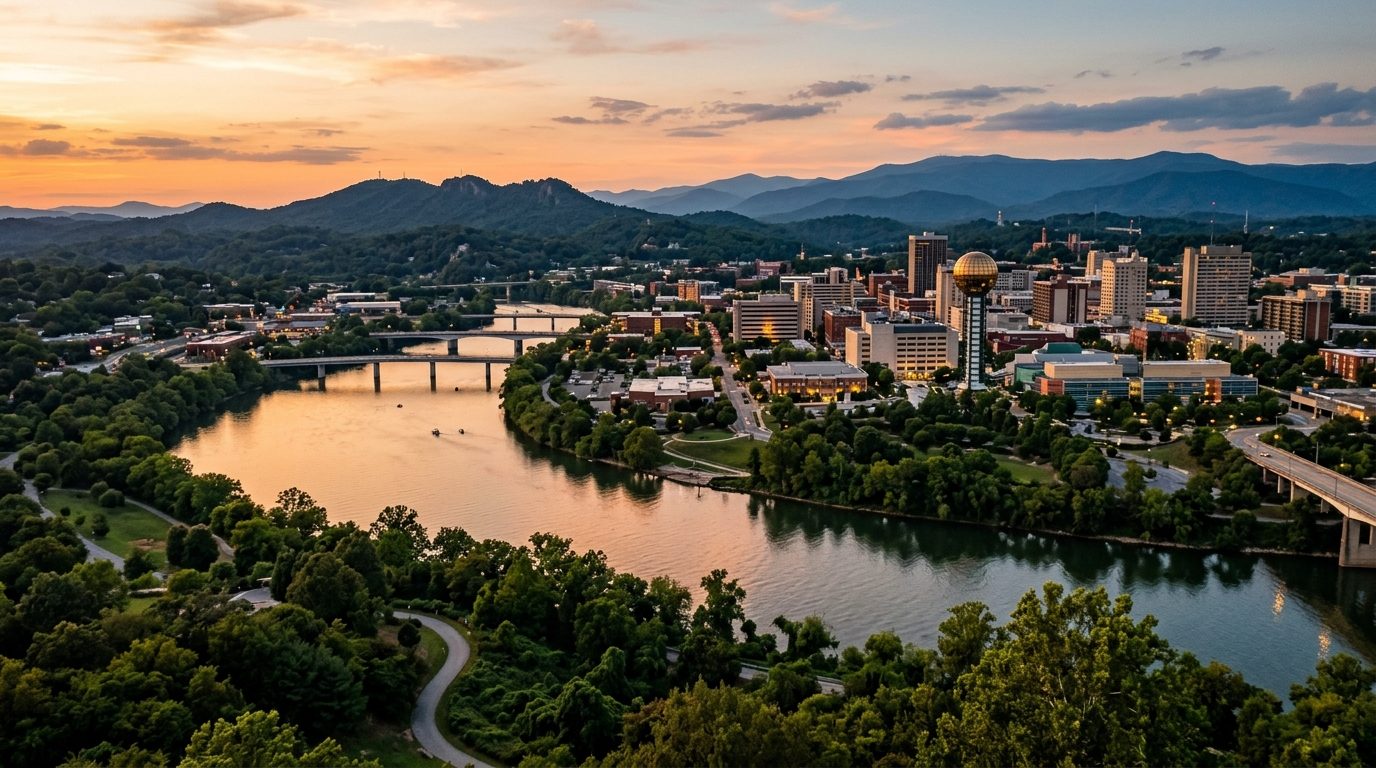
The Knoxville metro sits in the Tennessee Valley, between the Cumberland Plateau to the west and the Great Smoky Mountains and broader Appalachians to the east and southeast, with the mountains’ gateway towns roughly a half-hour to 45-minute drive away. Several Tennessee Valley Authority reservoir lakes shape the region’s geography, including one that runs directly through the city’s urban core. The climate is humid subtropical with four distinct seasons, generally mild winters, and hot, humid summers. Downtown Knoxville and its historic Old City anchor a dense urban core, giving way to established inner suburbs, then to fast-growing suburban development to the west, and finally to a more rural and mountain-and-lake-oriented fringe across the metro’s nine counties. Housing stock ranges from 19th- and early-20th-century homes in the city’s historic neighborhoods to mid-century ranch suburbs and heavy new-construction activity in the western suburbs and the lake counties.
The western suburbs, prized for top-rated schools and newer construction, along with a walkable, architecturally distinctive riverside neighborhood close to downtown, sit at the top of the market. Lakefront property on the metro’s reservoir lakes carries a similar premium for water access and mountain views, and a corridor of communities in the county just south of Knoxville commands a premium tied partly to its proximity to the Smoky Mountains and to strong schools. More affordable housing is generally found farther from the urban core and the lakes, in the metro’s more rural outer counties and in older, less-renovated pockets of the city itself.
The Oak Ridge corridor just northwest of the city is a major driver of the regional economy, home to a national laboratory and a national security complex, both U.S. Department of Energy facilities. The Tennessee Valley Authority is headquartered in downtown Knoxville, and the University of Tennessee’s flagship campus is both a major employer and the metro’s academic anchor. A regional hospital system headquartered in Knoxville operates multiple facilities across the metro, alongside an academic medical center and a children’s hospital, and a truck-stop chain and a canned-food company both maintain headquarters in the region.
Tennessee has no state income tax, and property is assessed at a fraction of its appraised value, keeping property tax rates relatively low, though properties within city limits pay both city and county tax and are worth checking against an otherwise-similar property just outside the city line. Severe thunderstorms and occasional tornadoes are a real seasonal risk, and standard homeowners insurance excludes flood damage, so buyers near the Tennessee River or one of the region’s lakes should look into separate flood coverage. Public transit is limited to city bus routes and a university campus system, and the metro is otherwise car-dependent. The county has been revising its growth and land-use plans to manage rapid suburban expansion, so it’s worth checking whether a specific area is subject to changing zoning or nearby development plans. Buyers on lake-adjacent parcels should also ask about shoreline-management rules tied to the Tennessee Valley Authority, and those in rural areas should confirm septic and well status.
Cities and Towns in the Knoxville Metro Area
Notable Communities and Neighborhoods
Knoxville Real Estate Market FAQ
How is the Knoxville metro housing market organized?
The market runs from a dense downtown and historic Old City outward through established inner suburbs to fast-growing western suburbs, with a more rural, mountain-and-lake-oriented fringe across the metro’s nine counties. Several Tennessee Valley Authority reservoir lakes shape development patterns throughout the region.
Which parts of the Knoxville area tend to be more expensive?
The western suburbs, prized for top-rated schools and newer construction, along with a walkable riverside neighborhood near downtown and lakefront property on the metro’s reservoir lakes, sit at the top of the market. More affordable housing is generally found in the rural outer counties and older, less-renovated pockets of the city.
What should buyers verify before purchasing in the Knoxville metro?
Check whether a property is within city limits, since those properties pay both city and county tax. Confirm whether standard homeowners insurance covers a property adequately, since flood damage is typically excluded and separate coverage is worth considering near the Tennessee River or a regional lake.
What should lake-area buyers in Knoxville know?
Lakefront and lake-adjacent property on the metro’s Tennessee Valley Authority reservoirs carries a premium for water access and mountain views, but buyers should ask about shoreline-management rules tied to the TVA and confirm septic and well status where municipal service isn’t available.
Nearby Markets