
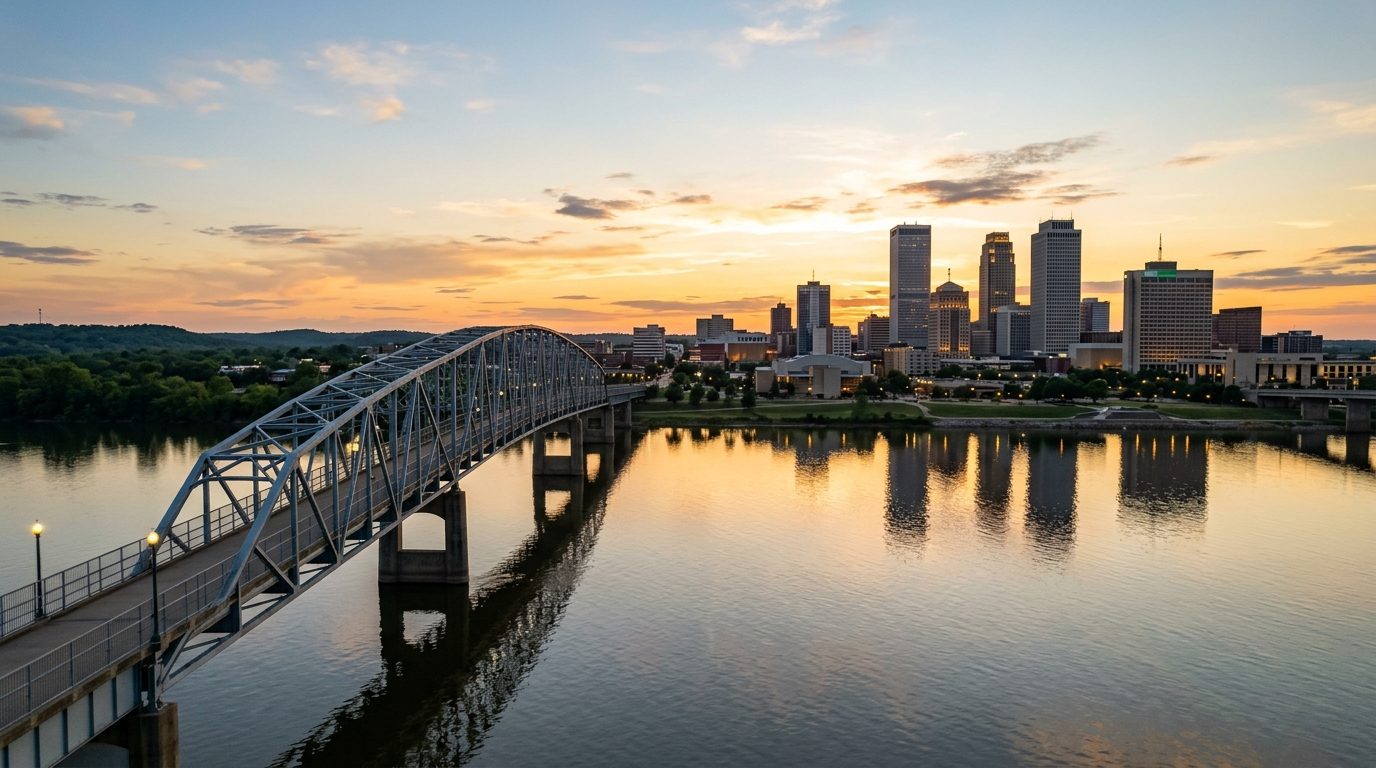
Current real estate market data, news and analysis for the Tulsa, OK metropolitan area — 1.1M residents across 7 counties in Oklahoma.
Data as of May 2026. Sources: Redfin Data Center, U.S. Census Bureau.
Latest Tulsa Real Estate News
Tulsa Real Estate Market Overview
The Tulsa metro spans seven counties in northeastern Oklahoma’s "Green Country," where the Great Plains give way to the rolling, wooded terrain of the Ozark Plateau’s western foothills. The Arkansas River runs through the center of the city. Summers are hot and humid, winters comparatively mild with occasional snow, and spring brings the region’s active severe-weather season. Midtown Tulsa’s neighborhoods date to the city’s 1920s oil-boom era, with Art Deco, Tudor, and Craftsman homes built along a historic streetcar-era street grid. The southern half of the city and its suburbs grew up largely after 1970 in lower-density, automobile-oriented subdivisions, and newer master-planned development continues to expand the metro’s southern suburbs. Beyond the built-up core, the outlying counties are a mix of small towns, ranch land, and acreage properties.
Midtown’s historic neighborhoods, with their mature tree canopy and architectural character, sit near the top of the market, matched by the metro’s southern suburbs, which combine newer construction, larger lots, and strongly regarded school districts. Established family-oriented suburbs to the northeast fall in between, offering a broad mix of housing ages at more moderate cost. North and east Tulsa, along with pockets near the metro’s industrial corridors, tend to be more affordable, generally reflecting older, smaller housing stock, and smaller outlying towns offer a more rural, small-town alternative with longer commutes into the city.
Aerospace is a foundational industry, anchored by a major airline’s largest maintenance base along with several other aircraft-maintenance and manufacturing companies operating in the metro. Energy remains a defining sector as well, with two large publicly traded energy companies headquartered in downtown Tulsa. Two major hospital systems operate multiple facilities across the metro, and higher education is represented by a private research university, a national religious university, and branch campuses of two of the state’s public university systems.
The metro sits within a tornado- and hail-prone corridor, and Oklahoma homeowners’ policies commonly apply a separate, percentage-based deductible to wind and hail claims rather than a flat dollar amount, so it’s worth reviewing that structure specifically when shopping for coverage. Much of the metro lies within floodplains along the Arkansas River and its tributaries, protected by a levee system tied to an upstream dam, and any specific parcel’s floodplain status is worth checking against the city or county’s floodplain maps. Following a 2020 U.S. Supreme Court ruling, a large share of the metro sits within recognized tribal reservation boundaries, which affects certain jurisdictional matters though not property ownership itself — buyers with questions about title, easements, or land use in a specific area should ask locally. Public transit is limited to a bus network, and the metro is generally car-dependent. A modest, county-filed homestead exemption is available to owner-occupants and is worth applying for after closing.
Cities and Towns in the Tulsa Metro Area
Show all 73
Notable Communities and Neighborhoods
Tulsa Real Estate Market FAQ
How is the Tulsa metro housing market organized?
The market runs from Midtown’s historic, streetcar-era neighborhoods through the city’s mostly post-1970 southern half and suburbs, out to a mix of small towns, ranch land, and acreage properties across the metro’s seven counties. Housing age and lot size generally increase as you move outward.
Which parts of the Tulsa area tend to be more expensive?
Midtown’s historic neighborhoods and the southern suburbs, with newer construction, larger lots, and strongly regarded schools, sit at the top of the market. North and east Tulsa, along with areas near the metro’s industrial corridors, tend to be more affordable.
What should buyers verify before purchasing in the Tulsa metro?
Check a specific parcel’s floodplain status against city or county floodplain maps, especially near the Arkansas River and its tributaries. Review how a homeowners policy structures its wind and hail deductible, and ask locally about any title, easement, or land-use questions tied to tribal reservation boundaries that cover much of the metro.
What severe-weather risks should Tulsa-area buyers plan for?
The metro sits in a tornado- and hail-prone corridor with an active spring storm season. It’s worth confirming how a homeowners policy handles wind and hail damage specifically, since Oklahoma insurers often apply a separate percentage-based deductible for those claims rather than a flat amount.
Nearby Markets