
Current real estate market data, news and analysis for the Joplin, MO-KS metropolitan area — 208,796 residents across Cherokee, KS, Jasper, MO and Newton, MO counties.
Data as of May 2026. Sources: Redfin Data Center, U.S. Census Bureau.
Latest Joplin Real Estate News
Coverage of this market is coming soon. Browse all housing market news.
Joplin Real Estate Market Overview
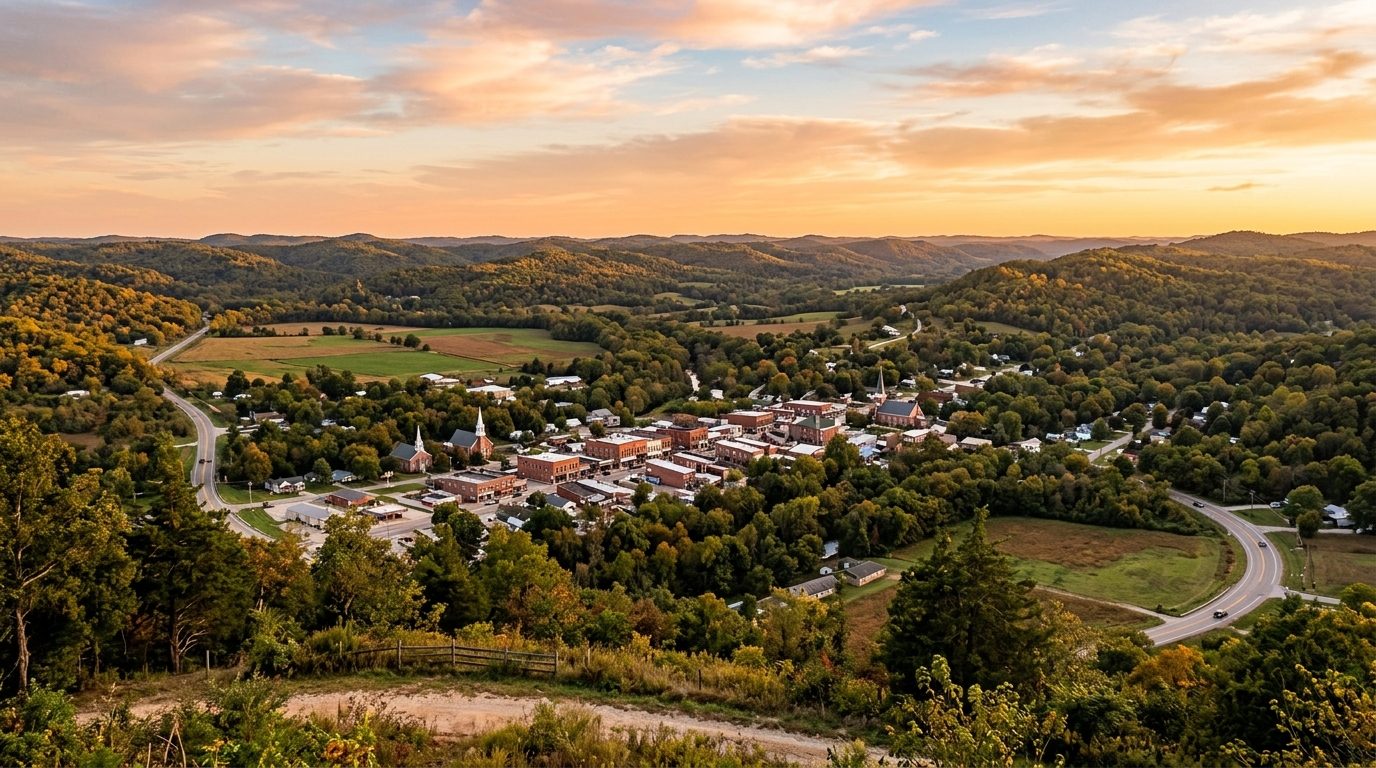
Joplin sits in the far southwest corner of Missouri where the Ozark foothills give way to the plains of eastern Kansas, and the metro spans both sides of that state line across Jasper and Newton counties in Missouri and Cherokee County in Kansas. The terrain is gently rolling, cut by Shoal Creek and the Spring River, with wooded creek bottoms, old chert bluffs, and the natural ledge at Grand Falls giving the landscape more texture than the flat prairie farther west. Housing stock reflects the area’s mining and manufacturing history: early twentieth-century bungalows and frame cottages from the lead-and-zinc boom sit alongside mid-century ranch homes and newer subdivisions on the city’s south and east sides, where much of the post-2011 rebuilding and later infill occurred. Smaller surrounding towns such as Webb City, Carthage, Carl Junction, and Baxter Springs each retain older town centers and courthouse squares, giving the region a patchwork of small-town cores linked by highway-corridor development.
Higher-priced housing tends to cluster in south Joplin, particularly newer subdivisions near golf courses and country-club areas, and in neighborhoods combining larger lots with mature trees and easy access to the Range Line Road retail corridor. Historic districts such as Murphysburg, with well-preserved Victorian and early-1900s architecture from Joplin’s mining-boom era, also command a premium for character and downtown proximity, though upkeep is a factor buyers weigh against newer construction. Lower-priced housing concentrates in older industrial and mining-era neighborhoods near the historic downtown core and in smaller unincorporated communities and former mining towns scattered through Jasper County, where lot sizes are smaller. On the Kansas side, Baxter Springs and Galena generally offer more affordable, small-town housing than the Missouri core.
The regional economy centers on healthcare, manufacturing, and logistics rather than one dominant industry. Freeman Health System and Mercy Hospital Joplin are the two major hospital systems and among the metro’s largest employers, anchoring a regional healthcare sector that draws patients from a wide multi-state area. Manufacturing has deep roots here: Leggett & Platt, a Fortune 500 manufacturer, is headquartered in nearby Carthage, TAMKO Building Products, a major roofing manufacturer, is headquartered in Joplin itself, and EaglePicher Technologies traces to the area’s mining and metals heritage. Food processing and cold-storage logistics, plus Missouri Southern State University as a higher-education anchor, round out the base, and Joplin functions as a retail hub for a broad rural trade area spanning Missouri, Kansas, and Oklahoma.
Severe weather is the defining local risk: the metro sits on Tornado Alley’s eastern edge, and Joplin was struck by a devastating EF5 tornado in 2011 that leveled a large swath of the city. Since then, storm-ready construction and reinforced safe rooms in public schools have become common considerations, and it is worth confirming whether a property has a safe room or ready access to public shelter. Homeowners insurance reflects this wind and hail exposure, and buyers should ask about storm history and roof age. Missouri and Kansas have different property tax structures, so buyers crossing the state line should compare carrying costs directly. The metro has no fixed-rail transit and relies on a small municipal bus system and personal vehicles, and land-use regulation is generally light, with many surrounding areas unincorporated or under county rather than city zoning, worth checking before assuming a lot’s future use.
Cities and Towns in the Joplin Metro Area
Notable Communities and Neighborhoods
Joplin Real Estate Market FAQ
How is the Joplin metro area organized geographically?
The metro spans two states, combining Jasper and Newton counties in southwest Missouri with Cherokee County in southeast Kansas. The city of Joplin is the population and employment center, with satellite communities such as Carthage, Webb City, Carl Junction, and Neosho on the Missouri side and Baxter Springs and Galena on the Kansas side, each retaining its own historic downtown core connected to Joplin by highway corridors.
Which parts of the Joplin area tend to be pricier, and why?
Newer subdivisions in south Joplin, especially those near golf courses and country-club areas, tend to command higher prices due to larger lots and newer construction. Historic districts like Murphysburg also carry a premium for their architectural character and walkable proximity to downtown. Older mining-era neighborhoods near the historic core and smaller former mining towns scattered through the county tend to be more modestly priced, reflecting older, smaller housing stock.
What should buyers verify locally before purchasing in the Joplin area?
Given the region’s tornado exposure, buyers should confirm whether a property has a storm shelter or safe room, or ready access to a public one, and ask about the roof’s age and any past storm or hail damage. Because the metro straddles Missouri and Kansas, it is also worth comparing property tax assessment practices and rates across the state line, and checking whether a parcel falls under city zoning or lighter county oversight, since many outlying areas are unincorporated.
How significant is tornado risk in the Joplin area?
The Joplin metro lies on the eastern edge of Tornado Alley and experiences tornado and severe thunderstorm activity in a typical spring and early-summer severe weather season. The area is best known for the catastrophic EF5 tornado that struck Joplin in May 2011, an event that reshaped local building practices, spurred wider adoption of reinforced safe rooms in schools and public buildings, and remains a reference point for storm preparedness in the region today.
Nearby Markets