
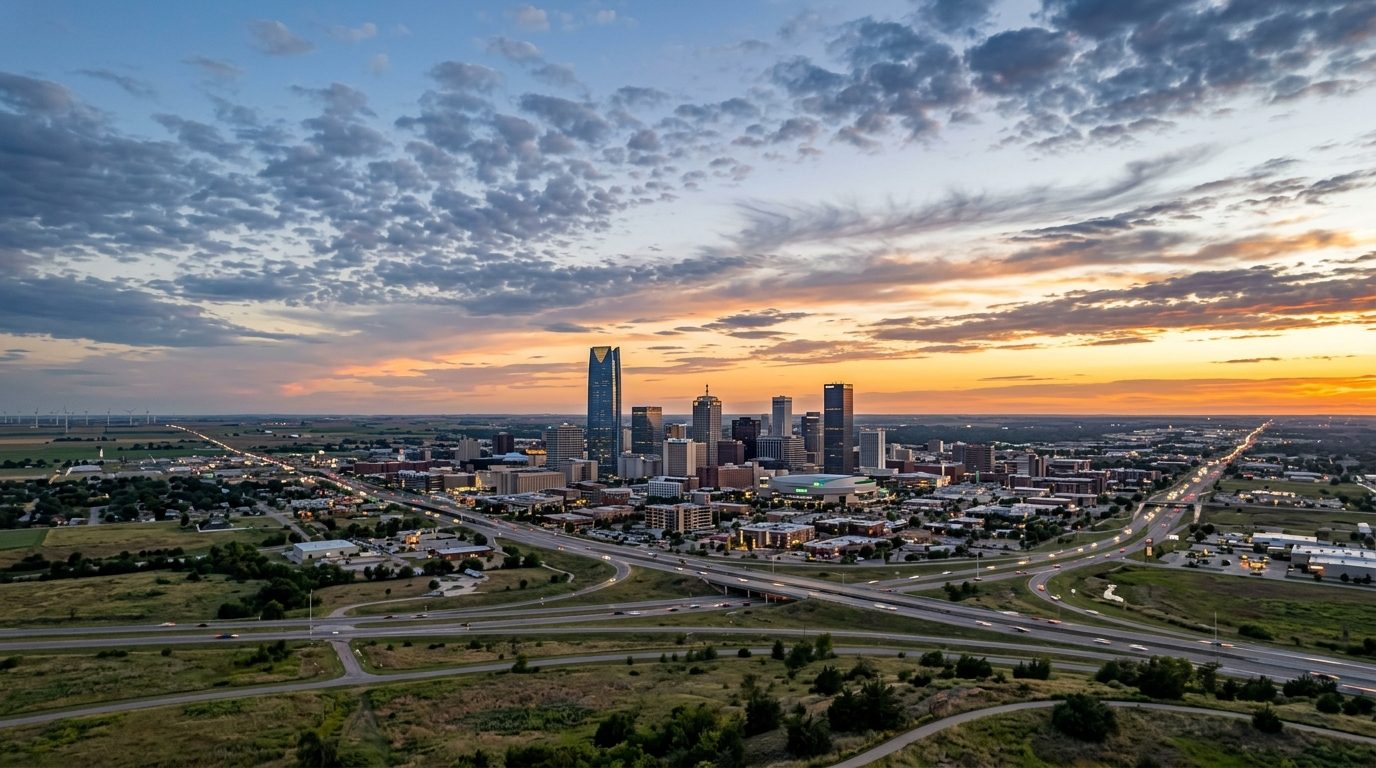
Current real estate market data, news and analysis for the Oklahoma City, OK metropolitan area — 1.5M residents across 7 counties in Oklahoma.
Data as of May 2026. Sources: Redfin Data Center, U.S. Census Bureau.
Latest Oklahoma City Real Estate News
Oklahoma City Real Estate Market Overview
The Oklahoma City metropolitan area covers Canadian, Cleveland, Grady, Lincoln, Logan, McClain and Oklahoma counties across central Oklahoma. Oklahoma City itself spans a large geographic area and contains early urban neighborhoods, postwar ranch homes, apartments, condominiums, townhouses and extensive suburban-style development within the city limits. Edmond, Moore, Norman, Midwest City, Mustang and Yukon form major suburban and employment centers. Smaller communities such as Guthrie, El Reno, Chickasha, Purcell and Chandler retain separate town centers and housing markets, while much of the outer metro consists of farms, acreage homes and rural subdivisions.
Higher price tiers are generally associated with Nichols Hills, Gaillardia-area neighborhoods, Heritage Hills, Mesta Park, Quail Creek, selected parts of Edmond and newer gated or golf communities. These locations often combine larger lots, established architecture, private amenities, school access or proximity to major employment corridors. More attainable choices are commonly found in portions of south and east Oklahoma City, Del City, Midwest City, older suburban neighborhoods and smaller outlying towns. Rural-edge properties may offer additional land but can involve wells, septic systems, propane service, private roads and longer travel to schools, hospitals and employment centers.
The economy is supported by state government, energy, aerospace, defense, health care, logistics, education and professional services. The State of Oklahoma is a major institutional employer, while Tinker Air Force Base anchors aerospace, maintenance and defense-related activity. The University of Oklahoma influences employment and housing in Norman, and major health systems and medical research institutions support the Oklahoma City core. Energy companies, aviation firms, distribution centers and livestock-related businesses broaden the employment base. Downtown Oklahoma City, the state Capitol and medical district, Tinker, Norman and northern suburban corridors form separate job centers.
Severe weather and soil conditions require property-specific review. Tornadoes, straight-line winds, hail, intense rain, ice storms and rapid temperature changes can affect roofs, foundations, trees and exterior structures. Expansive clay soils make drainage and foundation performance important inspection topics, while low-lying sites may experience flash flooding or overloaded stormwater systems. Public transportation is concentrated in Oklahoma City, leaving most suburban and rural households automobile-dependent. Buyers should verify school boundaries, utility service, storm-shelter access, homeowners association obligations and whether nearby land is approved for future residential, commercial or industrial use. Rural buyers should also investigate mineral rights, water sources, septic systems and road maintenance.
Cities and Towns in the Oklahoma City Metro Area
Notable Communities and Neighborhoods
Oklahoma City Real Estate Market FAQ
How is the Oklahoma City housing market geographically organized?
The market extends from Oklahoma City’s urban neighborhoods through suburban Edmond, Moore, Norman, Mustang, Yukon and Midwest City to small towns and rural properties across the surrounding counties. Highway access, school districts, municipal utilities and distance from employment centers divide the region into distinct submarkets.
Which Oklahoma City-area locations generally sit in higher price tiers?
Nichols Hills, Gaillardia-area neighborhoods, Heritage Hills, Mesta Park, Quail Creek, parts of Edmond and selected gated or golf communities generally occupy higher tiers. Larger lots, established architecture, private amenities, schools and proximity to major employment corridors contribute.
What should buyers verify in a new Oklahoma City-area subdivision?
Buyers should review homeowners association rules, builder warranties, drainage systems, school boundaries, utility providers and nearby approved land uses. They should also confirm responsibility for roads, retention ponds and common facilities.
What property risks should central Oklahoma buyers investigate?
Buyers should examine tornado and wind exposure, hail history, roof condition, drainage, expansive soils and foundation performance. Shelter access, insurance terms and the condition of large trees and exterior structures should also be considered.
Nearby Markets