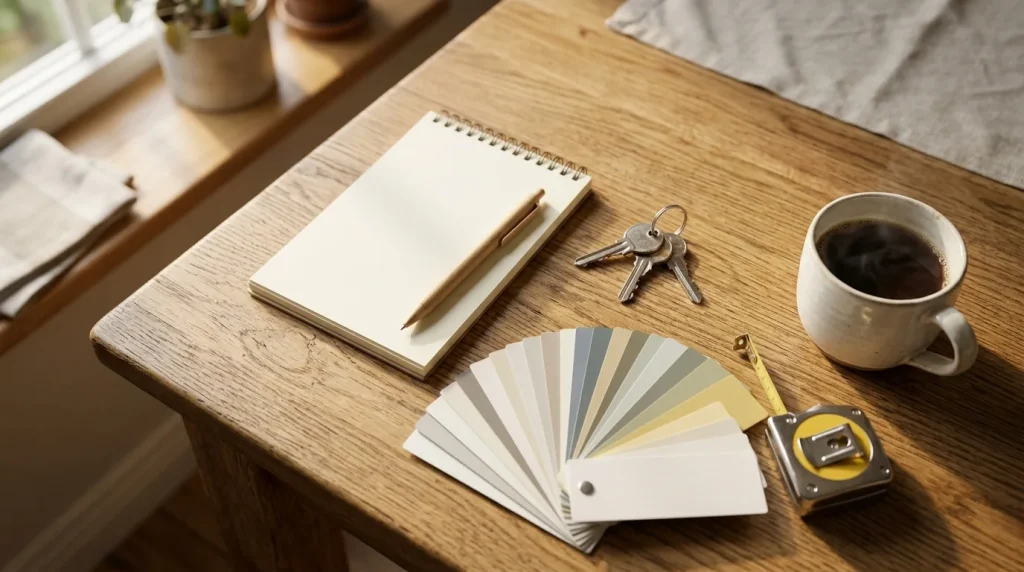
The most common mistake I see sellers make is not a bad paint color or an overpriced listing — it is starting the work with no plan. They burn their budget and energy on projects that do not move the sale price, then run out of both before tackling the things buyers actually notice. After hundreds of staging consultations, I can tell you the sellers who get top dollar all do the same thing first: they plan.
The key is starting early. The sooner you map out what needs to happen, the more time you have for repairs, decluttering, and updates — and the less it all costs, because nothing is rushed.
Walk your home like a buyer
Start with a full walkthrough, inside and out, as if you were seeing the property for the first time. Note everything: the squeaky door, the leaky faucet, the cracked walkway paver, the closet that will not close. Homeowners go blind to their own home’s wear and tear — we live with it daily, so we stop seeing it. Buyers see all of it in the first ten minutes.
Better yet, bring in fresh eyes. A pre-listing inspection or even a brutally honest friend will catch what you have stopped noticing.
Prioritize: not all tasks are equal
Once you have your list, rank it. Here is the order I use with my own sellers:
- Safety first. Tripping hazards, loose steps, wobbly railings, slippery walkways. These scare buyers and inspectors alike.
- Red flags. Water stains, odors, structural cracks, electrical problems. Any one of these can stop a sale cold, so they get fixed before anything cosmetic.
- Key rooms. The kitchen, living room, and primary bedroom carry the most weight in a buyer’s decision. Concentrate your budget there.
- High-ROI cosmetics. Neutral paint and updated light fixtures deliver the most impact per dollar of almost anything you can do.
- Everything else — as time and budget allow.
Your timeline matters too. If you need to list soon, choose quick, high-impact projects and skip the ones you cannot finish. A half-done renovation reads worse to buyers than a dated-but-tidy room, and sometimes adjusting the price is more practical than a major update.
Build the action plan
Turn the ranked list into a schedule: every task gets an owner, a deadline, and a budget line. Decide what you will do yourself and what needs a professional, and book tradespeople early — the good ones have wait times. Break big jobs into small daily steps, review progress weekly, and build in buffer time for surprises. There will be surprises.
Know when to bring in professionals
Professional stagers earn their fee most clearly on high-end properties, vacant homes, awkward layouts, and slow markets, where presentation is the difference between selling and sitting. And before you commit to any large project, run it past your REALTOR — some updates return several times their cost, while others return almost nothing. Knowing the difference is the whole game, especially when time on market is running longer than sellers expect.
A plan does more than organize the work. It keeps the stress manageable, the budget honest, and the finish line visible.
This article is adapted from my book, SELL SMART: The Proven Formula for Getting Top Dollar for Your Home, which includes a complete step-by-step preparation plan.