Washington has spent 2026 clearing the way for a new generation of factory-built homes. Local zoning is still in the way. Only about 17% of zoned land across the U.S. expressly allows manufactured home parks, according to a Realtor.com analysis published Oct. 26, 2026, and many jurisdictions block the homes through rules on minimum floor size, architectural design and by-right approval.
The report, written by Realtor.com senior economist Joel Berner, also ranks the 100 largest metro areas by how much they might gain if chassis-free manufactured homes were allowed. Hartford, Conn., tops the list, followed by Denver; Allentown, Pa.; Albuquerque, N.M.; and Colorado Springs, Colo.
What changed in federal policy
The analysis is pegged to two federal moves. The 21st Century ROAD to Housing Act, enacted earlier this year, removes the longstanding requirement that manufactured homes built to the federal HUD code sit on a permanent steel chassis for towing. Title III of the law also expands FHA-insured financing for manufactured home loans and directs HUD to study modular building codes, the report says.
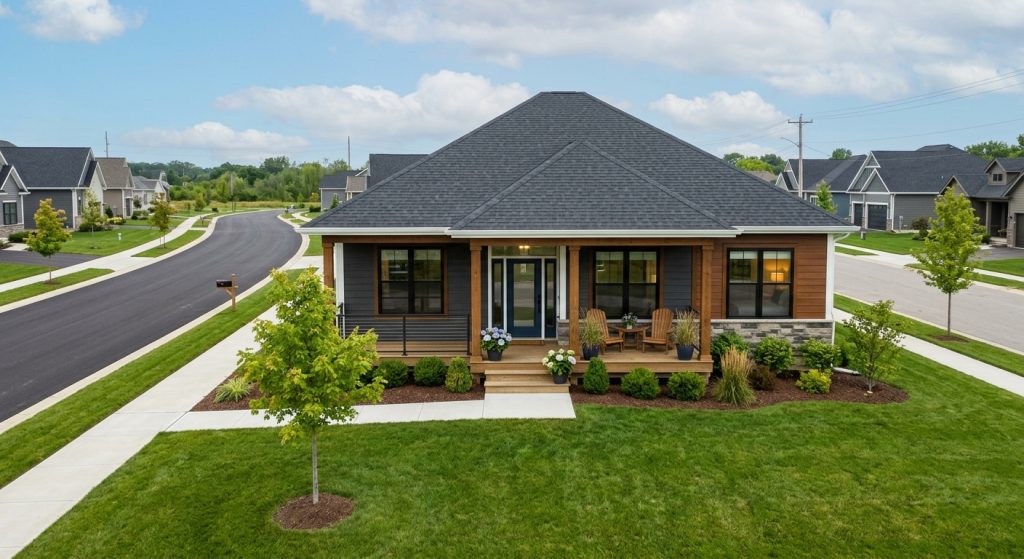
The law requires homes without a chassis to be treated the same as those with one for financing, titling, insurance, taxes, transport and installation. States have one year after enactment to adjust their laws, or two years where legislatures meet every other year, according to the report. Without the chassis, homes save on materials, can be assembled on multiple levels and lose the raised, step-up look associated with mobile homes. HUD has separately laid out a plan that would drop the chassis from its code.
Then, the week before the report, an executive order created a Task Force on Manufactured Housing Innovation that brings HUD together with the Federal Housing Finance Agency (FHFA) and other agencies. “Getting HUD and FHFA at the same table to coordinate developments in manufactured housing could lead to major steps forward,” Berner wrote, because differing agency definitions and policies “have created drag on the industry in the past.”
His bottom line: “These federal-level advances will certainly help the cause, but local zoning ordinances remain the largest hindrance to manufactured home expansion.”
How zoning keeps the homes out
Federal HUD code sets construction standards for manufactured homes and overrides local building codes, but municipalities decide where, or whether, the homes can be installed. The 17% figure comes from Land Use Labs, whose data covers roughly two-thirds of jurisdictions nationally, according to the report’s methodology.
Outright bans are rare, the report says, and some states, including North Carolina, forbid them. More common are rules that confine manufactured homes to commercial, industrial or agricultural zones or to mobile home parks; requirements for special exemptions or conditional use permits, which bring public hearings and neighborhood opposition; minimum floor-area rules; and design standards. Some foundation and skirting requirements that once excluded manufactured units may now be met without the chassis, the report notes.
The price gap
Price is the case for the product. Mobile home resale listings, including land, had a median price of $150,000 in September, and new manufactured homes sold for $134,800 in April, according to the report.
Financing remains the catch for buyers who do not own the land. They typically need a chattel loan, a personal-property loan with higher rates and fewer protections than a mortgage. For buyers who own or are buying the land, installation costs can generally be rolled into the loan, and Fannie Mae allows down payments as low as 3% at rates comparable to site-built mortgages, the report says.
Berner’s example: a $200,000 manufactured home bought with 3% down at a 7.4% rate means a $6,000 down payment and a monthly payment of $1,343. The median site-built buyer put down $27,100, and at the current median listing price of $419,250 and the same rate, the monthly payment comes to $2,715, roughly double.
Where the opportunity is greatest
Realtor.com scored each of the 100 largest metros on three measures: a low share of single-family starter homes (priced at or below 80% of the metro median listing price), a high per-square-foot premium for new single-family construction over existing homes, and low land prices per acre. The scores were averaged. The top 10, with their starter-home share, new-construction premium and median land price per acre:
- Hartford-West Hartford, Conn.: 17.9%; 29.1%; $54,805
- Denver-Aurora-Centennial, Colo.: 8.4%; 2.2%; $36,304
- Allentown-Bethlehem, Pa.-N.J.: 22.9%; 33.6%; $37,729
- Albuquerque, N.M.: 19.0%; 9.9%; $27,841
- Colorado Springs, Colo.: 13.7%; 8.1%; $46,126
- Albany-Schenectady-Troy, N.Y.: 31.6%; 47.0%; $26,265
- Rochester, N.Y.: 33.7%; 92.4%; $31,925
- Syracuse, N.Y.: 35.3%; 71.3%; $19,407
- Spokane-Spokane Valley, Wash.: 26.8%; 22.1%; $27,399
- Worcester, Mass.: 18.5%; 15.5%; $50,298
All ten are in the Northeast or West and most are smaller markets; only Denver ranks in the top 50 by household count, the report says. The three New York metros already have above-average starter-home shares, but new construction there carries steep premiums despite cheap land. The report also points to the Northeast’s short building season, which limits on-site construction in winter, as a reason factory-built homes could help there.
Local rules could still get in the way in some of these places. Albany bars mobile homes, mobile home courts and trailer parks for dwelling purposes citywide, according to the report, while Aurora, Fountain and Monument, Colo., use a 24-by-36-foot minimum footprint that likely excludes many single-wide homes. Colorado Springs; Bethlehem and Upper Macungie, Pa.; and Spokane and Spokane Valley, Wash., already allow manufactured homes by right.
The report lands as the entry-level squeeze tightens. Realtor.com’s research found starter homes make up a smaller share of listings than before the pandemic, and builders have said it is “incredibly difficult” to profit from a traditional starter home. Berner also pointed to perception: “If it looks like a site-built home, can be financed like a site-built home, and appreciates in value like a site-built home, there is less room for any stigma surrounding the purchase of a manufactured home.” More coverage is in RealtyWire’s Housing Market section.