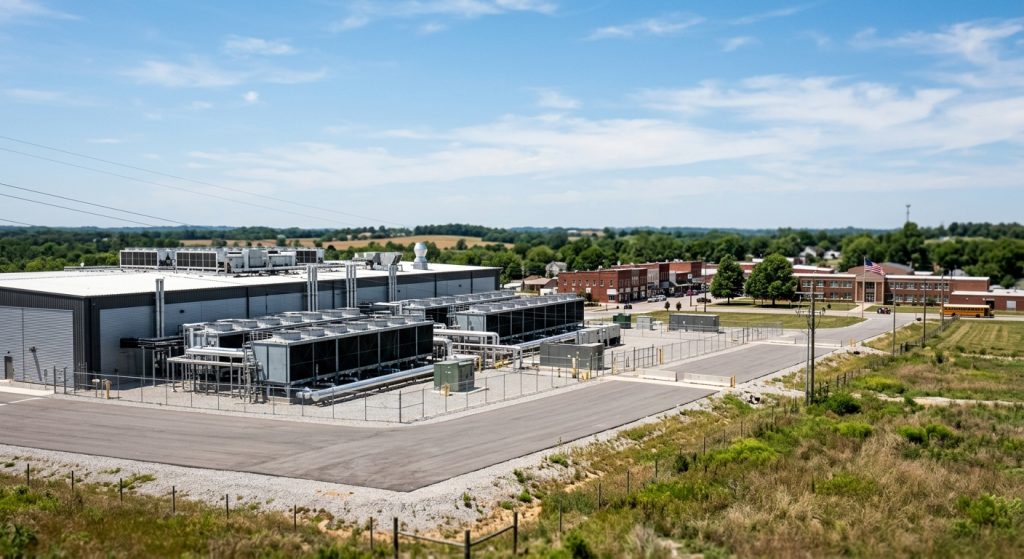
Meta is seeding a $1 billion fund to support the U.S. communities that host its data centers, CEO Mark Zuckerberg announced Monday, as the company faces mounting local pushback over the scale of its artificial intelligence infrastructure buildout.
The “Future Is for Everyone Fund” will direct money toward teachers, first responders, and energy and water infrastructure in towns near Meta’s data centers, with programs customized to each community’s needs, the company said. The commitment was unveiled inside a 6,500-word letter from Zuckerberg titled “The Future Is for Everyone: The Path to a Positive AI Future,” published alongside new open-source AI model releases.
“We’re starting a new Future is for Everyone Fund to invest in the communities’ teachers, first responders, energy and water infrastructure and more ways to support these communities directly,” Zuckerberg wrote.
A Louisiana model
Zuckerberg pointed to Richland Parish, Louisiana, as the template for the fund. Meta said local teachers there received a $50,000 bonus this year, funded by the increased tax revenue generated by the company’s data center investment in the parish, and that the district’s superintendent believes it can now compete nationally for teaching talent.
Meta said it has also launched “America’s Workforce Academy,” which offers free training for skilled trades workers with guaranteed jobs in data center construction, an attempt to address labor shortages in the communities where it builds. The company has framed both initiatives as evidence that the economic benefits of hosting AI infrastructure can outweigh the costs, an argument it is making at a moment when local resistance to new projects is intensifying nationally.
Responding to opposition
The fund arrives as data center development has become one of the more contentious land-use fights in American real estate. Communities from Virginia to Texas have organized against new projects over concerns about electricity costs, water use and noise, and lawmakers in Congress have introduced measures aimed at giving local governments more power to block or condition new facilities.
Meta’s announcement frames the fund as part of a broader argument that the company should be trusted to self-regulate its AI buildout rather than face heavier-handed restrictions. The letter also renewed Meta’s commitment to open-source AI development, arguing that keeping powerful AI models open reduces the risk of the technology’s capabilities concentrating in the hands of a small number of companies, a theme Zuckerberg tied to a broader goal of “personal superintelligence” being available broadly rather than only to a select few.
The community fund is a comparatively small line item next to Meta’s overall AI infrastructure spending, which has run into the tens of billions of dollars annually as the company builds and leases data center capacity nationwide. That gap between headline capital spending and direct community investment is likely to remain a point of scrutiny for critics who argue tax incentives and utility rate structures still shift real costs onto host communities even after funds like this one are in place.
What it means
Meta has not detailed how the fund will be governed, which specific communities will receive money first, or how the $1 billion will be allocated among the dozens of markets where the company now operates or is building data centers. Those specifics, along with whether other hyperscalers follow with similar community funds, will determine whether the commitment reshapes the increasingly tense relationship between AI infrastructure developers and host communities, or functions mainly as a public-relations response to that tension.
The move follows a pattern of large, individually negotiated Meta data center financings, including its $14 billion joint venture with BlackRock for an El Paso, Texas, data center campus and its Louisiana project, where new details on ownership and tax breaks have drawn scrutiny. Congressional pushback has also grown, including Rep. Ro Khanna’s proposed ‘Data Center Bill of Rights’ that would let communities block AI facilities.