
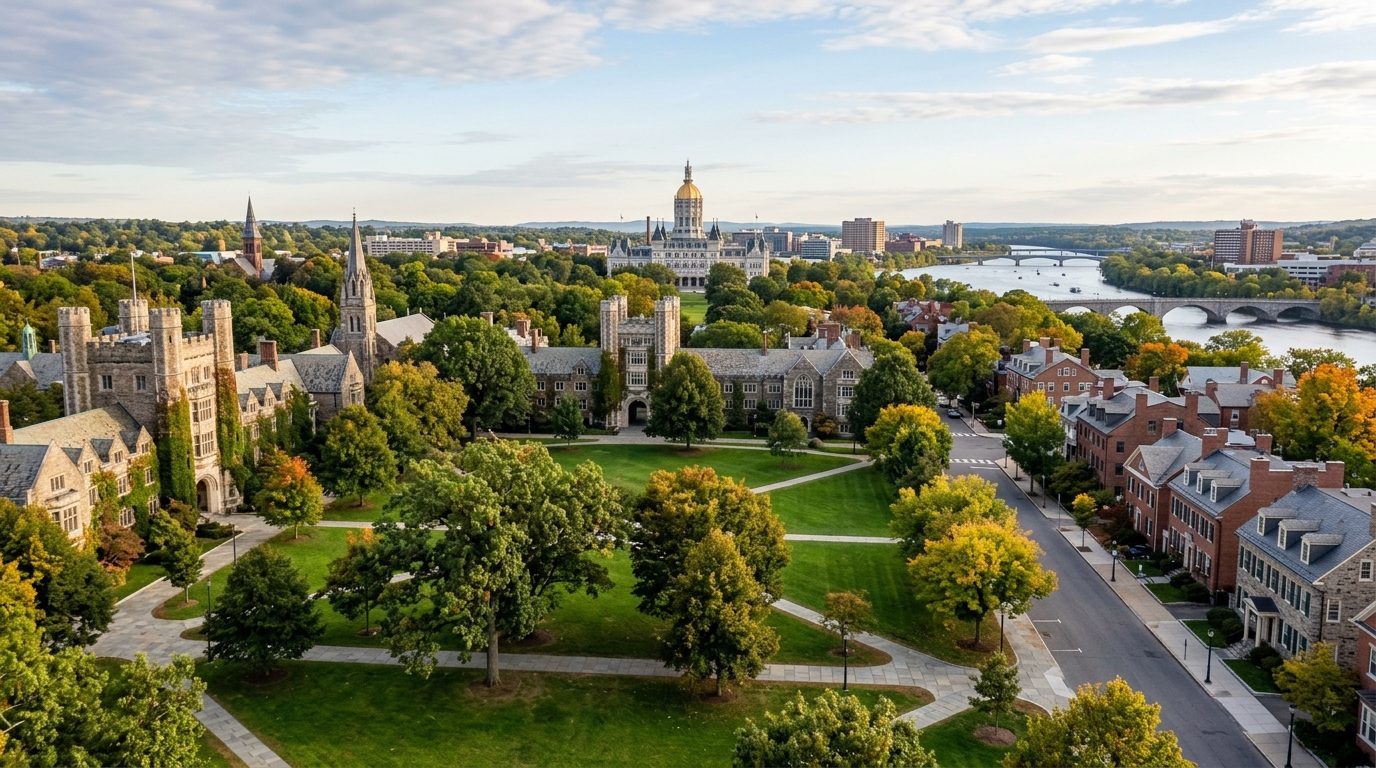
Current real estate market data, news and analysis for the Trenton-Princeton, NJ metropolitan area — 399,289 residents across Mercer county.
Data as of May 2026. Sources: Redfin Data Center, U.S. Census Bureau.
Latest Trenton Real Estate News
Coverage of this market is coming soon. Browse all housing market news.
Trenton Real Estate Market Overview
Mercer County occupies the center of New Jersey along the Delaware River, roughly midway between New York City and Philadelphia on the Northeast Corridor rail line. Trenton, the state capital, sits on the river at the county’s western edge, while Princeton lies to the northeast near the Millstone River and the Delaware and Raritan Canal. Between them lie Hopewell, Pennington, and Hightstown, along with townships such as Lawrence, West Windsor, Plainsboro, Hamilton, and Robbinsville, spanning a landscape that shifts from dense urban blocks to rolling farmland and the wooded ridge of Sourland Mountain. Housing stock reflects that range: Trenton holds brick rowhouses and twins from its industrial era, Princeton mixes colonial-era homes with early-twentieth-century estates near the university, and surrounding townships combine older farmhouses with newer subdivisions built on former agricultural land.
Within the metro, cost tends to track proximity to Princeton University, access to top-rated school districts, and the age and condition of surrounding infrastructure. Central Princeton, its historic western neighborhoods, and newer construction in districts such as West Windsor-Plainsboro and Hopewell Valley sit toward the upper end, reflecting demand tied to the university, walkable downtowns, and highly regarded public schools. Trenton’s urban core and its older, denser residential blocks generally sit toward the lower end, shaped by a smaller share of owner-occupied housing, more properties needing renovation, and a different mix of civic services. Smaller boroughs like Hightstown, Pennington, and Hopewell fall in between, trading urban walkability for small-town character.
The area’s economy centers on government, higher education, and life sciences. Trenton, as New Jersey’s capital, hosts state government offices that remain among the region’s largest employers. Princeton University anchors the northeastern end of the metro, supported by research institutions including the Institute for Advanced Study, the Princeton Plasma Physics Laboratory, and Educational Testing Service. A pharmaceutical and biotechnology corridor runs along the Route 1 corridor, where Bristol-Myers Squibb maintains a major research and administrative presence. Healthcare is another significant sector, led by the Capital Health system, which operates its Regional Medical Center in Trenton and a second hospital in Hopewell Township, alongside insurance and financial-services employers such as NJM Insurance Group and bank operations centered in the Trenton area.
Property taxes in New Jersey are among the highest in the country, and within this metro they vary widely by municipality and school district, so buyers should compare tax rates and assessment practices town by town rather than assume a single county-wide figure. Transit access is a defining feature: NJ Transit’s Northeast Corridor Line and Princeton Branch, along with Amtrak service from Trenton Transit Center and Princeton Junction, connect the area directly to New York Penn Station and Philadelphia’s 30th Street Station, making rail access a meaningful factor near stations. New Jersey’s home-rule tradition means zoning, permitting, and development review are handled independently by each municipality, so land-use rules and approval timelines differ town to town. Buyers should verify local school district boundaries, since some boroughs share regional districts with neighboring townships, confirm well and septic versus public water and sewer service in more rural parts of Hopewell Township, and check flood zone status near the Delaware River, the Delaware and Raritan Canal, or the Millstone and Stony Brook waterways.
Cities and Towns in the Trenton Metro Area
Notable Communities and Neighborhoods
Trenton Real Estate Market FAQ
How is the Trenton-Princeton metro area organized geographically?
The metro corresponds to Mercer County and runs from Trenton, the state capital, on the Delaware River at the county’s western edge, northeast to Princeton along the Millstone River and the Delaware and Raritan Canal. In between sit Hopewell, Pennington, and Hightstown, along with surrounding townships that range from dense, walkable downtowns to open farmland and wooded ridgeline. The county sits on the Northeast Corridor rail line roughly midway between New York City and Philadelphia.
Which areas within the metro tend to be pricier, and why?
Areas closest to Princeton University, its historic downtown, and neighborhoods within highly regarded public school districts such as Princeton, West Windsor-Plainsboro, and Hopewell Valley tend to sit toward the upper end of the market. Demand there reflects walkability, school reputation, and proximity to the university and its affiliated institutions. Trenton’s urban core and older, denser residential blocks generally sit at the more affordable end, while smaller boroughs and townships fall in between.
What should buyers verify locally before purchasing in this metro?
Buyers should confirm the specific municipality’s current property tax rate and assessment practices, since these differ significantly even between adjoining towns, and check which school district a property falls into, as some boroughs share regional districts with neighboring townships. In more rural parts of Hopewell Township and similar areas, buyers should confirm whether a property relies on well water and septic service or public utilities, and check flood zone status for anything near the Delaware River, the Delaware and Raritan Canal, or local streams. For newer developments, confirming homeowners association fees and rules is also worthwhile.
Why do property taxes vary so much between towns in this metro, and what does that mean for buyers?
New Jersey funds most local services and schools through municipal property taxes, and each town and school district sets its own budget and tax rate independent of neighboring municipalities, a product of the state’s strong home-rule tradition. As a result, two comparably priced homes in different towns within the same metro can carry noticeably different annual tax bills. Buyers should request the current, actual tax bill for a specific property rather than relying on a countywide average or a neighboring town’s rate.
Nearby Markets