
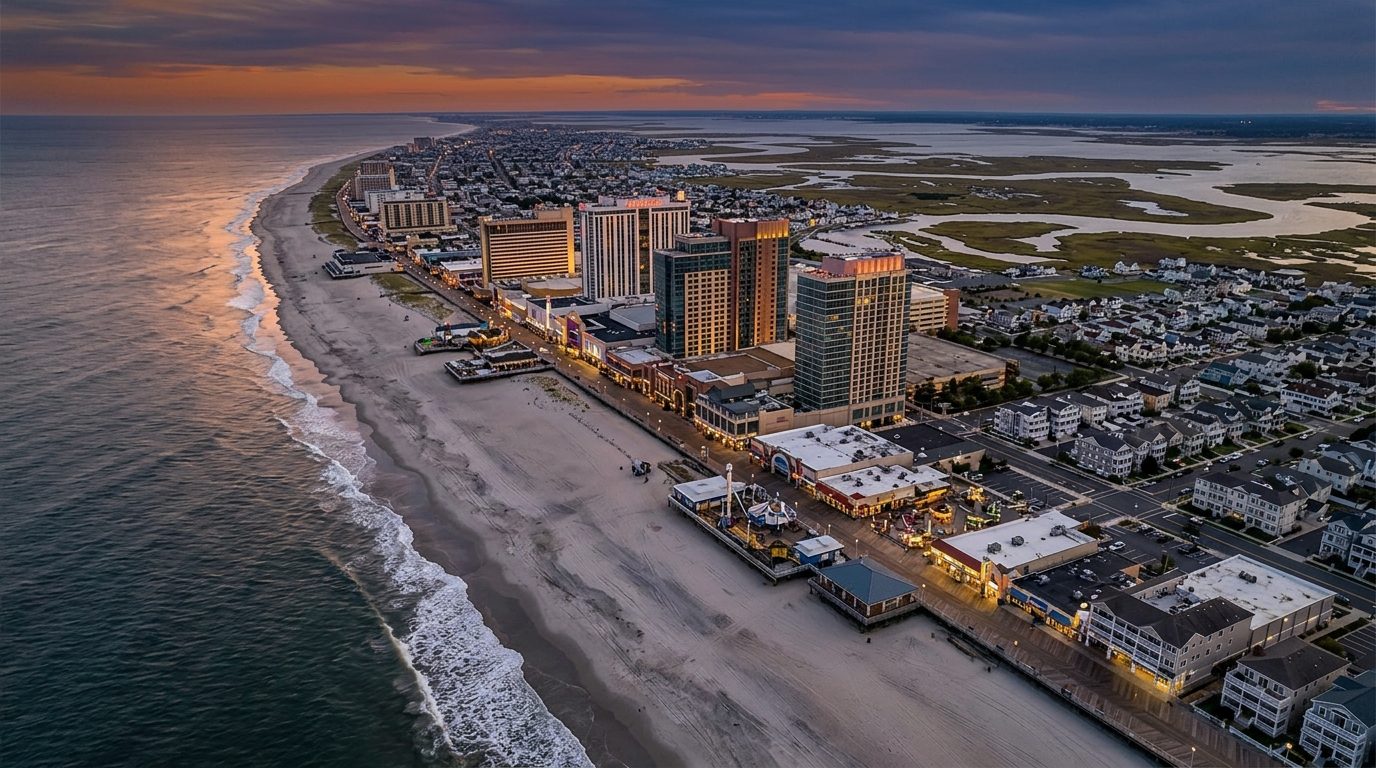
Current real estate market data, news and analysis for the Atlantic City-Hammonton, NJ metropolitan area — 372,047 residents across Atlantic and Cape May counties.
Data as of May 2026. Sources: Redfin Data Center, U.S. Census Bureau.
Latest Atlantic City Real Estate News
Coverage of this market is coming soon. Browse all housing market news.
Atlantic City Real Estate Market Overview
The Atlantic City-Hammonton metro spans Atlantic and Cape May counties along the southern New Jersey shore, where a string of barrier islands separates the Atlantic Ocean from bay and marsh country before giving way to a sandy mainland that blends into the Pine Barrens. Atlantic City, Ventnor City, Margate City, and Longport share Absecon Island; Ocean City occupies its own island to the south, the Wildwoods sit on another, and Cape May anchors the peninsula’s southern tip. Inland, Hammonton, Egg Harbor Township, Galloway, and Mays Landing sit amid farmland and pine forest. Housing ranges from Victorian-era cottages and high-rise condominium towers near the casinos to modest bungalows on the barrier islands, suburban ranch homes inland, and working farmhouses around Hammonton.
Price tiers across this metro largely track distance from open ocean and the scarcity of buildable shorefront land. Beach-block and bayfront properties on the southern barrier islands and in Longport and Avalon sit toward the top of the range, supported by limited lot supply, restrictive local zoning, and steady demand for second homes. Cape May’s historic district carries a premium tied to its preserved Victorian architecture. Inland communities such as Galloway, Egg Harbor Township, and Hammonton, along with older inland sections of Atlantic City, tend to sit lower, reflecting older housing stock, decades of casino-era economic swings, and simply more available land away from the water.
The metro’s economy centers on tourism and gaming. Atlantic City’s Boardwalk and Marina District casino resorts, including Borgata, Hard Rock, Ocean Casino Resort, Caesars, Bally’s, Tropicana, Harrah’s, Resorts, and Golden Nugget, anchor employment alongside the convention and entertainment business built around Boardwalk Hall. AtlantiCare is the region’s dominant healthcare system, with Shore Medical Center serving the Cape May County side. Stockton University, based in Galloway with a satellite campus in Atlantic City, is a major employer and trains workers for local hospitality and gaming programs. The FAA’s William J. Hughes Technical Center in Egg Harbor Township employs researchers and engineers supporting the national air traffic system. Around Hammonton, known for its blueberry farms, agriculture remains a significant employer, while Cape May County’s shore towns run on a seasonal economy of hotels, rentals, restaurants, and marine trades tied to the summer tourist season.
Because nearly every town in this metro touches ocean, bay, or back-bay marsh, flood risk and flood insurance are central concerns for buyers. Barrier-island communities face storm surge exposure and routine tidal flooding on low-lying streets, and federal flood maps place much of the shoreline in zones that require flood insurance and elevated construction. New Jersey’s Coastal Area Facility Review Act adds a layer of state oversight over shorefront building and rebuilding. Property taxes fund most local services and vary between shore boroughs and mainland townships. Public transit is limited to a single rail line linking Atlantic City and Philadelphia plus local jitney and bus service; most residents rely on cars. Many shore towns license or restrict short-term rentals and apply zoning tied to seasonal occupancy. Buyers should verify flood zone designation and insurance cost, septic versus sewer service on the mainland, any homeowners’ association or rental rules, and whether a property sits within a redevelopment or historic district before purchasing.
Cities and Towns in the Atlantic City Metro Area
Notable Communities and Neighborhoods
Atlantic City Real Estate Market FAQ
How is the Atlantic City-Hammonton market organized geographically?
The metro splits between barrier-island shore towns and a mainland interior. Absecon Island holds Atlantic City, Ventnor City, Margate City, and Longport; Ocean City and the Wildwoods each occupy separate islands to the south, and Cape May sits at the tip of the peninsula. Inland, towns like Hammonton, Egg Harbor Township, Galloway, and Mays Landing sit on the mainland amid farmland and forest, offering a different housing stock and buying process than the barrier islands.
Which areas tend to be pricier, and why?
Beach-block and bayfront properties on the barrier islands generally command the most, since buildable oceanfront and bayfront land is fixed in supply and local zoning in many shore boroughs limits new construction and lot subdivision. Historic districts, such as Cape May’s Victorian core, add a further premium tied to preservation rules and architectural character. Mainland and inland neighborhoods, with more available land and older general housing stock, tend to be more affordable.
What should buyers verify locally before purchasing here?
Confirm the property’s flood zone designation and expected flood insurance cost, since this varies block by block on the barrier islands. On the mainland, check whether the home relies on septic or public sewer service. In shore towns, review any homeowners’ association rules and local ordinances on short-term or seasonal rentals, and confirm whether the property lies within a redevelopment or historic district that limits alterations.
What coastal risks are specific to this market?
This is a barrier-island and bayshore region exposed to storm surge, nor’easters, and routine tidal flooding on low-lying streets even outside major storms. Much of the shoreline falls in federal flood zones that require flood insurance and elevated construction, and state coastal regulations add further oversight of shorefront building and rebuilding. Buyers should weigh ongoing flood insurance costs and maintenance demands alongside the purchase price.
Nearby Markets