
Current real estate market data, news and analysis for the Tallahassee, FL metropolitan area — 397,442 residents across Gadsden, Jefferson, Leon and Wakulla counties.
Data as of May 2026. Sources: Redfin Data Center, U.S. Census Bureau.
Latest Tallahassee Real Estate News
Coverage of this market is coming soon. Browse all housing market news.
Tallahassee Real Estate Market Overview
Tallahassee sits in Florida’s Panhandle, roughly equidistant between Jacksonville and Pensacola, about twenty miles north of the Gulf of Mexico and a short drive south of the Georgia line. The metro covers Leon County, home to the capital city, along with Gadsden, Jefferson, and Wakulla counties, a landscape of rolling hills, red clay soils, pine and hardwood forests, springs, and lakes that sets it apart from the flatter terrain of peninsular Florida. Housing stock varies accordingly: brick ranch and mid-century homes on shaded lots near downtown and the university corridors; golf-course and lakefront subdivisions built from the 1970s onward in the northeast; newer master-planned communities with town-center layouts on the city’s eastern edge; and, in the surrounding counties, farmhouses, small-lot housing, and rural acreage in the region’s agricultural towns.
Northeast Tallahassee generally sits at the higher end of the market. Established golf and lake communities there offer larger lots, mature tree cover, private club amenities, and proximity to well-regarded schools, while newer master-planned neighborhoods nearby add trails, pools, and town-center commercial space. Close-in historic neighborhoods near downtown and the Florida State and Florida A&M campuses trade smaller lots and older homes for walkability and character. The city’s south and west sides, along with the outlying counties, tend to offer more affordable options, shaped by older housing stock, larger undeveloped tracts, and greater distance from downtown and campus employment. These differences trace to when each area was built, its proximity to state government and the universities, and how much recent investment it has drawn.
Government, higher education, and health care anchor the metro’s economy. As Florida’s capital, Tallahassee houses the state Capitol and headquarters for numerous state agencies, making the State of Florida the region’s largest employer. Florida State University and Florida A&M University, both centered in the urban core, drive research, public-sector careers, and a large student population, alongside Tallahassee Community College. Tallahassee Memorial HealthCare and Capital Regional Medical Center are the region’s principal hospital systems. Outside Leon County, the economy leans agricultural: Gadsden, Jefferson, and Wakulla counties support farming, timber, and small manufacturing, with Quincy, Monticello, and Crawfordville serving as county seats and commercial centers.
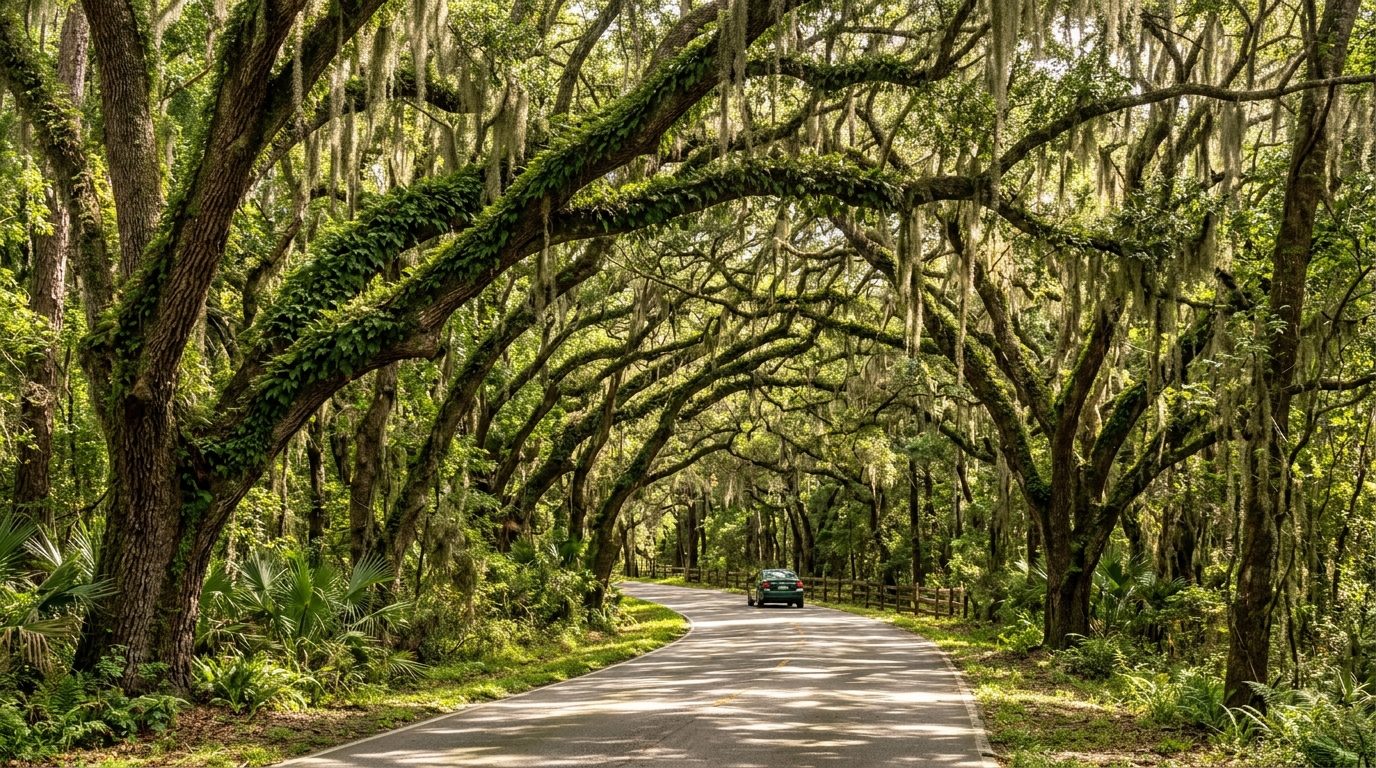
Because Tallahassee sits well inland, it faces less direct hurricane landfall exposure than much of Florida, but the region still experiences tropical storm winds, heavy rain, and inland flooding as systems track north from the Gulf, so buyers should confirm a property’s flood zone and wind-mitigation features regardless of distance from the coast. Florida imposes no state income tax, a factor buyers often weigh alongside property tax rates and insurance premiums, which vary by flood zone and construction age. A distinctive local feature is the canopy road network — corridors such as Old Bainbridge, Miccosukee, and Centerville roads where century-old live oaks form a continuous overhead canopy, protected under ordinances that restrict tree removal and limit development near the roadside; this preserves scenery but can constrain what is buildable on adjacent parcels. Development has generally pushed outward along the northeast and east corridors, while older neighborhoods see gradual infill. Buyers should verify flood zone designation, whether a property sits within a canopy road protection zone or historic overlay, septic versus municipal sewer outside the city core, and homeowners’ association rules in the master-planned communities, since these differ between Tallahassee proper and the surrounding counties.
Cities and Towns in the Tallahassee Metro Area
Notable Communities and Neighborhoods
Tallahassee Real Estate Market FAQ
How is the Tallahassee metro area organized geographically?
The metro consists of four counties: Leon County, anchored by the city of Tallahassee itself, plus Gadsden County to the west (seat: Quincy), Jefferson County to the east (seat: Monticello), and Wakulla County to the south toward the Gulf coast (seat: Crawfordville). Tallahassee is the urban core and employment center, while the other three counties are smaller, more rural, and organized around their own historic town centers and agricultural land.
Which parts of the metro tend to be pricier, and why?
Northeast Tallahassee, with its established golf and lake subdivisions and newer master-planned communities, tends to command higher prices, reflecting larger lots, mature landscaping, private amenities, and strong school access. Close-in neighborhoods near downtown and the university campuses carry a premium for walkability and historic character despite smaller lots. Areas farther from the capital’s employment centers, including much of the outlying counties, tend to be more affordable, largely because of older housing stock, longer commutes, and less recent infrastructure investment.
What should buyers verify locally before purchasing in this metro?
Buyers should check a property’s flood zone designation, confirm whether it falls within a canopy road protection zone or a historic district with added review requirements, and determine whether it relies on septic or municipal sewer service, which is common outside the Tallahassee city limits. In master-planned communities, buyers should also review homeowners’ association rules, dues, and any architectural or landscaping restrictions.
What is the region’s main weather-related risk, and how does it affect insurance?
Tallahassee’s inland location, roughly twenty miles from the Gulf, reduces direct hurricane landfall exposure compared with coastal Florida, but the metro still experiences tropical storm winds, heavy rain, and inland flooding when systems track north from the Gulf. Homeowners insurance in the area typically separates wind coverage from flood coverage, and premiums and hurricane deductibles vary based on flood zone, construction age, and roof and wind-mitigation features, so buyers should request an insurance quote before closing.
Nearby Markets