
Current real estate market data, news and analysis for the Pinehurst-Southern Pines, NC metropolitan area — 110,619 residents across Moore county.
Data as of May 2026. Sources: Redfin Data Center, U.S. Census Bureau.
Latest Pinehurst Real Estate News
Coverage of this market is coming soon. Browse all housing market news.
Pinehurst Real Estate Market Overview
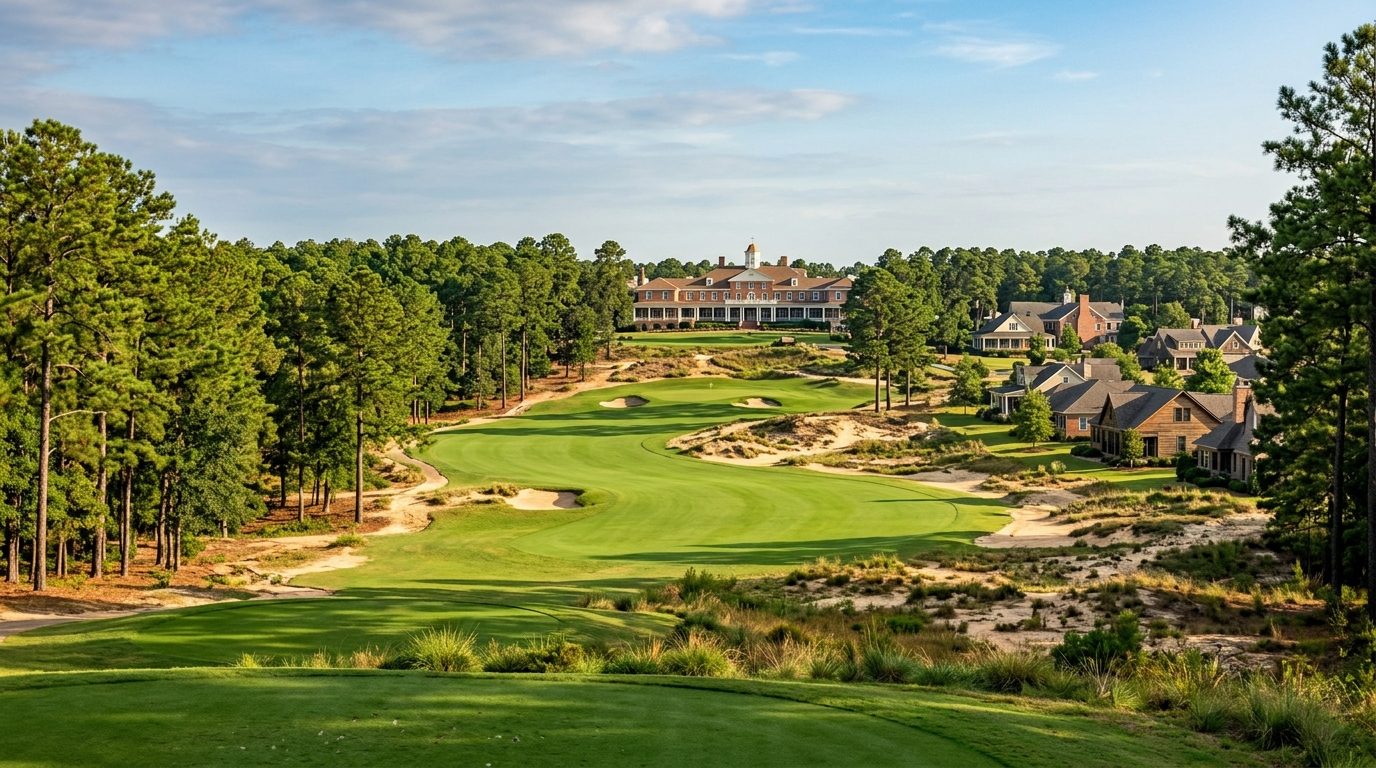
The Pinehurst-Southern Pines metro sits in North Carolina’s Sandhills region, a band of ancient wind-deposited dunes on the transitional line between the Piedmont and the coastal plain, covered largely in longleaf pine forest. The Village of Pinehurst, laid out beginning in 1895 by resort developer James Walker Tufts with landscape architect Frederick Law Olmsted, is a nationally designated historic landmark village of curving streets set among the pines, while Southern Pines grew up around the same era as a winter health resort along the railroad, with its own historic downtown and the large-lot Weymouth Heights enclave nearby. Beyond the resort core, Moore County’s development pattern includes numerous discrete golf-community subdivisions scattered through the pine forest and more rural, agricultural land to the west and south.
The Village of Pinehurst and the private, gated golf-equity communities around it — including the Country Club of North Carolina, Pinewild Country Club, National Golf Club, and Mid South Club — sit at the top of the metro’s price range, along with Southern Pines’ historic Weymouth Heights district. Golf- and lake-oriented communities further from the Pinehurst core, such as Seven Lakes and Whispering Pines, occupy a middle tier, still amenity-driven but generally less exclusive. The county’s outlying agricultural and timber land, and smaller towns away from the golf-resort core such as Robbins, Cameron, and Vass, offer the most affordable housing, reflecting a working-land character rather than planned-community amenities.
Healthcare is the county’s largest employment sector, led by FirstHealth of the Carolinas, a regional not-for-profit system based locally. Golf and hospitality form the metro’s other defining industry: Pinehurst Resort is among the county’s largest private employers, and Moore County’s density of golf courses — widely cited as among the highest anywhere in the country — has drawn golf-industry employers including the United States Golf Association and equipment makers Golf Pride and US Kids Golf. Pinehurst’s courses, especially Pinehurst No. 2, have repeatedly hosted the U.S. Open and other major championships, reinforcing golf tourism as a recurring economic driver for the wider area.
Moore County sits well inland in the Sandhills, so it faces no coastal storm-surge risk, and its well-drained sandy soils generally reduce surface flooding compared with much of eastern North Carolina, though buyers should still confirm parcel-level flood status. North Carolina taxes most retirement income other than Social Security, unlike Florida’s no-income-tax model, which is worth factoring in for retirees relocating from elsewhere. The area’s premier golf communities operate as private, gated clubs with equity-membership requirements tied to residency, a different structure from an open subdivision with a conventional homeowners association, so buyers should understand membership obligations before purchasing. Public transit is limited to a single fixed route connecting Southern Pines and Aberdeen, making most of the county car-dependent.
Cities and Towns in the Pinehurst Metro Area
Notable Communities and Neighborhoods
Pinehurst Real Estate Market FAQ
How is the Pinehurst-Southern Pines housing market organized?
The market centers on the historic Village of Pinehurst and its surrounding private golf-equity communities, Southern Pines’ historic downtown and residential districts, and more affordable, rural agricultural land toward the county’s edges.
Which parts of the metro tend to be pricier?
The Village of Pinehurst and private gated golf communities such as the Country Club of North Carolina and Pinewild Country Club sit at the top of the market, while outlying towns like Robbins, Cameron, and Vass are generally the most affordable.
What should buyers verify before purchasing here?
Buyers looking at the area’s private golf communities should confirm equity-membership requirements and dues, since these operate differently from a standard homeowners association, and all buyers should check parcel-level flood status even given the region’s generally low flood risk.
What is the main regional risk factor to know about?
This inland Sandhills location has no coastal storm-surge exposure, and its sandy, well-drained soils limit surface flooding compared with much of eastern North Carolina, making regional flood risk relatively low.
Nearby Markets