
Current real estate market data, news and analysis for the Monroe, MI metropolitan area — 156,004 residents across Monroe county.
Data as of May 2026. Sources: Redfin Data Center, U.S. Census Bureau.
Latest Monroe Real Estate News
Coverage of this market is coming soon. Browse all housing market news.
Monroe Real Estate Market Overview
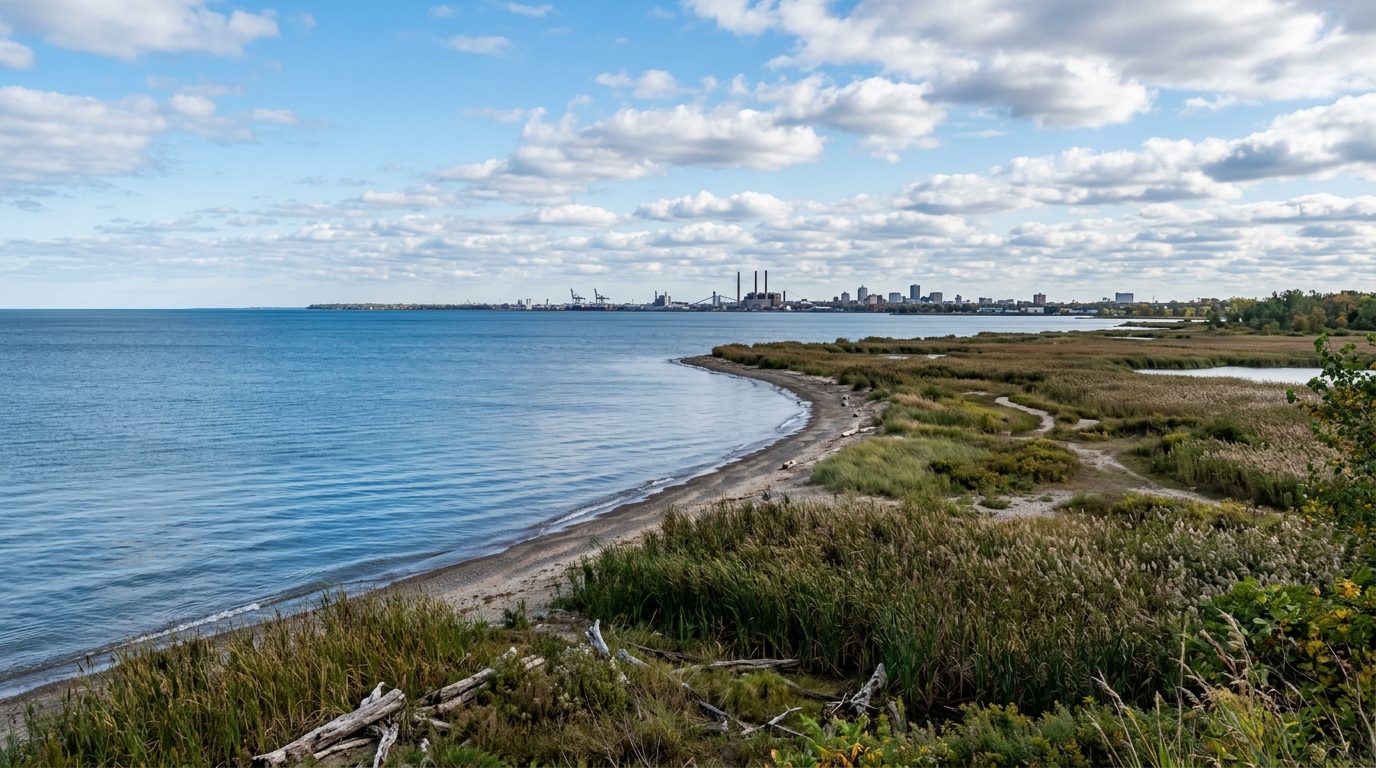
Monroe County occupies the southeastern corner of Michigan, along the western shore of Lake Erie between Detroit and Toledo. The land is flat lake-plain terrain shaped by marshland, drained farm fields, and the River Raisin, which winds east through the county before emptying into the lake near Sterling State Park. The city of Monroe sits at that river mouth and forms the metro’s urban core, with outlying townships such as Frenchtown, Raisinville, Bedford, Erie, and LaSalle spreading inland and along the shoreline. Housing stock reflects that layered history: the Old Village Historic District downtown holds old brick storefronts and worker cottages from the early mill era, surrounding neighborhoods carry postwar bungalows and ranch homes, and the townships mix farmhouses on open acreage with newer subdivisions built as the corridor between the two larger metros filled in.
Waterfront settings generally command the premium end of the market. Lake Erie shoreline communities such as Luna Pier and Stony Point draw buyers for direct water access and views, though many began as seasonal cottage colonies and vary in construction quality and age. Inland, Bedford Township and its communities of Lambertville and Temperance sit closest to Toledo and tend to combine newer construction with strong local schools, appealing to commuters working across the state line. The historic core of the city of Monroe, built out earliest, tends toward smaller, older homes on tighter lots, which keeps it more accessible. Farther from the river and lake, agricultural townships and smaller villages like Dundee, Carleton, Maybee, Petersburg, and South Rockwood offer more rural settings with larger lots but longer drives to job centers in Detroit or Toledo.
The local economy blends manufacturing, energy, healthcare, and agriculture. La-Z-Boy, the furniture maker, was founded in Monroe and keeps its corporate headquarters in the city, anchoring both employment and civic identity. DTE Energy’s Monroe Power Plant, sited on the Lake Erie shoreline, has long been one of the county’s most significant industrial employers. Healthcare is centered on ProMedica Monroe Regional Hospital, part of the Toledo-based ProMedica system. Manufacturing tied to the automotive supply chain and other industry continues the city’s paper-mill and heavy-industry heritage along the River Raisin, while the surrounding townships support active farmland. Because the metro sits between Detroit and Toledo, many residents commute to jobs in either metro rather than working locally.
Weather in Monroe County follows a lake-influenced pattern, with Lake Erie moderating temperatures near the shoreline compared with points farther inland. Low-lying land along the lake and the River Raisin means flood risk is a genuine consideration for shoreline and near-river properties, and local building rules incorporate federal flood-zone mapping for construction near the water. Property taxes are set locally by the city, townships, and school districts, so rates vary by jurisdiction across the county. Commuting shapes daily life for many residents, with the interstate and principal U.S. highway serving as the primary links to both Detroit and Toledo, and drive times factor heavily into where people choose to live. Much of the county outside the city and the townships closest to Lake Erie remains farmland, and local land-use planning generally channels new subdivisions toward the built-up corridor rather than open agricultural ground, preserving the metro’s mixed rural and small-city character.
Cities and Towns in the Monroe Metro Area
Notable Communities and Neighborhoods
Monroe Real Estate Market FAQ
What makes Monroe County’s location distinctive for homebuyers?
Monroe County sits on Michigan’s only Lake Erie shoreline, positioned along the corridor between Detroit and Toledo. That location means residents can reach either metro area for work, shopping, or entertainment while still living in a smaller, water-oriented community anchored by the River Raisin and the Lake Erie coast.
Is Monroe County a good fit for a Detroit or Toledo commuter?
Many residents commute north to Detroit or south to Toledo, and the county’s road network was built with that pattern in mind. Communities closer to the Ohio border, such as those in Bedford Township, tend to draw Toledo commuters, while areas nearer the city of Monroe and its northern townships often lean toward Detroit-area jobs.
What should buyers know about living near Lake Erie in this area?
Properties near the Lake Erie shoreline and along the River Raisin sit in low-lying, marsh-influenced terrain, so flood considerations are part of due diligence for waterfront and near-water homes. Local building codes account for this by referencing federal flood-zone mapping when permitting construction close to the water.
What kind of local economy supports the Monroe area?
The area’s economy is anchored by a mix of manufacturing, energy, and healthcare employers, including furniture maker La-Z-Boy, which is headquartered in the city of Monroe, along with DTE Energy’s Monroe Power Plant and ProMedica’s regional hospital. Agriculture also remains active across the county’s outlying townships.
Nearby Markets