
Current real estate market data, news and analysis for the Jackson, MI metropolitan area — 159,552 residents across Jackson county.
Data as of May 2026. Sources: Redfin Data Center, U.S. Census Bureau.
Latest Jackson Real Estate News
Coverage of this market is coming soon. Browse all housing market news.
Jackson Real Estate Market Overview
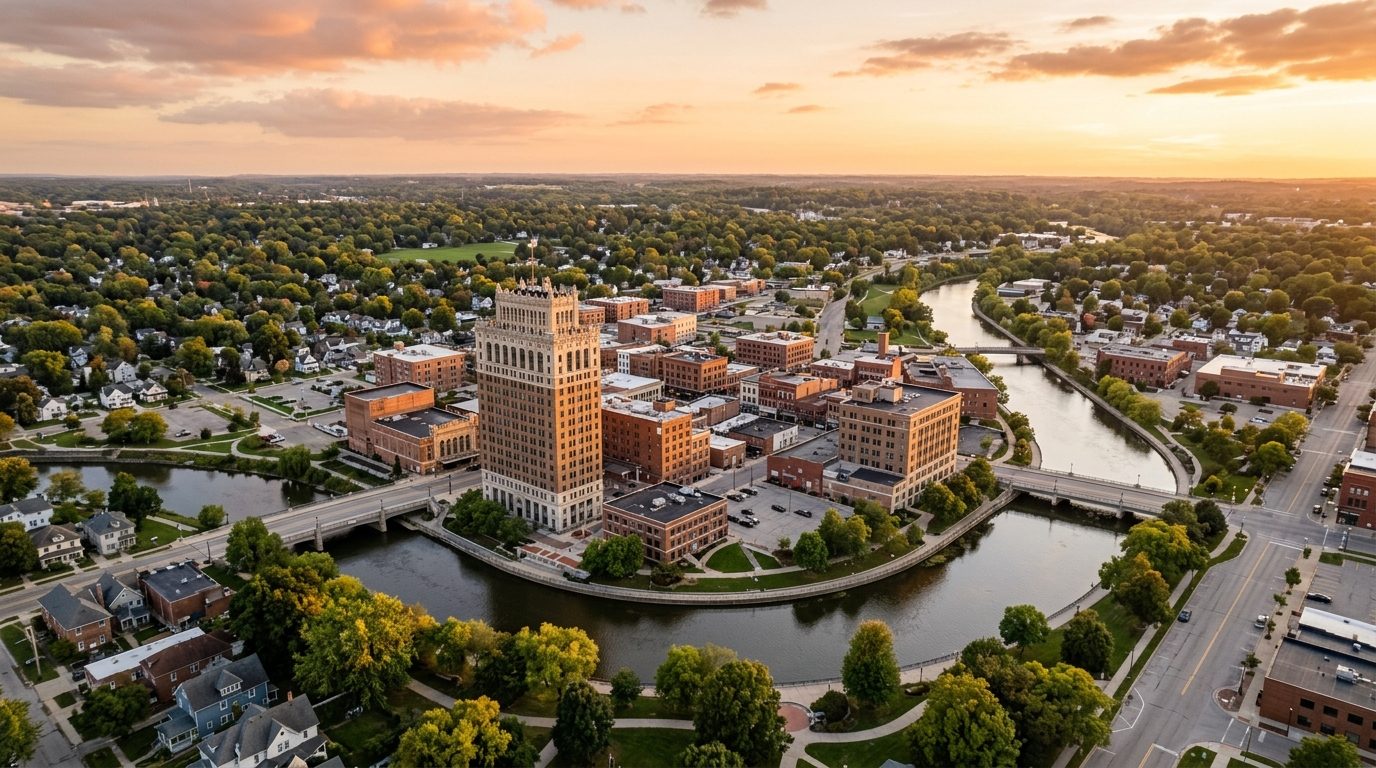
Jackson sits in south-central Michigan’s Lower Peninsula, where rolling farmland gives way to a glacially shaped landscape dotted with small kettle lakes across the county’s townships. The Grand River begins just south of the city and curves through downtown Jackson before continuing northwest toward Lake Michigan, and the Portage River threads through the county’s northeastern townships. The city grew up as a nineteenth-century railroad and manufacturing hub, and its core neighborhoods reflect that era, with tree-lined streets of Victorian, foursquare, and bungalow-style homes built close together on modest lots near downtown. Farther out, postwar subdivisions with ranch and split-level homes ring the city, while surrounding townships mix farmland with newer construction on larger parcels. Around the county’s lakes, older seasonal cottages sit alongside homes winterized into year-round residences, a pattern common across inland Michigan lake country.
Higher-priced pockets cluster around the county’s larger recreational lakes, such as Clark Lake, Vineyard Lake, and Pleasant Lake, where waterfront lots, larger acreage, and newer or renovated homes command a premium over inland properties. Townships toward the eastern edge of the county, closer to Ann Arbor and the Waterloo and Grass Lake area, also draw higher prices, reflecting shorter commutes to the Ann Arbor job market and its schools. Within the city of Jackson, values vary block by block depending on the age and condition of the housing stock, proximity to downtown’s employment core, and school attendance zone. The most affordable homes are generally found in older, denser sections of the city near the historic industrial corridor, while outlying rural townships farthest from highways and lakes also see lower prices, a function of distance from jobs and amenities.
Jackson’s economy has long been anchored by Consumers Energy and its parent company CMS Energy, both headquartered downtown and a major source of white-collar employment. Henry Ford Health operates Henry Ford Jackson Hospital, the metro’s principal hospital system, tracing back to the city’s earlier Foote Hospital and Allegiance Health systems. Manufacturing remains important, led by Eaton Corporation’s hydraulics and aerospace operations and Michigan Automotive Compressor, a DENSO and Toyota Industries joint venture making automotive air-conditioning compressors. Dawn Foods, a family-owned bakery-ingredients manufacturer, also maintains a significant presence. State government is notable too, with several Michigan Department of Corrections facilities in and around Jackson, a legacy of the city’s history as home to one of the state’s original prison sites. Higher education adds Jackson College and a Spring Arbor University branch site.
Michigan’s property tax system caps annual increases in a home’s taxable value while owned, but that value uncaps to match the sale price at closing, so buyers should expect a tax bill tied to the purchase price rather than the seller’s prior assessment. Many homes in outlying townships and around the county’s lakes rely on private wells and septic systems rather than municipal water and sewer, so buyers there should budget for well and septic inspections before closing. Winters bring routine snow and ice, and older homes near the Grand River warrant a check of drainage and flood-zone status. The region is largely car-dependent outside the city core, though Amtrak’s Wolverine line stops in Jackson, connecting to Ann Arbor and Detroit. Buyers should confirm whether a property sits within the city or a township, since zoning, millage rates, and permitting can differ between jurisdictions.
Cities and Towns in the Jackson Metro Area
Notable Communities and Neighborhoods
Jackson Real Estate Market FAQ
How is the Jackson, MI metro area organized?
The metro is coextensive with Jackson County, anchored by the city of Jackson, which serves as the county seat and only incorporated city. Around it are smaller incorporated villages, including Brooklyn, Concord, Grass Lake, Hanover, Parma, and Springport, along with numerous civil townships and unincorporated lake communities. Most everyday services, shopping, and employment are concentrated in and around the city of Jackson, while the villages and townships offer a more rural or lake-oriented setting.
Which parts of the Jackson metro tend to be pricier, and why?
Homes near the county’s larger recreational lakes, such as Clark Lake, Vineyard Lake, and Pleasant Lake, tend to command higher prices due to waterfront or near-water access, larger lots, and a mix of newer or renovated construction. Townships on the eastern side of the county, closer to Ann Arbor, also see stronger pricing because of shorter commute times to that job market. Within the city of Jackson itself, price differences generally track the age and condition of housing stock and proximity to downtown.
What should buyers verify locally before purchasing in the Jackson metro?
Buyers should confirm whether a property is served by municipal water and sewer or relies on a private well and septic system, since this is common outside the city core. It is also worth checking whether a parcel sits within the city of Jackson or a surrounding township, since tax millage rates, zoning, and permitting authority differ by jurisdiction. Properties near the Grand River or county lakes should be checked against flood-zone maps, and any lake-association dues or easements should be reviewed.
What region-specific risk should buyers be aware of in rural parts of the metro?
Many homes in Jackson County’s townships and lake communities are not connected to municipal water or sewer service and instead rely on private wells and septic systems. Buyers considering these properties should arrange a well-water test and a septic inspection or evaluation before closing, confirm the septic system’s age and capacity, and check with the local health department on permitting requirements, since replacing or repairing a failed system can be a significant expense.
Nearby Markets