
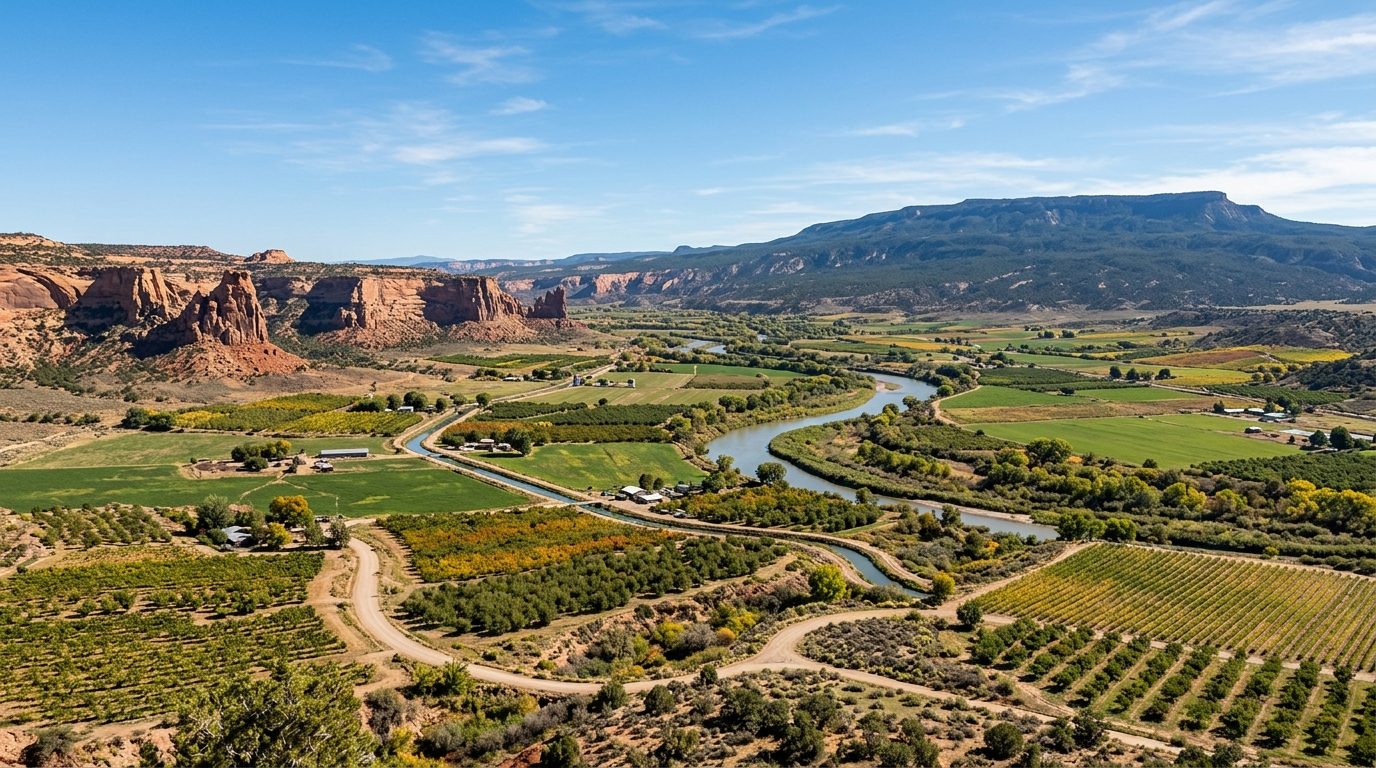
Current real estate market data, news and analysis for the Grand Junction, CO metropolitan area — 162,845 residents across Mesa county.
Data as of May 2026. Sources: Redfin Data Center, U.S. Census Bureau.
Latest Grand Junction Real Estate News
Coverage of this market is coming soon. Browse all housing market news.
Grand Junction Real Estate Market Overview
Grand Junction sits at the confluence of the Colorado and Gunnison rivers in a broad valley known locally as the Grand Valley, ringed by dramatic high-desert terrain. The Grand Mesa, one of the largest flat-topped mountains in the world, rises to the east; the Book Cliffs form a long escarpment along the valley’s northern edge; and the red-rock canyons and monoliths of Colorado National Monument frame the southwestern skyline above the Redlands. The valley floor sits lower, warmer, and drier than the surrounding highlands, giving the area a high-desert climate distinct from Colorado’s mountain resort towns. Housing stock reflects this layered landscape: older bungalows and brick homes fill the original downtown grid, mid-century ranch homes spread through established residential tiers, and newer subdivisions climb the mesas and benches at the valley’s edges, alongside orchard- and vineyard-adjacent properties near Fruita and Palisade.
Price tiers across the metro track proximity to Colorado National Monument, mountain and valley views, and distance from industrial or agricultural corridors. Neighborhoods built into the Redlands benches, with unobstructed monument views and custom lots around golf-course communities, sit toward the upper end of the market. Older, flatter neighborhoods east and north of downtown, including areas historically tied to agricultural labor housing and rail-adjacent industry, tend to be more moderately priced, reflecting smaller lot sizes and older infrastructure. Palisade’s orchard and vineyard parcels carry a premium tied to scarce irrigated agricultural land and scenic value, while Fruita’s newer family-oriented subdivisions occupy a middle tier shaped by distance from Grand Junction’s job centers.
The economy centers on healthcare, education, government, energy, and agriculture. Intermountain Health’s St. Mary’s Regional Hospital and Community Hospital anchor healthcare alongside a VA Western Colorado Health Care System campus. Colorado Mesa University, based in Grand Junction, is a major employer and shapes housing demand near its campus. Mesa County, the City of Grand Junction, and federal land-management agencies such as the Bureau of Land Management provide substantial public-sector employment, reflecting the public lands the county administers. Energy has long been part of the local economy through oil and natural gas activity in the nearby Piceance Basin, though the region has seen sharp boom-and-bust cycles tied to oil shale development. Agriculture remains concentrated around Palisade, historically known for peach orchards and, since the 1970s, an expanding wine-grape and winery industry. Aviation maintenance and outdoor-recreation tourism add further diversity to employment.
Water in the Grand Valley is governed by senior agricultural water rights held by local irrigation districts; buyers of rural or orchard-adjacent property should confirm which ditch or irrigation rights attach to a parcel. Wildfire risk is a growing concern along the wildland-urban interface where subdivisions meet mesa slopes, canyon rims, and Book Cliffs terrain, and buyers should check local fire-mitigation requirements. Property taxes in Colorado are assessed under the state’s statutory framework and are generally lower than the national average. Public transit is limited to a local bus network and the regional airport, so most residents rely on personal vehicles. Development has followed the valley’s irrigation canals and bench topography; buyers should also verify floodplain status near the rivers and confirm municipal versus well water service in outlying areas such as Collbran, De Beque, and the Plateau Valley.
Cities and Towns in the Grand Junction Metro Area
Notable Communities and Neighborhoods
Grand Junction Real Estate Market FAQ
How is the Grand Junction real estate market organized geographically?
The metro follows the Colorado River’s Grand Valley, with Grand Junction as the urban core, Fruita to the west, Palisade to the east, and the unincorporated benches and mesas (including the Redlands) forming distinct residential tiers around them. Collbran and De Beque sit apart from the valley floor in the Plateau Valley and Book Cliffs country, functioning as smaller, more rural markets tied to agriculture and ranching rather than to Grand Junction’s job base.
Which areas of the Grand Junction metro tend to be priciest, and why?
Properties along the Redlands benches, close to Colorado National Monument and built around golf-course communities, generally command higher relative value because of unobstructed views, larger custom lots, and elevation above the valley floor. Palisade’s irrigated orchard and vineyard parcels also carry a premium tied to the scarcity of productive agricultural land. Older, flatter neighborhoods closer to downtown, rail corridors, and industrial areas tend to be more moderately priced.
What should buyers verify before purchasing in the Grand Junction area?
Buyers should confirm whether a property is served by municipal water and sewer or relies on a private well and septic system, especially outside city limits in areas like Collbran and De Beque. For rural, orchard, or vineyard parcels, buyers should verify what irrigation or ditch water rights, if any, are attached to the land, since these rights are separate from municipal water service and are administered by local irrigation districts. Floodplain status near the Colorado and Gunnison rivers and any HOA or historic-district design requirements are also worth confirming.
What regional risk factors are specific to the Grand Junction area?
Wildfire risk is a growing concern in the wildland-urban interface where subdivisions meet mesa slopes, canyon rims, and Book Cliffs terrain, and local fire-mitigation requirements can affect insurance and building rules. Water availability is another regional factor: the Grand Valley depends on senior agricultural water rights and irrigation infrastructure, and drought conditions on the Colorado River system periodically raise questions about long-term water supply for the region.
Nearby Markets