
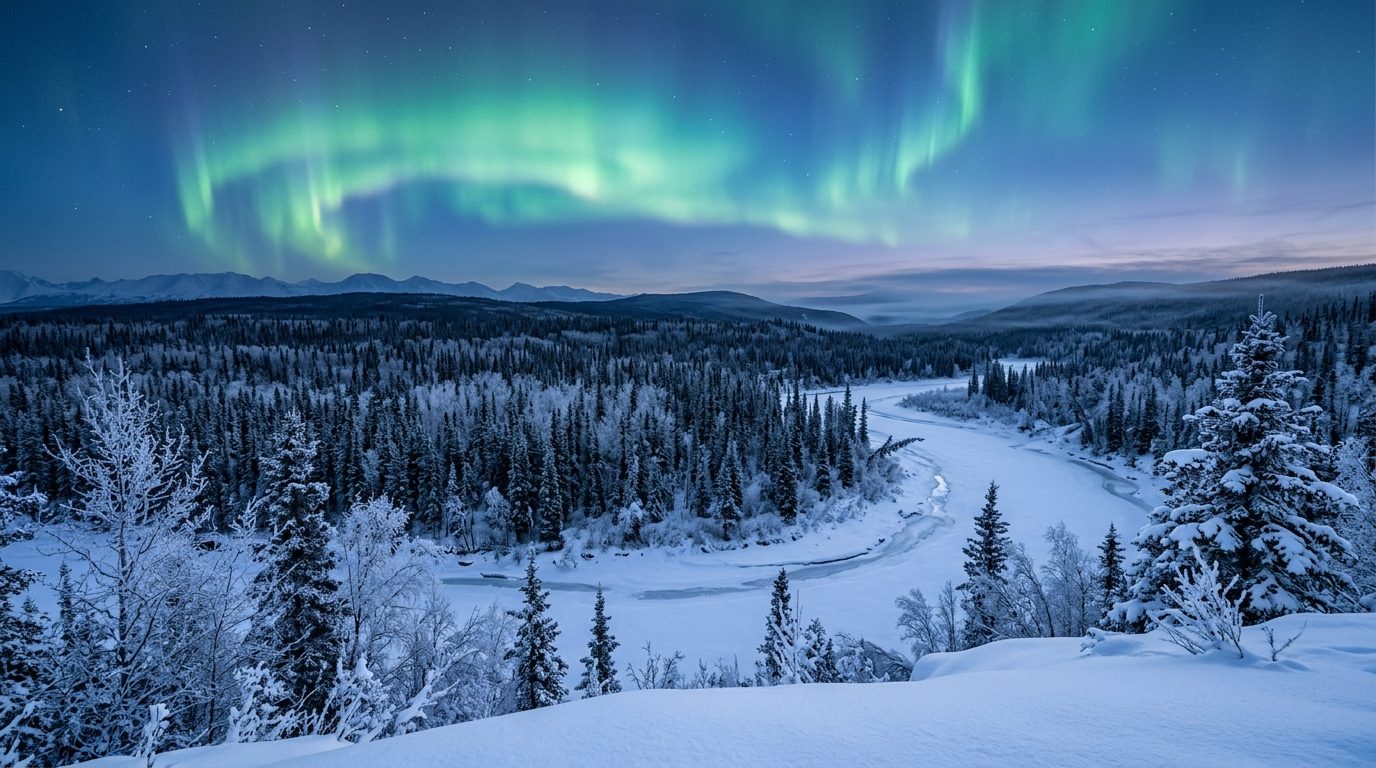
Current real estate market data, news and analysis for the Fairbanks-College, AK metropolitan area — 93,972 residents across Fairbanks North Star Borough county.
Data as of May 2026. Sources: Redfin Data Center, U.S. Census Bureau.
Latest Fairbanks Real Estate News
Coverage of this market is coming soon. Browse all housing market news.
Fairbanks Real Estate Market Overview
Fairbanks lies in Alaska’s interior, in the Tanana Valley near the confluence of the Chena and Tanana Rivers, well inland from ocean moderation and just south of the Arctic Circle. The Fairbanks North Star Borough spans boreal forest, river flats, and low hills around the incorporated cities of Fairbanks and North Pole, ringed by unincorporated subdivisions and rural acreage. The subarctic climate produces wide seasonal temperature swings, and the valley floor is prone to winter temperature inversions that trap cold air close to the ground. Discontinuous permafrost underlies much of the borough, present in some pockets and absent nearby. Housing reflects these conditions, built with heavier insulation, arctic entryways, and heating systems suited to long winters, and set on piling, post, or elevated pad foundations rather than conventional basements to protect the frozen ground beneath the structure.
Higher ground with stable, well-drained soil tends to draw stronger interest, since it carries less permafrost and frost-heave risk for foundations and driveways. Hillside and ridge subdivisions on the west and south sides of the city, and areas near the University of Alaska Fairbanks campus, generally fall into this tier, valued for stable building ground and views above the winter inversion layer. Lower-lying valley terrain and more remote rural subdivisions with heavier wetland or permafrost exposure tend to see softer demand. North Pole and communities toward Eielson Air Force Base sit in a more exurban tier, trading city proximity for larger lots and rural density.
The economy is anchored by government, defense, education, and healthcare. Fort Wainwright, home to United States Army Alaska units, and Eielson Air Force Base, an active-duty installation near North Pole, together account for a large share of area employment and steady military-linked housing demand. The University of Alaska Fairbanks, the state’s flagship research university with a strong Arctic and geophysical research program, is one of the borough’s largest employers and anchors College and the university-adjacent area. Foundation Health Partners, which operates Fairbanks Memorial Hospital and affiliated clinics, is the largest private employer. The Trans-Alaska Pipeline System passes through the borough, and Alyeska Pipeline Service Company maintains a local operating presence. State and borough government, the local school district, and seasonal tourism tied to aurora viewing round out the employment base.
Buyers should treat ground conditions and climate as central to due diligence. Extreme winter cold demands higher-than-standard insulation and heating-system reliability, and heating cost is a legitimate factor in evaluating any property. Summer wildfire smoke from interior Alaska wildfires is a recurring seasonal air-quality concern. Permafrost thaw is the area’s most distinctive structural risk, capable of causing uneven settling and foundation or utility movement, making a soils or foundation-specific inspection worthwhile outside the established city core. Alaska has no state sales or income tax, and Fairbanks levies no local sales tax, though property taxes apply at the borough and city level. Long-term residents receive an annual Permanent Fund Dividend tied to state oil revenue. Public transit is limited, with most households relying on personal vehicles suited to winter conditions. Development outside the core favors larger lots and lower density, so confirming zoning, well and septic status, and foundation type with the borough is advisable before purchase.
Cities and Towns in the Fairbanks Metro Area
Notable Communities and Neighborhoods
Fairbanks Real Estate Market FAQ
How is the Fairbanks metro area organized geographically?
The Fairbanks North Star Borough sits in the Tanana Valley in Alaska’s interior, centered on the confluence of the Chena and Tanana Rivers. It contains two incorporated cities, Fairbanks and North Pole, surrounded by a mix of established suburban subdivisions, rural residential areas, and unincorporated communities spread across boreal forest and river-flat terrain.
Which parts of the Fairbanks area tend to be pricier, and why?
Areas on higher, well-drained ground, including ridge and hillside subdivisions and locations near the University of Alaska Fairbanks campus, tend to draw stronger interest because they present fewer permafrost and frost-heave complications for foundations and driveways and sit above the valley floor’s winter cold-air inversion layer. Lower-lying or more remote rural areas, and the more exurban corridor toward North Pole and Eielson Air Force Base, tend to trade some of that convenience and stability for larger lots and a more rural setting.
What should buyers verify before purchasing property in the Fairbanks area?
Buyers should confirm foundation type and its suitability for local soil conditions, request a soils or permafrost assessment where relevant, verify whether the property relies on a private well and septic system or municipal utilities, and evaluate the heating system’s age and capacity given long, cold winters. Confirming zoning and any borough building requirements tied to ground conditions is also worthwhile.
Why does permafrost matter for homes in the Fairbanks area?
Much of the borough sits on discontinuous permafrost, meaning frozen ground can be present in one area and absent a short distance away. When heat from a building thaws underlying permafrost, the ground can settle unevenly, leading to foundation movement, cracked slabs, and shifting driveways or utility lines. This is why many homes are built on piling, post, or elevated pad foundations designed to limit heat transfer into the ground, and why foundation type and ground condition are important points of local due diligence.
Nearby Markets