
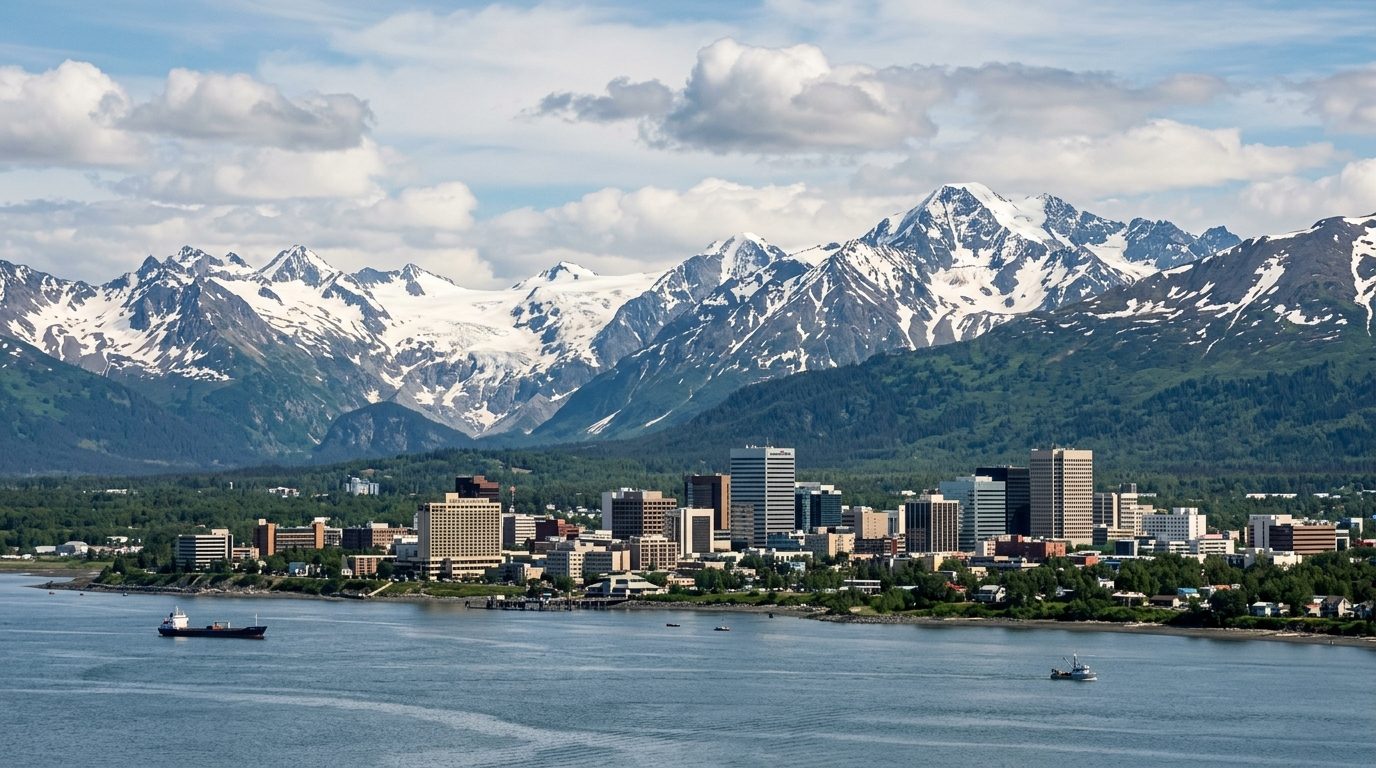
Current real estate market data, news and analysis for the Anchorage, AK metropolitan area — 405,821 residents across Anchorage Municipality and Matanuska-Susitna Borough counties.
Data as of May 2026. Sources: Redfin Data Center, U.S. Census Bureau.
Latest Anchorage Real Estate News
Coverage of this market is coming soon. Browse all housing market news.
Anchorage Real Estate Market Overview
Anchorage sits on a coastal shelf between Cook Inlet and the steep front range of the Chugach Mountains, with the Anchorage bowl bounded by Knik Arm to the north and Turnagain Arm to the south. The Matanuska-Susitna Borough extends north and east along the Glenn and Parks highways into the broader Mat-Su Valley, drained by the Matanuska and Susitna rivers beneath the Talkeetna Mountains. The metro’s subarctic climate, with long winters and brief intense summer daylight, shapes the housing stock: homes typically feature deep foundations, heavy insulation, and heated garages or mudrooms, ranging from mid-century ranch and split-level construction in older Anchorage neighborhoods to newer log and timber-frame homes on larger Mat-Su parcels.
Within the Anchorage bowl, established neighborhoods near the coastline, downtown, and the base of the mountains tend to command higher prices, reflecting smaller lots but easy access to trails, schools, and employment centers. Areas higher on the Hillside toward the Chugach foothills carry premiums for view lots and acreage, while neighborhoods closer to the airport and industrial corridors are generally more moderately priced. The Mat-Su Valley communities north of Anchorage typically offer larger lots and lower price points than the bowl, reflecting greater land availability and a more rural development pattern, though towns along the main highway corridors have grown costlier as commuting infrastructure and local employment have expanded.
The regional economy centers on a few anchor sectors. Joint Base Elmendorf-Richardson, a combined Air Force and Army installation within the Anchorage bowl, is a major source of military and federal civilian employment. Oil and gas companies with North Slope operations, including ConocoPhillips Alaska, maintain substantial Anchorage offices and support a network of oilfield-services firms even though extraction occurs farther north. Healthcare is another core pillar, anchored by Providence Alaska Medical Center in Anchorage and Mat-Su Regional Medical Center in Palmer, alongside the University of Alaska Anchorage. Transportation and logistics round out the base: Ted Stevens Anchorage International Airport is a major trans-Pacific air cargo hub where international carriers stop to refuel and change crews, supporting freight and aviation-services employment across the metro.
Buyers should weigh several region-specific factors. Southcentral Alaska is seismically active, and past damaging earthquakes led the municipality to adopt and enforce building codes with seismic provisions stricter than baseline national standards, so verifying a property’s construction era and foundation type is worthwhile. Cold-climate considerations also matter: heating systems, insulation quality, and the depth of water and sewer lines affect long-term costs, and outlying Mat-Su properties may rely on septic and well systems or sit on permafrost-influenced soils that warrant inspection. Alaska has no statewide income tax or sales tax, and Anchorage itself levies no local sales tax, though property tax rates and service fees differ between the Municipality of Anchorage and the Matanuska-Susitna Borough. Public transit is limited, so most residents depend on personal vehicles, and the highway corridor linking Anchorage and the Mat-Su Valley can see slower winter travel. Buyers should confirm zoning, road maintenance responsibility, and utility service with the relevant borough or municipal office before purchasing.
Cities and Towns in the Anchorage Metro Area
Notable Communities and Neighborhoods
Anchorage Real Estate Market FAQ
How is the Anchorage-area real estate market organized geographically?
The market is generally split between the Municipality of Anchorage, which includes the urban Anchorage bowl plus outlying communities like Eagle River, Chugiak, and Girdwood, and the Matanuska-Susitna Borough to the north, which includes Wasilla, Palmer, Houston, and the surrounding Mat-Su Valley. Anchorage proper offers a denser mix of city neighborhoods, while Mat-Su is organized around highway corridor towns and larger, less densely platted subdivisions.
Which parts of the Anchorage area tend to be more expensive?
Neighborhoods within the Anchorage bowl that sit close to the coastline, downtown amenities, and the base of the Chugach Mountains, along with higher Hillside areas prized for views and acreage, tend to carry higher prices. The Mat-Su Valley generally offers more affordable, larger-lot options, though highway corridor towns closer to Anchorage have grown pricier as commuting infrastructure has improved.
What should buyers verify before purchasing in this market?
Buyers should confirm zoning and platting status with the Municipality of Anchorage or the Matanuska-Susitna Borough, check whether a property relies on municipal utilities or a private well and septic system, review foundation and construction details relevant to seismic performance, and verify road maintenance responsibility, since some Mat-Su subdivisions sit on private or unmaintained roads.
What natural hazards and climate factors affect homes in this region?
Southcentral Alaska is seismically active, so building age, foundation type, and adherence to local seismic building code amendments are important considerations. The subarctic climate also means heating system efficiency, insulation quality, and protection against frost heave in foundations and utility lines matter for long-term maintenance costs, and some outlying areas have soils influenced by permafrost or seasonal ground movement that should be evaluated before building or buying.
Nearby Markets