
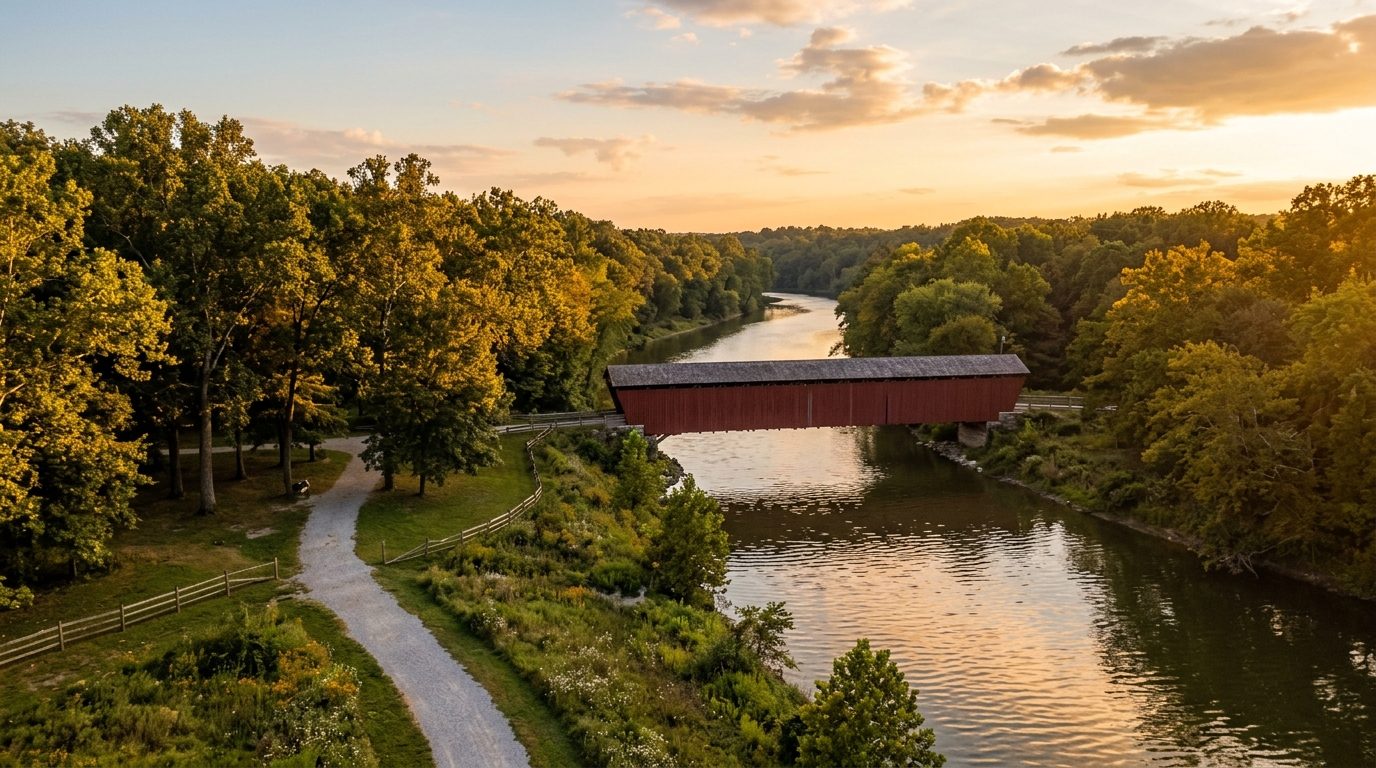
Current real estate market data, news and analysis for the Columbus, IN metropolitan area — 85,729 residents across Bartholomew county.
Data as of May 2026. Sources: Redfin Data Center, U.S. Census Bureau.
Latest Columbus Real Estate News
Coverage of this market is coming soon. Browse all housing market news.
Columbus Real Estate Market Overview
Columbus sits about forty miles south of Indianapolis at the confluence of the Driftwood and Flatrock rivers, which join to form the East Fork White River, on the flat-to-gently-rolling farmland typical of south-central Indiana. The city is nationally known for its concentration of modernist architecture, funded in large part by a local corporate foundation starting in the mid-20th century, but its everyday residential stock is more conventional: a nineteenth- and early-twentieth-century core of homes surrounds downtown, mid-century-modern houses are scattered through the older neighborhoods, and standard postwar-to-present subdivisions and planned communities ring the edges of the city. The smaller outlying towns of Hope, Hartsville, Elizabethtown, Clifford, and Jonesville retain small-town and rural housing stock, including older farmhouses and acreage.
Tipton Lakes, a large master-planned community built around three lakes on the city’s west side, commands a premium for its waterfront and planned amenities, and newer subdivisions on the city’s growth edges also trend higher. Older, more modest in-town neighborhoods and areas near the city’s industrial employment base are generally more affordable, as are the small outlying towns, which trade lower prices for a longer commute into Columbus’s job base. Proximity to Interstate 65 and to the low ground along the East Fork White River are secondary factors buyers weigh against price throughout the metro.
Cummins, the diesel-engine and power-generation manufacturer founded in Columbus in 1919, remains the metro’s dominant employer, with its global headquarters, technology center, and manufacturing operations concentrated in the area. Toyota Material Handling’s North American headquarters sits just south of the city, and automotive suppliers including Faurecia and NTN Driveshaft add to a manufacturing base that includes dozens of foreign-owned companies tied to the auto and diesel supply chain. Columbus Regional Health operates the area’s main hospital system and is one of the largest non-manufacturing employers.
Flooding is a documented and recurring concern, with a major flood in 2008 setting a modern record and causing widespread damage in low-lying parts of the city, so buyers near the East Fork White River or the downtown park system should check current FEMA flood maps for their specific parcel. Indiana caps property taxes by property type under a constitutional formula, and effective rates vary modestly by taxing district within Bartholomew County. Local transit is limited to a small city bus system, there is no passenger rail, and the nearest commercial airport is in Indianapolis, roughly an hour away. Because Columbus and the county maintain their own zoning and historic-preservation review given the concentration of landmark buildings, buyers renovating in the older neighborhoods should check local design-review requirements, and those looking at the outlying towns should confirm well and septic versus municipal utility service.
Cities and Towns in the Columbus Metro Area
Notable Communities and Neighborhoods
Columbus Real Estate Market FAQ
How is the Columbus-area housing market organized?
Columbus itself is the metro’s core, with the master-planned Tipton Lakes community and newer subdivisions on the west and growth edges commanding higher prices. The small outlying towns of Hope, Hartsville, Elizabethtown, Clifford, and Jonesville offer smaller, more rural, and generally more affordable housing farther from the city’s job base.
Which parts of the metro tend to be pricier?
Tipton Lakes, with its waterfront lots and planned amenities, and newer subdivisions on the city’s growth edges tend to command the highest prices. Older in-town neighborhoods and the small outlying towns are generally more affordable, trading price for age of housing stock or commute distance.
What should buyers verify before purchasing here?
Given the city’s history of significant flooding along the East Fork White River, buyers near the river or the downtown park system should check current FEMA flood maps for their specific parcel. Anyone buying in the older historic neighborhoods should also confirm local historic-district design-review requirements before planning a renovation.
What is the biggest region-specific risk for homeowners here?
Flood risk along the East Fork White River is the most significant physical concern, with a well-documented history of major flooding events downtown. The area’s economy is also concentrated in manufacturing, so buyers should understand how closely local housing demand tracks the fortunes of a small number of large employers.
Nearby Markets