
Current real estate market data, news and analysis for the Bowling Green, KY metropolitan area — 197,180 residents across Allen, Butler, Edmonson and Warren counties.
Data as of May 2026. Sources: Redfin Data Center, U.S. Census Bureau.
Latest Bowling Green Real Estate News
Coverage of this market is coming soon. Browse all housing market news.
Bowling Green Real Estate Market Overview
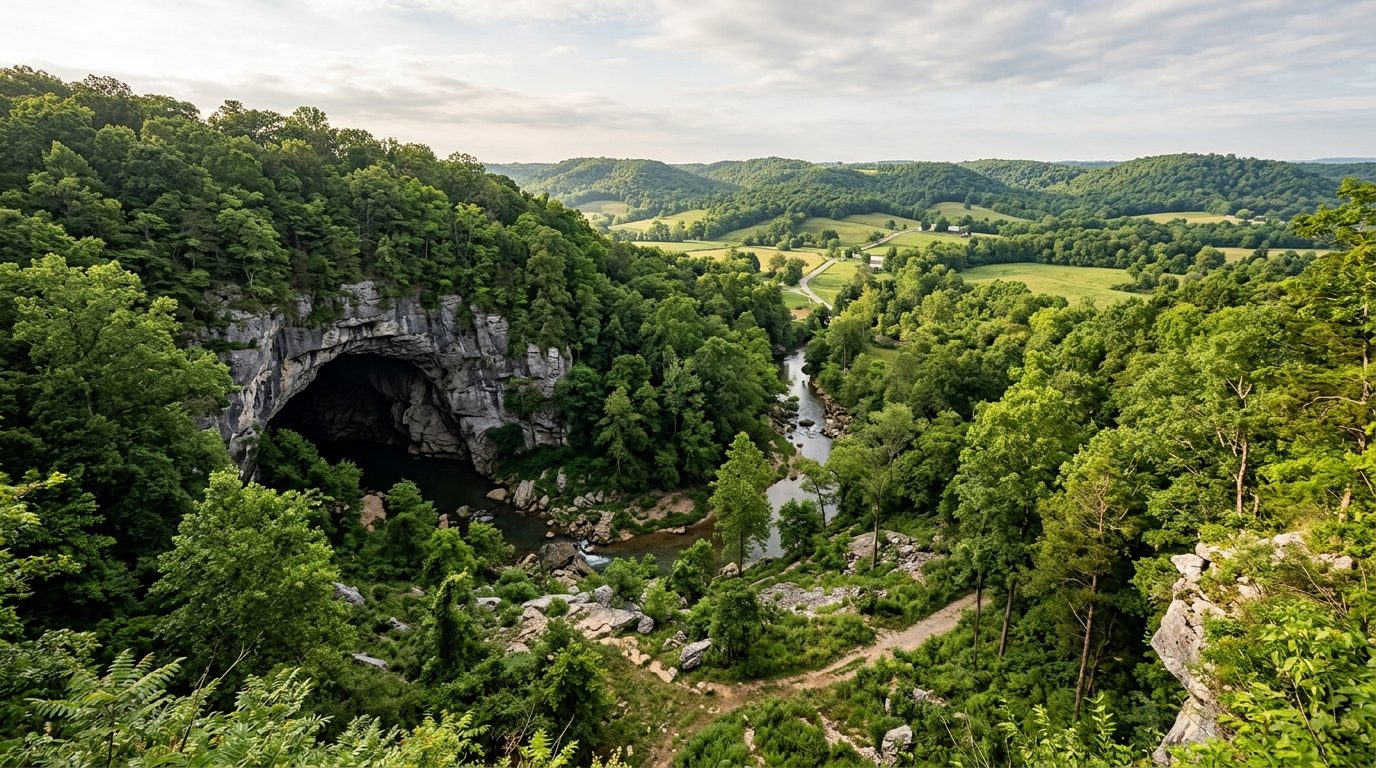
Bowling Green sits in south-central Kentucky’s Pennyroyal region, on ground defined by karst limestone, a landscape riddled with sinkholes, underground streams, and caves rather than the surface rivers and creeks more typical of other regions. Warren County alone has hundreds of documented cave entrances, and Lost River Cave sits within the city limits itself; nearby Edmonson County contains the great majority of Mammoth Cave National Park. The Barren River runs through Bowling Green, and the surrounding terrain rises toward the Dripping Springs Escarpment to the northwest. Housing stock in the city is relatively young by national standards, with most of it built from the mid-20th century onward as the city expanded well beyond its original downtown footprint following highway and, later, interstate construction. The three outlying counties, Allen, Butler, and Edmonson, remain predominantly small-town and rural, centered on towns like Scottsville, Morgantown, and Brownsville.
Neighborhoods near Western Kentucky University’s hilltop campus and Bowling Green’s downtown historic districts, areas with names like Shake Rag, St. Joseph, College Hill, and Magnolia Street, carry a premium tied to walkability, historic character, and university proximity, with a downtown core dating back to the 19th century. Newer subdivisions along the city’s growth edges, built out along the interstate corridor and toward the periphery of Warren County, reflect more recent construction standards and layouts. The three surrounding rural counties, being smaller, more agricultural, and further from Bowling Green’s job base, generally develop at a different pace and price point than the urbanized Warren County core, though the direction and degree of that difference is worth checking locally rather than assumed.
Western Kentucky University is the metro’s largest employer by a wide margin, reflecting Bowling Green’s identity as a college town as much as an industrial one. The Medical Center at Bowling Green anchors regional healthcare. Manufacturing has deep roots here too: General Motors’ Bowling Green Assembly Plant has built every Chevrolet Corvette since production began there, making the city synonymous with the car in American pop culture, and BG Metalforming and Union Underwear/Fruit of the Loom add further manufacturing employment. Houchens Industries, an employee-owned company with a large portfolio of subsidiary businesses, is described locally as the area’s largest employer overall. The Warren County Board of Education and Graves-Gilbert Clinic round out a diversified base built on education, healthcare, and manufacturing.
The region’s karst geology means sinkhole risk is a real, ongoing consideration for building and drainage, and it is largely unregulated compared to flood-zone rules in other parts of the country, so a geotechnical assessment is worth considering for any property on undeveloped or newly platted ground. Tornado risk is severe and well documented in this part of Kentucky, and buyers should ask about a home’s storm history and any resulting structural repairs. Kentucky assesses property at full fair cash value with no discount ratio, administered by an elected county Property Valuation Administrator, and a homestead exemption is available for owners 65 and older or disabled, so buyers should confirm current figures with the Warren County PVA. Local public transit is limited to a small city-operated bus system, plus a separate campus system for WKU students; most of the metro is car-dependent.
Cities and Towns in the Bowling Green Metro Area
Notable Communities and Neighborhoods
Bowling Green Real Estate Market FAQ
How is the Bowling Green, KY housing market organized across the metro?
The market centers on Warren County and the city of Bowling Green, with historic in-town neighborhoods near WKU’s campus and downtown, newer subdivisions along the interstate growth corridor, and more rural, agricultural land in the surrounding Allen, Butler, and Edmonson counties.
Which parts of the Bowling Green metro tend to carry higher prices?
Neighborhoods near Western Kentucky University’s campus and Bowling Green’s historic downtown districts carry a premium for walkability and character, while newer interstate-corridor subdivisions offer more recent construction.
What should buyers verify before purchasing in the Bowling Green area?
Ask about sinkhole and karst-related drainage risk for any specific parcel, since the region’s limestone geology is prone to sinkholes and is not uniformly regulated, and confirm current property tax figures with the Warren County PVA.
Is severe weather a significant risk for homeowners in the Bowling Green metro?
Yes — the area has experienced violent, deadly tornadoes that have damaged large numbers of homes, so buyers should ask about a property’s storm history and confirm adequate insurance coverage.
Nearby Markets