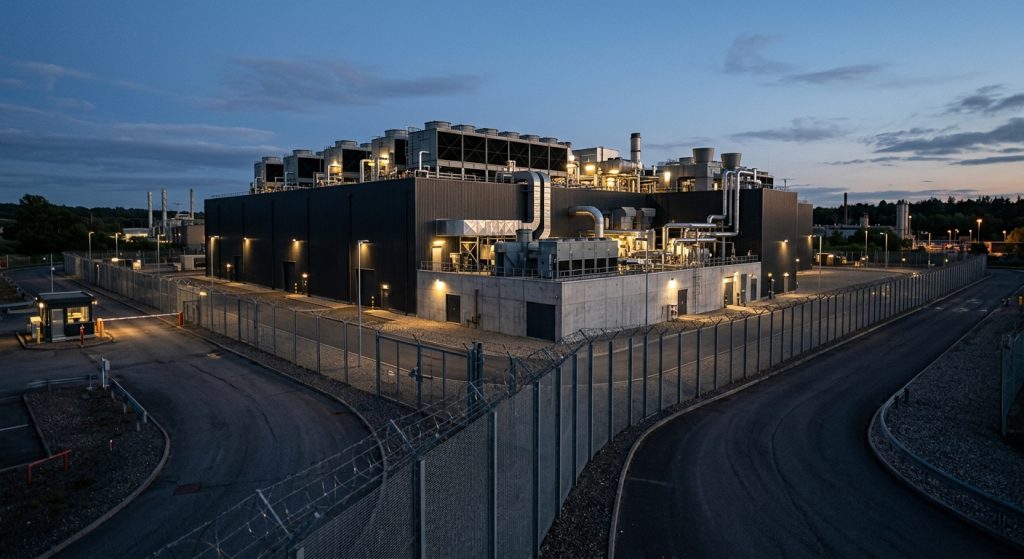
Core Scientific and AMD announced an infrastructure partnership on July 28, 2026 that will see AMD secure more than 500 megawatts of U.S. data center capacity from Core Scientific beginning in 2027, with the companies structuring the deal so that capacity could expand to as much as 2.5 gigawatts over time, according to Core Scientific’s press release.
The deal makes AMD the latest major chipmaker to lock down large-scale U.S. data center real estate as demand for AI computing capacity continues to outstrip available power and building supply nationwide. Core Scientific (NASDAQ: CORZ), a Bitcoin-mining-turned-AI-infrastructure company, will deploy AMD’s Instinct GPUs, EPYC CPUs and ROCm software across its facilities to support high-density colocation services for AMD’s AI workloads.
A warrant-based structure, not a disclosed dollar figure
Unlike several recent AI data center megadeals that have carried headline dollar figures in the tens or hundreds of billions, Core Scientific and AMD structured this partnership around equity rather than a stated contract value: AMD will receive market-priced warrants to purchase Core Scientific common stock, contingent on the companies hitting specific commercial conditions as the partnership scales. Neither company disclosed a total dollar value for the infrastructure commitment in the announcement.
“AI deployments are accelerating rapidly, and bringing that compute online requires trusted infrastructure partners,” said Mathew Hein, AMD’s senior vice president and chief strategy officer, in the companies’ joint announcement.
Core Scientific CEO Adam Sullivan said the company was “proud to establish a strategic relationship with AMD and support the continued deployment of its next-generation products,” framing the deal as central to Core Scientific’s transition from crypto-mining infrastructure toward AI-focused colocation.
Where the capacity will come from
Core Scientific currently operates data centers across seven states — one facility each in Alabama, Kentucky, North Carolina, North Dakota and Oklahoma, two in Georgia, and four in Texas — giving AMD a geographically diversified footprint to draw on as it scales AI infrastructure. The company has separately disclosed plans this year to expand gross power capacity to 1.5 gigawatts each at its Muskogee, Oklahoma and Pecos, Texas campuses, underscoring how much of its recent growth has been aimed squarely at AI-scale power and cooling demand rather than its legacy mining business.
The AMD announcement landed one day after Core Scientific reported its second-quarter 2026 results and named Mark Adams to its board of directors, part of a busy week of corporate news for the company.
What it means
Verified facts: AMD has secured more than 500 megawatts of Core Scientific capacity starting in 2027, with room to expand to 2.5 gigawatts, in exchange for performance-contingent stock warrants rather than a disclosed cash payment.
RealtyWire analysis: The equity-for-capacity structure is notable in a data center market where landlords increasingly have leverage to demand more than rent from chipmakers desperate for space and power. As hyperscalers and chip designers alike race to lock down gigawatts of U.S. capacity, deals tying tenant commitments to ownership stakes — rather than straightforward leases — may become a more common way for infrastructure operators like Core Scientific to capture upside from the AI buildout, not just collect rent from it.
Related: Nvidia in Talks to Backstop OpenAI’s $500 Billion Ohio Data Center Lease and Meta, BlackRock Form $14 Billion Venture for El Paso Data Center Campus.