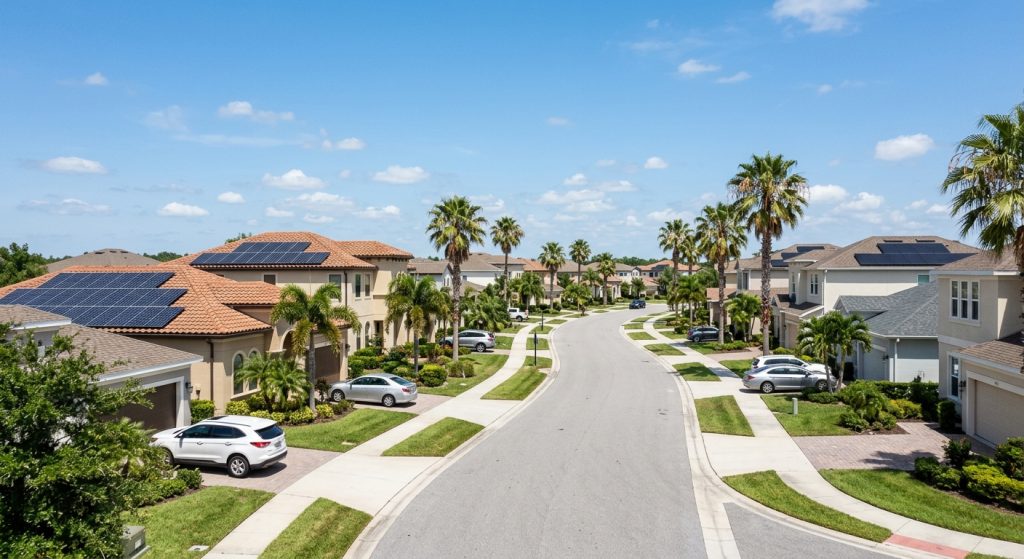
Babcock Ranch, the Punta Gorda, Fla., master-planned community that became nationally known for surviving a direct hit from Category 5 Hurricane Ian without losing power, will anchor a new statewide climate-resilience program launching in October, according to reporting by Realtor.com published Aug. 23, 2026. The Southwest Florida Resilience Accelerator will bring together CEOs, founders, investors, universities and corporate partners to develop the next generation of extreme-weather resilience technology, with the community hosting at least two weeks of an eight-week inaugural cohort.
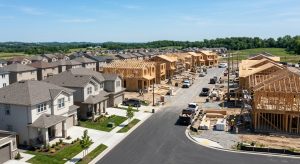
Developed by former professional football player Syd Kitson and Kitson & Partners starting in 2006, Babcock Ranch now has roughly 15,000 residents spread across an 18,000-acre residential footprint within a 91,000-acre former timber tract. The community runs on 687,000 solar panels with battery backup and uses a storm-water drainage system that routes floodwater through roads and man-made ponds without reaching homes. When Hurricane Ian struck in September 2022, Babcock Ranch never lost electricity — a result that drew a national “60 Minutes” segment and a sales surge that has continued largely unabated since.
New Home Sales Up Nearly 30% This Quarter
New home sales at Babcock Ranch are up almost 30% this quarter after a “stagnant” 2025, said Benjamin Board of The Ferrari Team with Nicklaus Vance, who along with business partner Christy Ferrari sells real estate in the community and lives there. “We have the peace of mind of never losing power,” Ferrari said. “That safety is why people come here.” She recalled walking out after Hurricane Ian passed to find barely detectable damage — a few uprooted trees and some newly planted street signs blown over. Board said he and Ferrari have had big-box store employees try to sell them backup generators, unaware the couple’s Babcock Ranch home doesn’t need one. Many buyers are Florida residents tired of evacuating for every storm, Board said; some maintain a waterfront home elsewhere and migrate to Babcock Ranch for two or three months each hurricane season. “They feel safe here,” he said. “They know if something is coming, they can stay in their homes.”
Turning Storm Resilience Into an Export Industry
Southwest Florida’s resilience sector has grown at a 41.9% GDP rate over the past five years, according to the Florida Council of 100, cited in the report. Lucienne Pears, vice president of economic and business development for Kitson & Partners, said the accelerator’s inaugural cohort will focus on innovations that make homes both more resilient and more affordable — particularly at the intersection of construction quality and insurance pricing. “The best way to affect the cost of insurance is through the quality of construction,” Pears said. “So what are those things we can do to create a stronger home that would then be recognized by insurance companies that would have the cumulative effect of a lower premium?” She said the goal is to identify specific, exportable fixes — a different roof strap, a different plywood material, another way of designing a building — that other Florida communities could adopt. “How can we support those innovative companies so that the Babcock story is more the ‘everybody’ story?” she said.
What It Means
Babcock Ranch’s push to formalize its resilience know-how into an accelerator program comes as Florida’s broader insurance and construction markets are still adjusting to years of storm losses; RealtyWire has separately reported on the state’s sharp decline in property-insurance litigation following 2022-2023 reforms. If the accelerator succeeds in identifying construction techniques that insurers will reward with lower premiums, the model could offer a template for other hurricane-exposed Gulf and Atlantic coast communities well beyond Babcock Ranch itself. Pears cautioned the work is ongoing: “We’ve solved a lot of the concerns of today, but that doesn’t mean we’re done. There is always ‘How do we address the concerns of tomorrow’?”