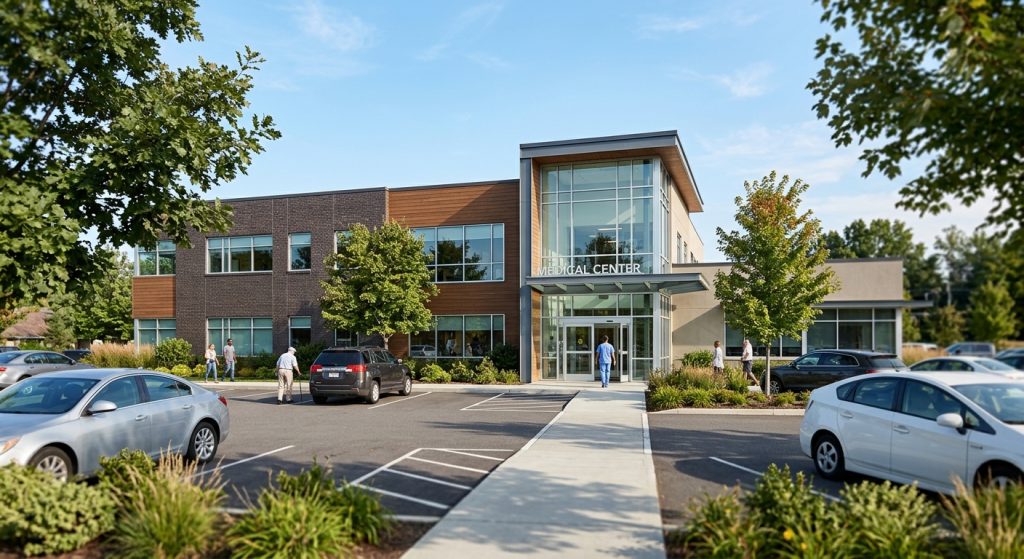
Two real estate firms are making a sizable bet on one of commercial real estate’s most resilient corners: the buildings where Americans increasingly get their medical care. Detroit-based REDICO and One Orchard, a newly formed real assets investment firm, have launched InfraMed Properties, a platform to acquire, develop, own and manage medical outpatient buildings nationwide, the companies said in an announcement Wednesday.
InfraMed is starting at scale. The platform launches with a 25-asset portfolio spread across 16 states, anchored by credit-backed tenants affiliated with leading health systems and specialty care providers. The partners said they are targeting more than $1 billion in total investments over time.
A bet on outpatient care
Medical outpatient buildings — the clinics, physician offices and ambulatory surgery centers that have taken over much of the care once delivered in hospitals — have become a favored asset class for real estate investors. The properties tend to have sticky, creditworthy tenants tied to major health systems, long lease terms and demand that is driven by demographics rather than the economic cycle, giving them a defensive profile that has held up better than traditional office.
InfraMed is designed as a fully integrated platform, meaning it will handle acquisition, development, leasing and management in-house to serve the property needs of health systems and specialty providers. That vertical structure is intended to make it a one-stop partner for health care operators looking to expand their physical footprint without owning the real estate themselves.
The partners
The venture pairs REDICO, a vertically integrated real estate investment, development and operating company with a 60-year track record and extensive health care real estate experience, with One Orchard, a New York City-based real assets firm recently established by David Elliott and Bradley Guz.
The platform’s more than $1 billion in targeted investments will be capitalized through a combination of programmatic equity and debt financing from Fifth Third Bank, the companies said. Programmatic capital — committed in advance to fund a pipeline of deals — signals that the partners intend to be steady acquirers rather than one-off buyers.
Part of a broader push
The launch adds to a run of capital flowing into health care real estate. Institutional investors and specialized REITs have been forming joint ventures and building pipelines around medical office and outpatient assets, drawn by the sector’s stable cash flows and the long-term tailwind of an aging population. Health care landlords have generally reported steady occupancy and rent growth even as other commercial sectors have struggled.
What it means: The debut of a $1 billion-plus platform is a vote of confidence in medical outpatient real estate at a time when investors remain cautious about much of commercial property. The strategy’s appeal rests on tenant credit quality and demographic demand, both of which are more predictable than the office leasing or retail sales that drive other sectors. The main risks are the same ones facing all real estate buyers today — the cost of debt and competition for a limited pool of high-quality assets, which has pushed pricing higher as more capital chases the same buildings. For health systems, meanwhile, well-capitalized landlords like InfraMed offer a way to fund expansion without tying up their own balance sheets in bricks and mortar.