Dallas Tanner, chief executive of Invitation Homes, the nation’s largest single-family rental landlord, said he expects the new federal ban on large-scale institutional home buying to eventually push down home prices — but not right away, and not primarily because of the ban itself.
“I believe in the medium- to long-term, it definitely will,” Tanner told CNBC’s Diana Olick in an interview published Aug. 11 on “Squawk on the Street.” “I think 90% of the bill focuses on deregulation. How do we simplify capital coming into housing? Are there ways that we can spur up the supply side challenges that we have? I think overnight in the immediate term, it’s a bit trickier because there’s more to the story than just what the bill addresses.”
Tanner pointed to mortgage rate volatility, elevated construction costs and zoning and regulatory constraints as bigger near-term drags on affordability than investor purchasing activity.
The policy behind the interview
Tanner’s comments follow the enactment in July 2026 of the 21st Century ROAD to Housing Act, which bars investors who own more than 350 homes from purchasing additional existing single-family houses, though it leaves newly built build-to-rent homes exempt. President Trump first called for such a ban in January 2026, framing it around the message that “people live in homes, not corporations.”
The law caps off months of political pressure on institutional single-family landlords, and several states have moved on their own: Michigan enacted a ban on large investors buying single-family homes that goes further than the federal limit.
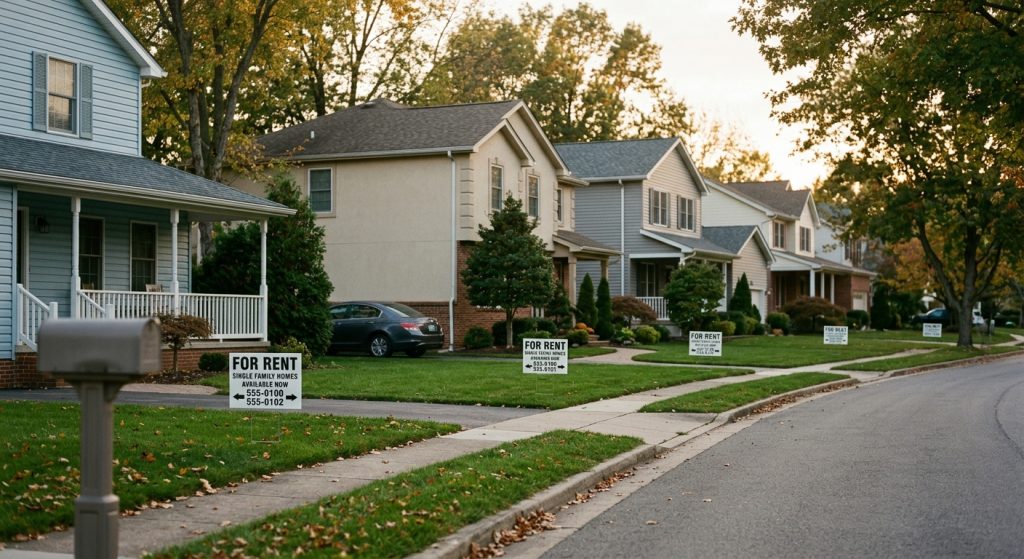
Invitation Homes (NYSE: INVH) is a direct target of that scrutiny. Per Urban Institute data cited by CNBC, investors who own 1,000 or more homes represent under 3% of the national single-family rental market but hold an outsized share in certain metro areas — about 25% of single-family homes in Atlanta, 21% in Jacksonville, Florida, and 18% in Charlotte, North Carolina.
The company’s supply argument
Tanner framed Invitation Homes’ growth strategy as centered on adding new supply rather than competing for existing homes. “Our focus as an industry and as a company has been, how do we create new supply and bring that into the housing system today?” he said, adding that the company has built or acquired more than 6,000 new homes over the past five years through partnerships with homebuilders.
Invitation Homes acquired homebuilder ResiBuilt in January 2026 and also buys newly built homes from Pulte Homes and Lennar for its rental portfolio. Tanner said the company’s build-to-rent product within master-planned communities “works really, really well for our families” and remains part of its growth strategy, even as Invitation Homes has been selling off hundreds of older rental properties.
What it means
Tanner’s remarks are a company executive’s attributed view, not independent verification that the ban will or won’t move prices — a point he himself hedged by separating the bill’s “90% deregulation” focus from its investor-purchasing restriction. Invitation Homes reported better-than-expected earnings for the quarter ended in July, with Tanner citing “green shoots” in several markets on the company’s last earnings call, according to CNBC.
The interview underscores a split emerging in the institutional-investor debate: state and federal lawmakers are targeting investor purchases of existing homes as a lever on affordability, while the industry’s largest player argues new construction, not resale competition, is the more consequential fight.