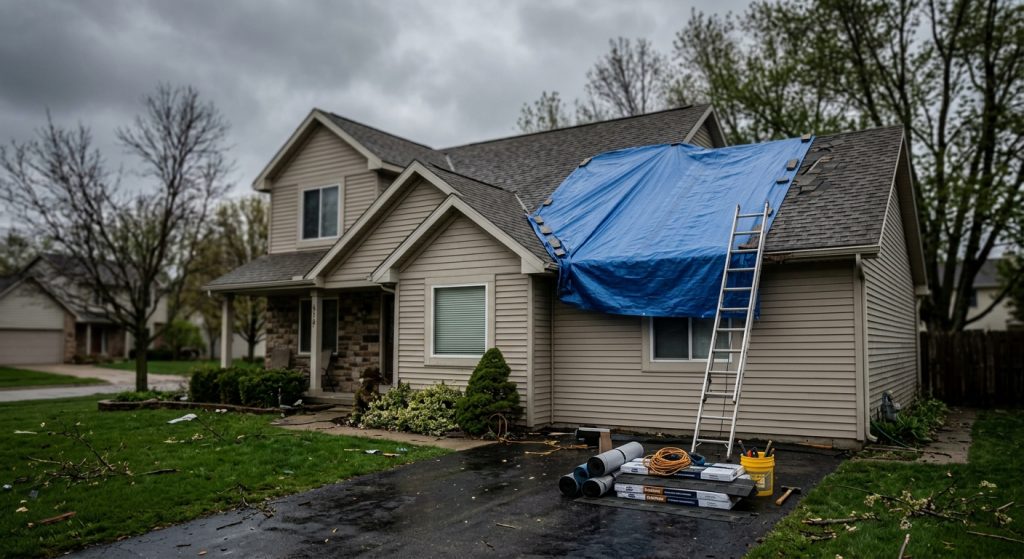
For every day a home insurance company delays a claim payment, the industry collectively earns an extra $8.8 million in interest and investment income — money made off homeowners while they wait to rebuild after a fire, storm or flood. Stretch that delay to a week, and insurers realize an estimated $61.6 million windfall, according to a new analysis from the Consumer Federation of America (CFA) and Weiss Ratings.
The figures, highlighted this week in reporting by Realtor.com, put a dollar sign on a problem consumer advocates have flagged for years: claim payment delays have become the single largest source of complaints filed with state insurance regulators, even as insurers dispute that the delays are deliberate.
How insurers profit from the wait
The math comes from Weiss Ratings, the independent financial-institution rating firm that partnered with CFA on the analysis. U.S. property and casualty insurers — companies selling homeowners, auto, business and other coverage — averaged about $241 million a day in investment income in 2024. Roughly $24.7 million of that daily total is tied to the premiums and surplus insurers hold from homeowners policies alone.
Using each insurance group’s average investment yield and annual claims payments, Weiss Ratings calculated that delaying homeowners claims industrywide by a single day generates $8.8 million in extra income. Across all lines of property and casualty insurance, a one-day delay is worth $52.3 million to the industry.
The underlying business model isn’t new. Insurers collect premiums up front and invest that money — what Warren Buffett has called the “float” — before claims come due. In his 2008 letter to Berkshire Hathaway shareholders, cited in the CFA analysis, Buffett described the arrangement as one he and vice chairman Charlie Munger “find enjoyable,” noting Berkshire’s insurance float effectively cost the company less than zero that year.
“The insurance business model is built on the investment opportunity that arises in the time between premium inflow and claim payment outflow,” said Douglas Heller, CFA’s director of insurance, in the release. “That creates a perverse incentive for insurers to increase the time before paying a claim in order to squeeze extra income out of the policy.”
Complaints pile up as disasters mount
Delayed claim payments accounted for 22% of the roughly 65,000 complaints filed with state insurance departments in 2025, the largest single category, according to data cited in the CFA analysis from the National Association of Insurance Commissioners complaint database.
A separate Weiss Ratings study found that insurers in 15 disaster-prone states took at least 60 days to pay 28.1% of claims in 2024, up from 25.6% in 2018 — a sign the problem has worsened even as climate-driven disaster losses have grown. In California, state regulators reviewed a sample of 220 State Farm claims tied to the January 2025 Los Angeles wildfires and found that in 27 instances, the insurer failed to pay within 30 days of agreeing to cover the claim.
“And this is just one of six tactics insurers are using to stiff homeowners,” said Weiss Ratings founder Martin D. Weiss, pointing to other practices such as closing more than 42% of homeowner claims with no payment at all, up from 25.7% in 2004.
California lawmakers are already responding. A bill under consideration in the state legislature, known as SB 878, would set deadlines for insurers to respond to claims in writing and require them to pay interest to policyholders when payments are delayed more than 30 days past key claims-handling milestones, according to the CFA analysis.
The cost for homeowners waiting on repairs
Realtor.com’s reporting adds the practical dimension of what a delay looks like from the homeowner’s side. “When repair costs are put on a high-interest credit card and insurance reimbursement is months away, the financial consequences can get ugly quickly,” Colin Ram, an insurance attorney and founder of Colin Ram Law in Mount Pleasant, South Carolina, told the outlet. “And the mortgage payment doesn’t pause because the house is unlivable.”
For displaced families, Ram said, the costs extend beyond the repair bill itself — temporary housing, childcare disruptions and other routine expenses continue even as insurance money is tied up. “Ask a family with kids what a delayed claim actually costs, and the answer isn’t a number,” he said. “It’s a schedule falling apart.”
Delays can also make the underlying damage worse. A roof leak that could have been fixed quickly can turn into a mold problem within weeks, Ram said, and contractors who move on to other jobs while a claim is pending can leave a homeowner waiting even longer for a new appointment. Ram recommends homeowners get every claims conversation in writing, keep detailed records, and ask insurers to release payment on any portion of a claim they have already accepted rather than waiting for full resolution — a distinction that also matters when a loss involves flood damage, which standard homeowners policies typically don’t cover.
What it means
The verified facts: CFA and Weiss Ratings calculated the $8.8 million daily figure from insurers’ own 2024 investment-income data, and delayed payments are the top complaint category in the NAIC’s national complaint database. Those underlying numbers are not in dispute.
The interpretation — that insurers face a financial incentive to slow-walk payments — comes from CFA and Weiss Ratings, both consumer-facing organizations. Insurers broadly reject that framing, arguing delays more often stem from claims complexity, contractor availability and disaster-driven surges in claim volume rather than deliberate stalling.
RealtyWire’s analysis: the data lands as scrutiny of insurer claims practices is already building in disaster-exposed states, though outcomes vary by state. Florida has moved in the opposite direction on litigation, with property insurance lawsuits falling sharply after 2022 tort reforms and insurers such as Universal Insurance posting stronger profits in the reform’s wake — a reminder that state-level rules can shift claims outcomes for homeowners and insurers alike, in either direction.
What to watch
California’s SB 878 is a test case for whether states start attaching interest penalties to slow claims payments, which would directly offset the investment-income incentive CFA and Weiss Ratings describe. With Atlantic hurricane season underway and wildfire risk elevated across the West, claim volumes in hard-hit states are likely to keep pressure on insurer payment timelines through the rest of 2026. Homeowners currently waiting on a claim can look up state-specific complaint procedures through their state insurance department’s website, one of the steps Realtor.com’s reporting recommends before involving an attorney. More coverage of property insurance and homeowner finance is available on RealtyWire’s housing market page.