Fannie Mae and Freddie Mac will each be allowed to buy up to $88 billion of multifamily loans in 2027, the same limit as this year. The Federal Housing Finance Agency, which now calls itself U.S. Federal Housing, announced the 2027 multifamily loan purchase caps on Nov. 23, 2026. The combined limit for the two government-sponsored enterprises is $176 billion.
The caps shape how much financing the two agencies can supply to apartment owners, developers and lenders. They arrive as new apartment construction has fallen sharply and borrowing costs remain high. The regulator kept two features from 2026. At least half of each enterprise’s multifamily business must be “mission-driven” affordable housing, and loans that finance workforce housing do not count toward the cap. It also said it will not lower the caps if the 2027 market turns out smaller than projected.
What the 2027 multifamily caps include, and what they leave out
The 2027 cap and definitions document sets out which loans count as mission-driven. The main categories are:
- Targeted affordable housing. Properties with a regulatory agreement or recorded use restriction that reserves units for lower-income tenants and limits their rents. Examples include Low-Income Housing Tax Credit properties, inclusionary-zoning deals, Section 8 contract properties and public housing authority borrowers. FHFA counts half the loan as mission-driven if fewer than 50% of units are restricted, and the full loan at 50% or more.
- Workforce housing preservation. The full loan is exempt from the cap if the loan agreement requires the sponsor to keep rents affordable for at least 10 years or the loan term. Those levels are the “other affordable” levels described below, or a state or local affordability standard. Half the loan counts as mission-driven if fewer than 20% of units are restricted, and all of it at 20% or more.
- Other affordable units. These are unsubsidized units whose market rents are affordable at set income levels, including small 5-to-50-unit properties and seniors housing. The threshold is 80% of area median income (AMI) in standard markets. It is 100% of AMI in markets FHFA designates as cost-burdened and 120% in very cost-burdened markets.
- Rural, manufactured housing and green loans. These include rural-area loans with units affordable at 100% of AMI and manufactured housing community blanket loans credited under the Duty to Serve regulation. Energy- and water-efficiency loans also qualify, provided rents meet the affordability tests and the renovations hit minimum projected savings.
FHFA said it will consider, case by case, requests to classify other loans as mission-driven when they meet affordable housing goals but fall outside the definitions. An enterprise may submit such a request only after meeting with the agency.
Room to raise, no plan to cut
The regulator said the $88 billion level is “appropriate given current market forecasts.” It added that it will keep monitoring the market and “will increase the caps if necessary.” It also ruled out a cut. “To prevent market disruption, if the Agency determines that the actual size of the 2027 market is smaller than was initially projected, it will not reduce the caps,” the release said.
On our reading, the workforce housing exemption may matter to borrowers as much as the headline number. Because those loans fall outside the cap, the enterprises can keep financing rent-restricted workforce properties without using up their $88 billion each. The definitions also give owners of unsubsidized, moderately priced buildings a way to qualify for mission-driven treatment. In expensive metros, the 100% and 120% of AMI thresholds widen that pool.
The enterprises must report acquisition and commitment volumes to FHFA monthly. They must also report quarterly on purchases under the caps, with detail on mission-driven loans.
A flat cap in a slower building market
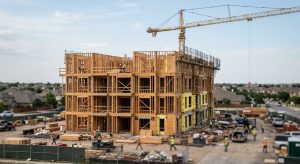
Keeping the caps flat means agency financing capacity does not grow. Apartment development has slowed sharply: third-quarter apartment starts fell to 76,000, the lowest since 2012, according to CoStar data. FHA has separately opened its multifamily mortgage insurance to build-to-rent communities. That is another federal channel for rental financing.
The release does not say how much of their 2026 caps Fannie Mae and Freddie Mac have used so far this year. FHFA’s quarterly reporting requirement means volume against the 2027 limits will be tracked through the year. More coverage of apartments and other income property is in our commercial real estate section.