
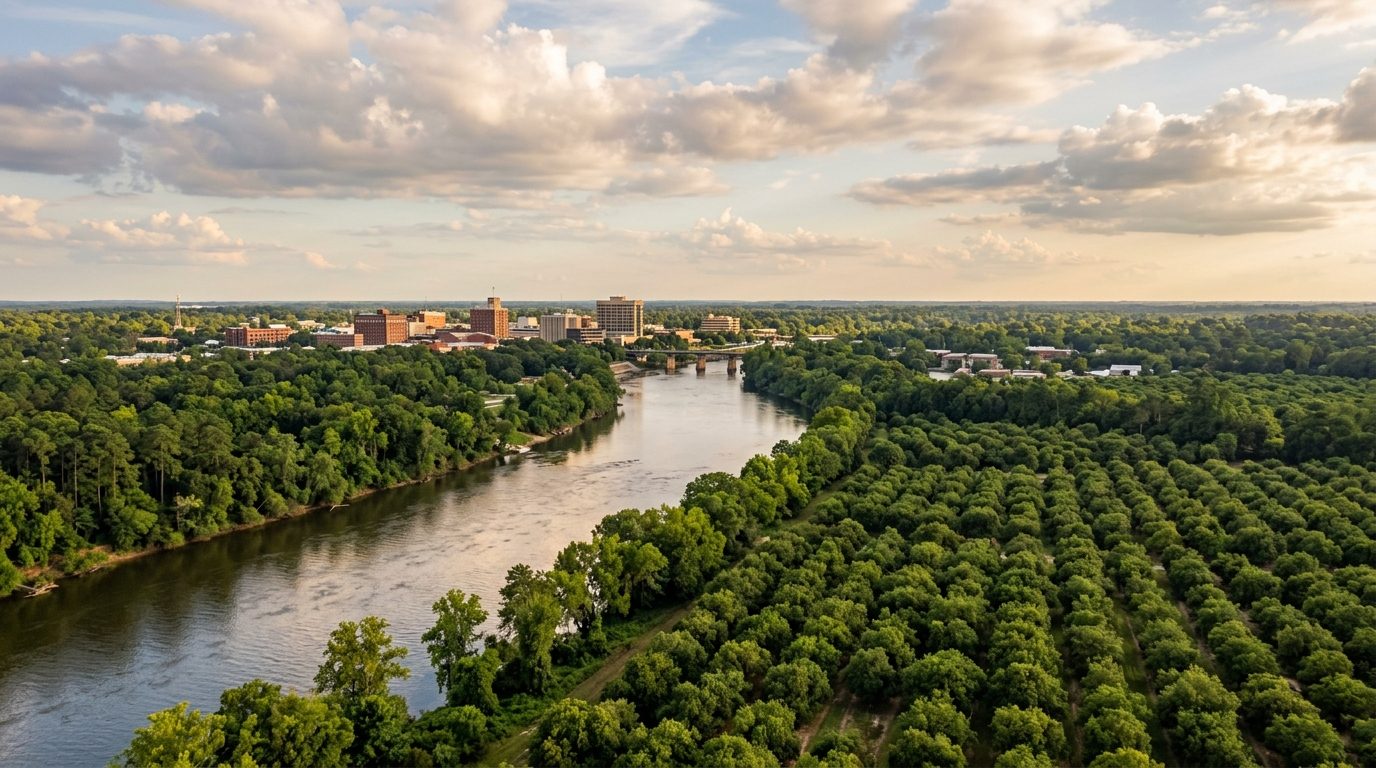
Current real estate market data, news and analysis for the Albany, GA metropolitan area — 145,510 residents across Dougherty, Lee, Terrell and Worth counties.
Data as of May 2026. Sources: Redfin Data Center, U.S. Census Bureau.
Latest Albany Real Estate News
Coverage of this market is coming soon. Browse all housing market news.
Albany Real Estate Market Overview
Albany, Georgia sits along the Flint River in the flat coastal plain of southwest Georgia, surrounded by farmland, pecan orchards, and pine woods. The river splits the city into east and west sides, and its floodplain has pushed newer development toward higher ground to the north and west. Housing stock reflects that pattern: blocks near downtown hold a dense mix of historic bungalows, brick cottages, and grander homes from Albany’s years as commercial hub for the surrounding farm counties, while ranch homes fill the postwar neighborhoods extending outward. Toward the edges and across the county line into Lee County, subdivisions of brick ranch and traditional homes on larger lots mark a newer, suburban pattern expanding along the highway corridors leading north.
Price tiers track a fairly clear geographic pattern. North Albany and the growth corridor across the county line in Lee County, anchored by Leesburg, sit at the upper end of the market, drawing buyers with newer construction, larger lots, a school system viewed as stronger than the city district, and less flood exposure on higher ground away from the river. In-town neighborhoods such as Westover carry a similar premium for mature tree canopy and good schools. Areas closer to the river and older industrial corridors on the south and east sides, along with much of the historic core, sit at the lower end, reflecting older housing stock, softer demand, and, in some pockets, overlap with mapped flood zones. Outside Dougherty and Lee counties, small towns across Terrell and Worth counties price well below the metro core, trading commute distance for rural land and a slower pace.
The regional economy rests on defense, manufacturing, healthcare, and agriculture. Marine Corps Logistics Base Albany, which overhauls combat vehicles and equipment, is one of the area’s largest employers and anchors related contractor and logistics work. Procter & Gamble runs a manufacturing plant expanded and modernized repeatedly, and other manufacturers, including an aircraft maker and a brewer, add to the industrial base. Phoebe Putney Health System, headquartered in Albany, is the dominant healthcare provider across southwest Georgia and one of the region’s biggest employers outside government and defense. Agriculture remains woven into local identity: Dougherty County and its neighbors are known for pecan production, and farm counties such as Worth County support agricultural processing tied to peanuts and cotton, centered around Sylvester.
Flood risk tied to the Flint River is the defining environmental factor here; the river has left its banks repeatedly, including a catastrophic overflow tied to a stalled tropical system that reshaped how the city treats low-lying ground, so flood zone status and insurance requirements deserve close attention near the river and its tributaries. The region also sits within reach of hurricane remnants moving up from the Gulf, bringing heavy rain and wind well inland. Property taxes and regulation vary by county, so a home across the line in Lee County can carry a different tax and school-district picture than one in Dougherty County; buyers should verify millage rates, service areas, and school zoning with local officials rather than assume they carry across the line. Public transit is limited and the area is built around car travel, with growth favoring new subdivisions toward Leesburg over infill. Buyers should also confirm well and septic versus municipal water and sewer service in unincorporated areas.
Cities and Towns in the Albany Metro Area
Notable Communities and Neighborhoods
Albany Real Estate Market FAQ
How is the Albany, GA housing market organized across the metro?
The metro centers on the city of Albany within Dougherty County, with a suburban growth area extending north across the county line into Lee County around Leesburg. Terrell and Worth counties add a ring of small farm towns further out that trade metro amenities for rural land and lower cost. Buyers should think of the market less as one uniform city and more as a core city, a growing suburban county, and a rural periphery, each with its own tax structure and school system.
Which parts of the Albany area tend to carry higher prices, and why?
North Albany and the Lee County corridor around Leesburg command the highest prices, largely because of newer home construction, larger lots, a separate school system with a strong local reputation, and higher ground that sits outside the Flint River floodplain. Established in-town neighborhoods known for mature landscaping and good schools, such as Westover, hold a similar premium. Areas closer to the river and to older commercial corridors tend to be more affordable, reflecting older housing stock and, in places, flood zone overlap.
What should buyers verify before purchasing in the Albany metro?
Because the metro spans several counties, buyers should confirm which county and school district a property sits in, along with local millage rates and whether the address falls inside city limits or an unincorporated area. It is also worth confirming water and sewer service, since well and septic systems are common outside city limits, and checking flood zone status directly rather than assuming it based on a neighborhood’s general reputation.
What is the main regional risk buyers should factor into a purchase here?
Flood risk from the Flint River is the most consequential local factor, since the river has overflowed its banks historically and low-lying ground near it and its tributaries remains subject to floodplain mapping and flood insurance requirements. The area also lies within reach of tropical weather remnants moving up from the Gulf, which can bring heavy rain and flooding well after a storm has weakened, so it is worth reviewing a property’s flood history and elevation independent of its distance from the river’s main channel.
Nearby Markets