
Current real estate market data, news and analysis for the Valdosta, GA metropolitan area — 153,276 residents across Brooks, Echols, Lanier and Lowndes counties.
Data as of May 2026. Sources: Redfin Data Center, U.S. Census Bureau.
Latest Valdosta Real Estate News
Coverage of this market is coming soon. Browse all housing market news.
Valdosta Real Estate Market Overview
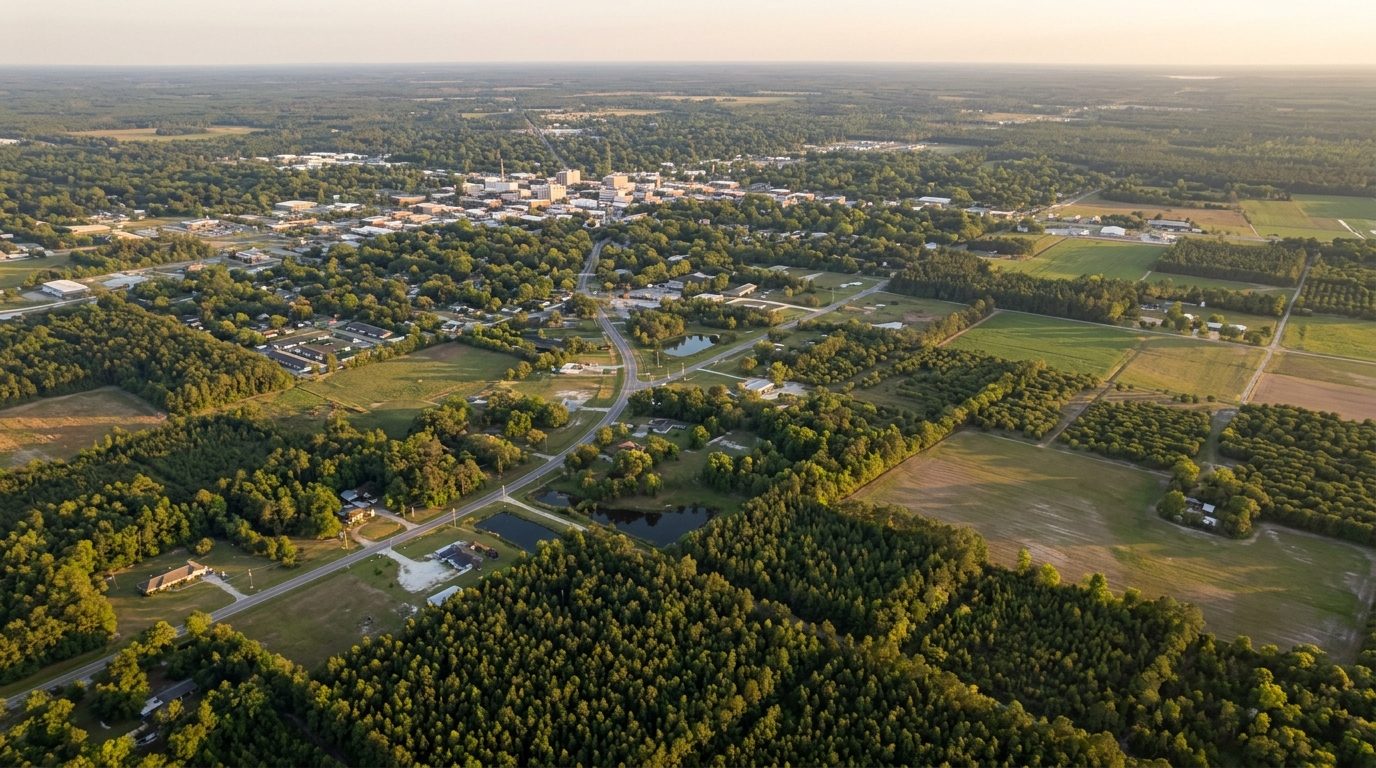
The Valdosta metro lies in the lower coastal plain of south Georgia, a landscape of flat to gently rolling pine flatwoods, farmland, and pecan groves cut by the Withlacoochee and Little Rivers. Valdosta forms the urban core, with Interstate 75 running along its western edge and highways linking Hahira, Lake Park, Lakeland, Remerton, Dasher, Morven, and Quitman, along with rural Echols County to the south. The historic core reflects the city’s railroad-era growth, with Queen Anne, Colonial Revival, and Craftsman houses shaded by live oaks and azaleas along tree-lined streets near downtown. Farther out, ranch and brick homes line subdivisions along highway corridors, while newer golf-course and gated developments occupy former timber and farmland at the edges. Smaller towns keep their own compact downtowns ringed by single-family neighborhoods, and much of the wider metro remains agricultural or rural land.
Within Valdosta, neighborhoods closest to downtown and Valdosta State University tend to carry the most character and steadiest demand, since historic architecture, mature tree canopy, and walkable access to campus are hard to replicate elsewhere. The Fairview, North Patterson Street, Brookwood North, and East End historic districts fall into this category, valued for well-preserved older architecture on established lots. The gated Kinderlou Forest community, built around a golf course on former timberland, represents a different but similarly sought-after tier for buyers favoring newer construction over historic character. Areas with older, more modest housing stock, greater distance from the university and hospital, or schools perceived as weaker sit at a more accessible level. Remerton, bordering campus, mixes longtime residents with student rentals, while outlying towns trade more land for a longer commute into Valdosta.
The regional economy centers on a handful of large, stable institutions rather than one dominant industry. Moody Air Force Base, home to fighter and combat search-and-rescue units, is the area’s largest employer and anchors housing demand among active-duty families and the surrounding civilian workforce. Valdosta State University is the other major institutional anchor, drawing faculty, staff, and students into the local housing and rental market. Healthcare is represented by South Georgia Medical Center, a hospital system drawing patients from across south Georgia and north Florida, while the county and city school systems are also large employers. Logistics, retail distribution, and tourism tied to the Wild Adventures theme park round out the private sector. Beyond the city, agriculture remains foundational to the surrounding counties, with row crops, pecans, and timber shaping the rural economy.
Buyers should know the region sits inland from the coast but is not sheltered from tropical weather; the remnants of hurricanes and tropical storms regularly move through south Georgia, bringing heavy rain, wind, and periodic flooding along the Withlacoochee and Little Rivers rather than storm surge. Local governments maintain flood-tracking tools for property near these waterways, and flood risk should be checked parcel by parcel before purchase. Property taxes are administered separately by the county and by the city and county school systems, so the applicable millage depends on whether a property sits inside city limits or unincorporated county land. Development has generally followed a low-density, highway-oriented pattern, with new subdivisions expanding along major corridors while historic downtown retains preservation oversight. The Florida line lies just south along Interstate 75, giving the area close cultural and economic ties to the Florida panhandle and Tallahassee.
Cities and Towns in the Valdosta Metro Area
Notable Communities and Neighborhoods
Valdosta Real Estate Market FAQ
What style and age of homes are typical in the Valdosta area?
The metro mixes historic Queen Anne, Colonial Revival, and Craftsman homes in and near downtown Valdosta with ranch-style and brick traditional homes from later suburban development, plus newer construction in golf-course and gated communities and in the small outlying towns. Architectural style tends to track distance from the historic core, with older homes concentrated near downtown and Valdosta State University and newer builds toward the edges of the metro.
Why do homes near Valdosta State University tend to attract steady interest?
Proximity to the university means walkable access to campus jobs, classes, and events, along with a built-in pool of student and faculty renters. The surrounding blocks also tend to have the oldest, most architecturally distinct housing stock and mature tree canopy, which many buyers value independent of the university connection.
Is the Valdosta area at risk from hurricanes even though it is inland?
Yes. While Valdosta does not face storm surge, it lies in the path that tropical systems from the Gulf and Atlantic frequently follow inland, and remnant storms can bring heavy rain, wind damage, and river flooding along the Withlacoochee and Little Rivers. Buyers should ask about a specific parcel’s flood history and elevation rather than assume inland location removes weather risk entirely.
How does agriculture shape the character of the wider metro?
Outside the city of Valdosta, the surrounding counties remain working agricultural land, with row crops, pecan groves, and timber production shaping both the economy and the visual character of the countryside. This means many properties on the metro’s outer edges border farmland, timberland, or agricultural operations rather than other residential development.
Nearby Markets